Introduction: The Hunt Is Harder Than You Think
Are you trying to buy a real World War 1 British uniform? Then you already know the problem. The market is full of fakes. Prices swing wildly. Some sellers don’t list clear details. Others mix reproduction parts with original pieces and call it “authentic.”
Between 1914 and 1918, millions of British soldiers wore standard service dress. But over 100 years later, surviving original pieces are limited. Museums like the Imperial War Museum hold verified examples. Private collectors compete for the rest.
Here’s the issue. If you don’t know the fabric weight, insignia rules, or correct cut of a 1902 pattern tunic, you can waste serious money. Worse, you might miss a real historical piece because you weren’t confident enough to bid.
This guide fixes that. We’ll break down real WWI British uniform specs. We’ll look at real auction sales. We’ll compare originals vs repros. And you’ll walk away knowing exactly what to look for.
Ready? Let’s dig in.
What Makes WWI British Uniforms Stand Out?
Materials: Khaki Wool Serge and Practical Design
When Britain entered war in 1914, soldiers wore the 1902 Pattern Service Dress. It was made of khaki wool serge. Period records show wool serge cloth typically weighed around 18–20 ounces per yard. It was durable, breathable, and suitable for trench warfare.
Key material features:
-
Khaki wool serge (not bright green, not brown)
-
Rougher wartime weave due to mass production after 1915
-
Cotton drill linings in some tunics
-
Brass general service buttons with crown detail
Early war tunics were better finished. By 1916–1918, production scaled up fast. Stitching became simpler. Cloth quality sometimes dropped. That difference matters when you’re inspecting an original.
If the fabric feels too smooth or too light, question it.
Design: Built for Function, Not Style
The British service dress tunic had:
-
Stand-and-fall collar
-
Four front patch pockets with box pleats
-
Five-button front
-
Internal waist belt with brass buckle
-
Reinforced shoulder areas
Trousers were high-waisted. Puttees wrapped around the lower leg. Officers often purchased tailored versions with finer wool and better lining.
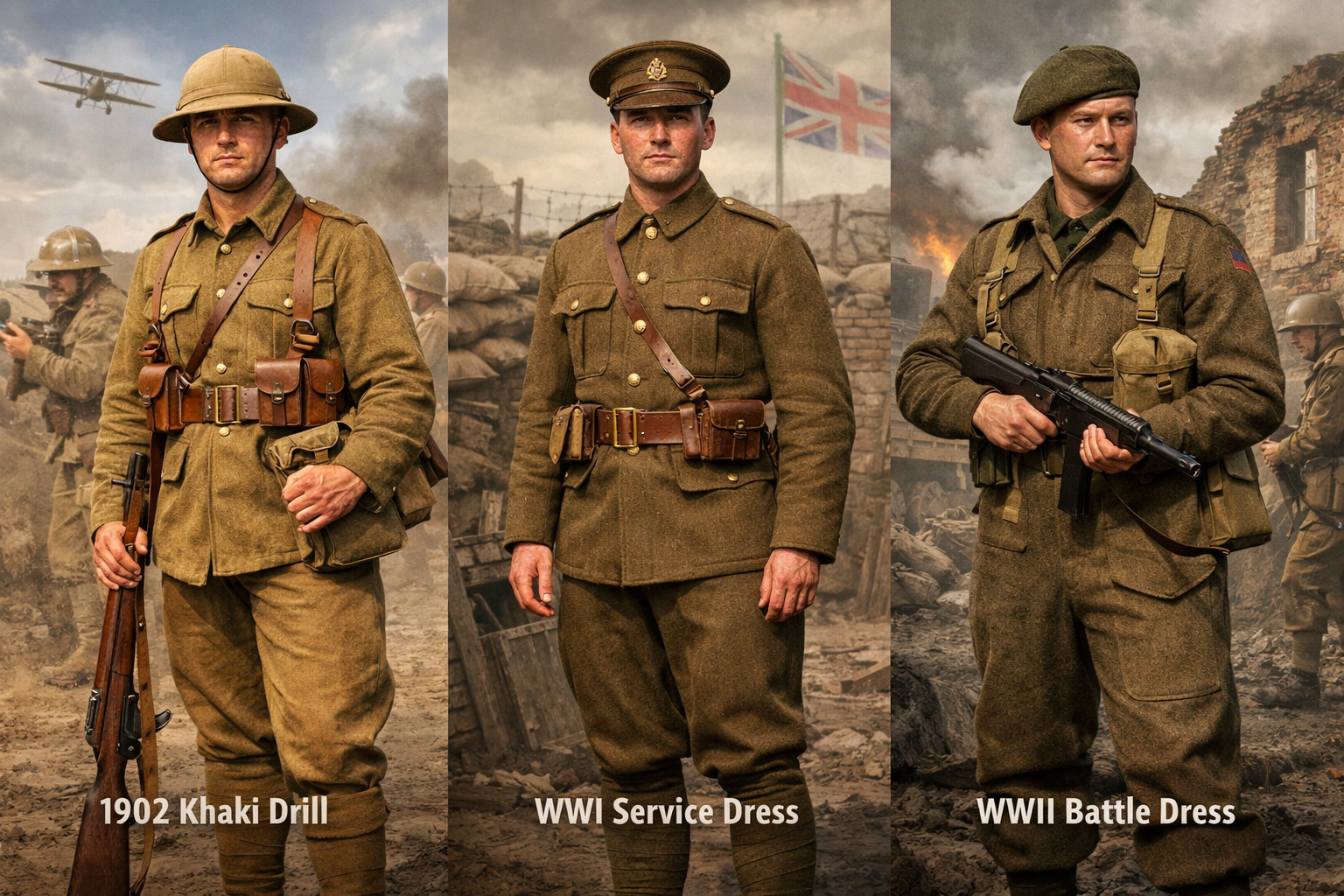
Look closely at pocket construction. Original box pleats are sharply defined. Many reproductions flatten this detail.
Rank Markings and Insignia
Rank was shown using cloth chevrons or pips.
-
Privates: No insignia
-
Corporals: Two chevrons
-
Sergeants: Three chevrons
-
Officers: Bronze or embroidered pips and crowns
Officers’ insignia placement followed strict rules. The Imperial War Museum archives show consistent spacing and alignment. On originals, stitching holes from removed insignia are often visible.
That’s a good sign. It shows real service use.
Fake tunics often use modern thread. Check thread aging. Natural fading is uneven. Artificial aging looks forced.
Real Collector Wins: Case Studies
Let’s talk real sales. Numbers matter.
Case Study 1: 1916 Dated Service Dress Tunic (eBay UK)
In 2023, a clearly dated 1916 British other ranks tunic sold on eBay UK for approximately £1,250. Condition: moderate wear, minor moth damage, original brass buttons intact, visible regimental stamps inside.
Why did it sell strong?
-
Clear date stamp (1916)
-
Regiment markings readable
-
Original insignia stitching visible
-
No replaced buttons
The buyer paid for documented authenticity. Even with moth damage, originality mattered more.
Case Study 2: Officer’s Tailored Tunic at Auction
A WWI officer’s khaki service dress tunic sold through a UK militaria auction house in 2022 for roughly £2,800.
Details included:
-
Private tailored label inside
-
Bronze rank pips intact
-
Medal ribbon bar sewn above pocket
-
Clean wool with light wear
Officer pieces often command higher prices. Why? Fewer were mass produced. Tailoring labels help verify authenticity.
Case Study 3: Complete Set With Trousers and Puttees
In 2021, a full original WWI British uniform grouping (tunic, trousers, puttees) sold for around £3,400 at a specialist militaria sale.
Condition: Good overall, minor fabric thinning, matching cloth shade across items.
Matching shade is key. Many sellers assemble sets from different sources. When color tone matches naturally, it suggests original pairing.
That consistency drove bidding higher.
Pros and Cons: Originals vs Reproductions
Let’s be honest. Originals aren’t for everyone.
Buying Original WWI Uniforms
Pros:
-
True historical value
-
Potential resale appreciation
-
Museum-level authenticity
-
Natural aging and wear
Cons:
-
High prices
-
Risk of moth damage
-
Fragile fabric
-
Harder to find complete sets
Buying Reproductions
Pros:
-
Affordable
-
Wearable for reenactment
-
Easy to replace
-
No fear of damage
Cons:
-
No historical investment value
-
Fabric often lighter than 18–20 oz serge
-
Modern stitching
-
Incorrect button detail in some cases
If you’re collecting for history and long-term value, originals win. If you want something to wear regularly, repros make sense.
Know your goal before you spend.
Top Tips for Scoring Real Deals
1. Always Ask for Interior Photos
You want:
-
Date stamps
-
War Department marks
-
Tailor labels
-
Regimental stamps
No inside photos? Walk away.
2. Check Button Detail
Original WWI British buttons often feature:
-
King’s crown
-
Brass construction
-
Maker marks on reverse
Shiny modern brass is a red flag.
3. Examine Stitching Closely
Original wartime stitching:
-
Slight irregularity
-
Cotton thread
-
Fading consistent with fabric
Machine-perfect modern stitching usually means reproduction.
4. Compare With Museum References
Study verified examples at institutions like the Imperial War Museum. Many online collections show high-resolution images.
Compare:
-
Pocket depth
-
Collar shape
-
Button spacing
-
Belt construction
Training your eye saves money.
5. Watch Auction Timing
Militaria auctions spike around:
-
November (Remembrance period)
-
Major war anniversaries
Buying off-season can mean lower competition.
FAQs: Buying WWI British Uniforms
How do I spot a fake WWI British tunic?
Check fabric weight, stitching type, and button backs. Look for real aging. Compare with verified museum examples.
What is the correct fabric weight?
Most original service dress used wool serge around 18–20 ounces per yard.
Are moth holes normal?
Yes. Small moth damage is common in 100-year-old wool. Large structural damage lowers value.
Do officer tunics cost more?
Usually, yes. Tailored officer pieces often sell between £2,000–£4,000 depending on condition.
Should I clean an original uniform?
No aggressive cleaning. Light brushing only. Professional textile conservation is safest.
Is a missing insignia bad?
Not always. Visible stitch marks where insignia once sat can prove authenticity.
Are complete sets rare?
Yes. Tunic, trousers, and matching cloth together are harder to find.
Can these uniforms increase in value?
Historically, strong-condition originals have shown steady demand in militaria markets.
Conclusion: Buy Smart and Own History
The problem is clear. The WWI British uniform market has fakes. Prices vary. Mistakes cost money.
But you now know the facts.
You know wool serge weight. You know what pocket pleats should look like. You know how insignia was placed. You’ve seen real sales data. That gives you an edge.
Study museum examples. Ask for interior photos. Compare stitching. Be patient.
When you finally secure a real 1914–1918 British service dress tunic, you’re not just buying cloth. You’re holding a piece of history.
So what’s next?
Start watching auctions. Save searches. Train your eye.
Hunt one today.
