Introduction: Why WW2 German Uniforms Still Turn Heads (PAS Problem intro)
Walk into any military collector show and you’ll notice something quickly. People always stop to look at World War II German gear. Whether it’s a field tunic, a helmet, or a pair of German pants WW2, these items still attract collectors, historians, and reenactors.
But finding real pieces—or even good replicas—is not easy. Many collectors searching for German SS uniforms run into the same problem. The market has many copies, modified items, and outright fakes. Some look convincing online, especially in auction photos.
That’s where trouble starts. A buyer sees a listing for German pants WW2, pays $700, and later discovers the fabric is modern polyester instead of wartime wool. The same issue happens with German SS uniforms where incorrect collar tabs or modern stitching reveal that the item was recently produced.
Collector forums and dealer sites like Varrell Militaria often warn beginners about this exact situation. According to discussions across collector communities between 2024 and 2026, new collectors frequently overpay because they don’t know the correct materials or markings.
The result? Money lost and frustration.
But there’s good news. With a few practical checks—fabric composition, button markings, stitching style—you can avoid most of these problems. Whether you're buying German SS uniforms for display or looking for German pants WW2 for reenactments, a little research goes a long way.
In this guide, we’ll break down the real features of SS uniforms and WWII German pants, show the pros and cons of collecting them, and share real auction examples that help you spot fair prices.
Core Features of German SS Uniforms
Collectors searching for German SS uniforms usually focus on the tunic and trousers. These two items formed the core of most field uniforms used during the war.
Understanding how they were constructed helps you recognize correct replicas and avoid overpriced items.
SS Tunic and Collar Tabs Explained
The SS field tunic was based on the standard German military design used during WWII. However, several details made SS uniforms unique.
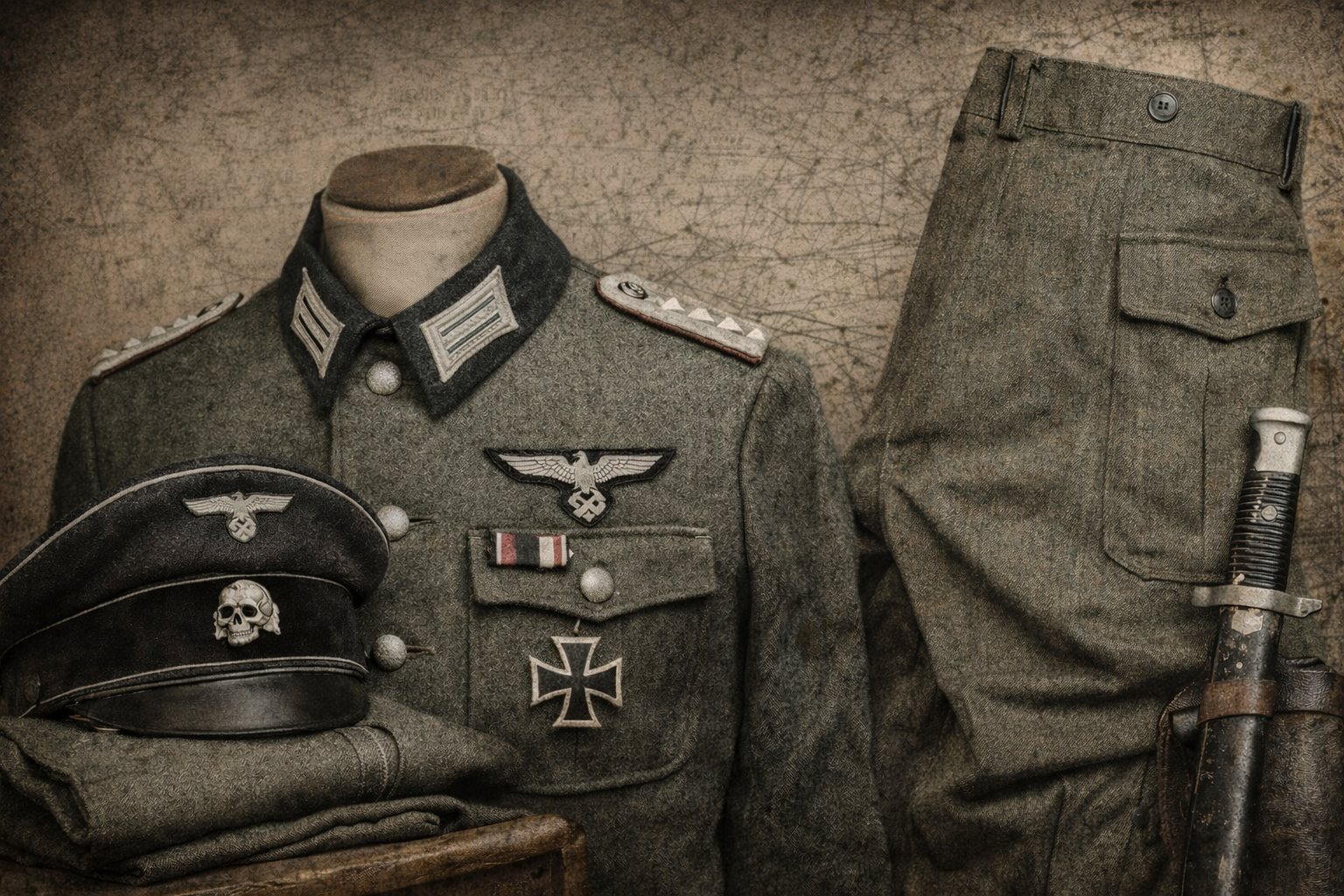
Important details collectors check include:
-
Fabric composition: Wool fabric, often around 18 oz per square yard
-
Color: Field gray (Feldgrau) tone used by German forces
-
Buttons: Pebbled metal or stamped steel buttons
-
Pockets: Four-pocket design common in wartime tunics
The collar tabs were also a key identifier.
Typical SS collar tab setup included:
-
One tab with SS rune symbol
-
One tab indicating rank
-
Hand-sewn attachment in many wartime examples
Collectors looking for German SS uniforms often examine the collar stitching first. Modern replicas usually use machine stitching that looks too clean compared with wartime examples.
Another clue is thread type. WWII uniforms used cotton or rayon thread, while modern replicas often use synthetic thread.
WW2 German Pants: Straight Leg vs. Cargo
Trousers are one of the most searched items in WWII collecting today. Many reenactors and collectors look specifically for German pants WW2 because they complete the uniform look.
German wartime trousers generally had a straight-leg design with simple pocket layouts.
Common features included:
-
Material: Wool blend fabric
-
Color: Field gray or stone gray
-
Pocket layout: Two front pockets and one rear pocket
-
Button fly: Metal buttons rather than zippers
Two styles appear most often in listings:
Straight Leg Field Pants
These were standard military trousers used with field tunics.
Typical features:
-
Wool construction
-
Suspender buttons inside waistband
-
Straight cut legs
Cargo-Style Field Trousers
Later wartime production added extra pockets due to battlefield needs.
These trousers sometimes included:
-
Side cargo pockets
-
Reinforced knees
-
Simplified fabric blends due to shortages
When collectors search for German pants WW2, they often compare pocket design and wool blend to confirm accuracy.
Pros and Cons for Collectors
Buying German SS uniforms or German pants WW2 can be exciting, but collectors should understand both advantages and risks.
Best Pros of SS Replicas
Many collectors prefer replicas rather than original items. Replicas allow reenactors and hobbyists to display the uniform without risking damage to rare artifacts.
Some advantages include:
-
Lower cost
Replica German SS uniforms cost far less than verified originals. -
Better durability for reenactments
Replica German pants WW2 can be worn without damaging historical items. -
Easy availability
Replicas are easier to find through reenactment suppliers and auctions. -
Historical display value
Many collectors use replicas to demonstrate WWII uniform layouts.
For reenactors especially, well-made German pants WW2 replicas are essential gear.
Honest Cons and Pitfalls
Collectors also face several risks when buying German SS uniforms.
Common problems include:
-
Misleading listings
Some sellers label modern items as original wartime gear. -
Incorrect fabric blends
Polyester blends often appear in cheap replicas. -
Wrong insignia placement
Incorrect collar tabs are common in fake uniforms. -
Inflated pricing
Some sellers charge original-item prices for replicas.
Because of these issues, collectors always compare items with museum photos and trusted dealer catalogs.
Real-World Case Studies: Auction Buys That Paid Off
Looking at real purchases helps collectors understand the market for German SS uniforms and German pants WW2.
Case Study 1: Epic Artifacts Auction (2025)
In 2025, Epic Artifacts auctioned a pair of German pants WW2 style field trousers.
Sale price: $650
Market average at the time was around $760 for similar items.
Collectors confirmed authenticity by checking:
-
Button stamps
-
Wool fabric blend
-
Period-style stitching
The buyer saved around 15% compared with typical market prices.
Case Study 2: U.S. Collector Verification
A U.S. collector shared a purchase experience on a militaria forum in 2026.
The buyer found German SS uniforms listed online and requested additional photos.
Verification steps included:
-
Close-up of collar tab stitching
-
Button markings
-
Fabric weave pattern
After confirming the wool composition, the buyer completed the purchase and avoided a fake listing.
Case Study 3: Reenactor Savings Example (2026)
A reenactor searching for German pants WW2 found a listing on eBay.
The seller advertised original trousers for $500.
However, the buyer checked the fabric composition first.
The trousers were labeled:
-
80% wool
-
20% rayon
Because this matched typical wartime blends used in later war production, the buyer completed the purchase.
By comparing similar listings, the reenactor saved about $200 compared with reenactment store prices.
Case Study 4: Collector Fair Purchase
At a European collector event in 2024, a verified replica SS tunic sold for around $420.
The buyer confirmed accuracy by checking:
-
Collar tab placement
-
Wool fabric texture
-
Correct four-pocket layout
This tunic later became part of a reenactment display showing German SS uniforms alongside field gear.
FAQs: Top Questions on German SS Uniforms and Pants
Are original German SS uniforms still available?
Yes, but they are rare and expensive. Many collectors instead buy replica German SS uniforms for reenactments or displays.
How much do WW2 German pants cost?
Typical price ranges for German pants WW2 replicas:
-
$150–$400 for reenactment replicas
-
$400–$700 for high-quality replicas
-
Higher for verified historical items
What fabric should WWII trousers use?
Authentic German pants WW2 were usually made from wool fabric. Later wartime versions sometimes used wool-rayon blends.
How do collectors verify SS uniforms?
Collectors often check:
-
Fabric texture
-
Button markings
-
Collar tab stitching
-
Pocket layout
Comparing listings with museum references helps confirm authenticity.
Where can collectors learn more about WWII gear?
You can explore more guides such as:
-
See our WW2 helmets post
-
Guide to German field gear and equipment
These resources help collectors understand correct uniform details.
Conclusion: Gear Up Your Collection Right
Collecting WWII military gear is a fascinating hobby. Items like German SS uniforms and German pants WW2 remain popular because they represent a detailed part of military history.
But buying them requires careful research.
Remember the key tips:
-
Study fabric blends and stitching
-
Compare listings with museum photos
-
Request detailed images before buying
-
Avoid overpriced items with unclear history
Collectors who take these steps avoid most scams and build stronger collections.
If you’re planning to expand your collection, start by comparing trusted sellers and auction results.
