Introduction: Spotting Real Wehrmacht Uniforms (PAS Problem hook)
Hey, ever wondered why that Feldgrau jacket turns heads at collector shows? Many history fans start looking for a Wehrmacht uniform for sale because they want to hold a real piece of WWII history. German military uniforms from 1935–1945 are among the most studied and collected items in the militaria world. But buying one is not always easy.
The problem collectors face is simple. Authenticity and price. A real Wehrmacht tunic or helmet can cost hundreds or even thousands of dollars. At the same time, the market is flooded with reproductions and altered pieces. Some sellers are honest. Others are not.
According to discussions on collector communities such as Wehrmacht-Awards forums and data from militaria auctions between 2023 and 2025, fake or altered items appear regularly on marketplaces like eBay and small auction sites. Many beginners end up buying pieces that look correct but use the wrong wool weight, incorrect insignia stitching, or modern thread.
That leads to frustration. Imagine paying $900 for what you think is an original field tunic, only to learn later that the collar tabs were added recently. That happens more often than most collectors expect.
The good news? You can avoid these mistakes. When you understand the details of authentic materials, correct insignia placement, and trusted sellers, buying a Wehrmacht uniform for sale becomes much safer. In this guide, we’ll break down the real features of Wehrmacht uniforms, show the pros and cons of collecting them, and share real auction examples so you know what prices and details to expect.
Key Features of Authentic Wehrmacht Gear
When collectors search for a Wehrmacht uniform for sale, the first step is learning how authentic gear was made. German military uniforms followed strict production standards during WWII. Museums such as the Imperial War Museum and military archives have documented these specifications in detail.
Here are the main features collectors check before buying.
Feldgrau Field Tunic Breakdown
The most recognized German uniform item is the Feldgrau field tunic. Feldgrau simply means “field gray,” the green-gray color used by the German army during WWII.
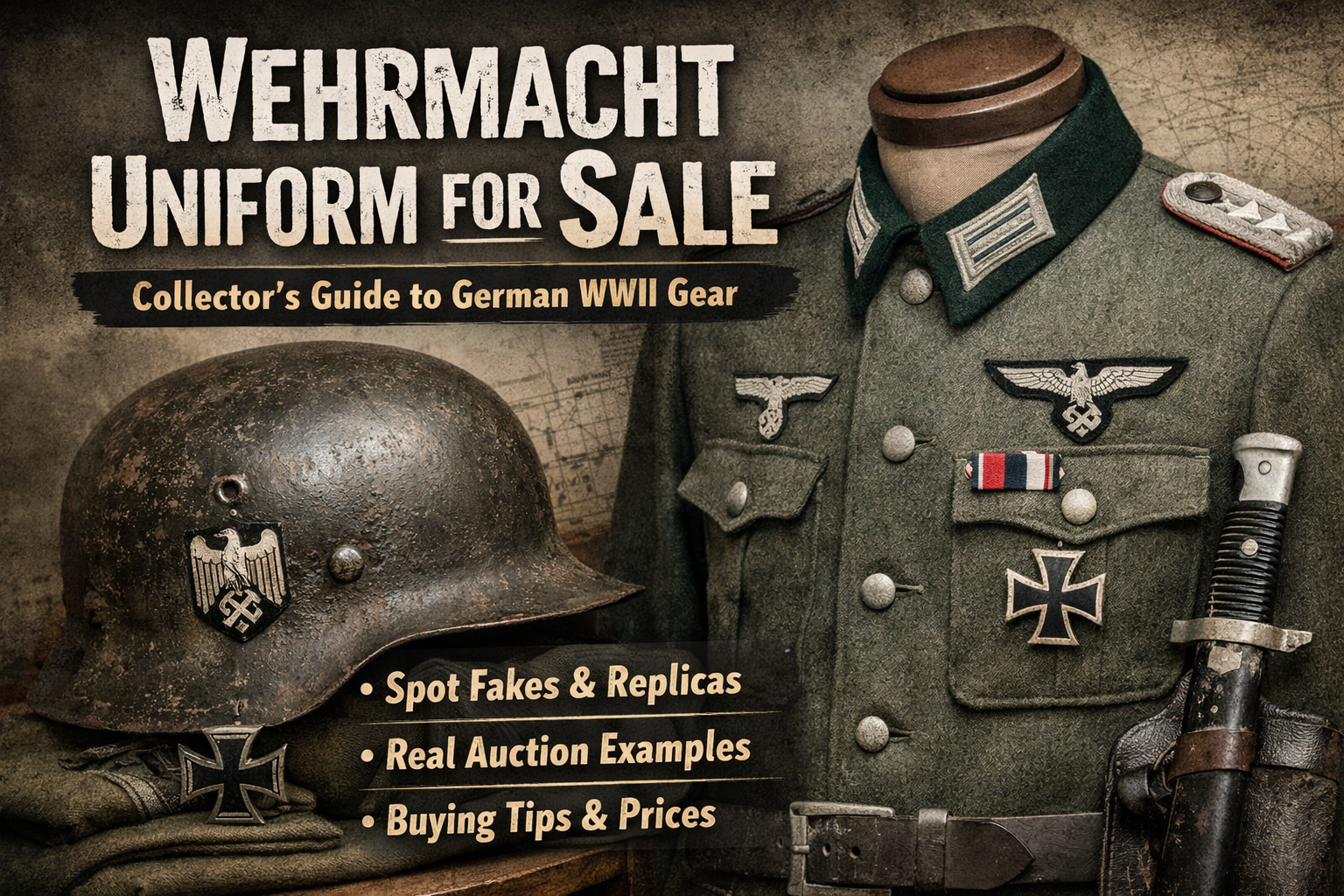
Important details include:
-
Fabric weight: Typically around 18 oz wool per square yard
-
Material: Wool with small rayon blends in later-war models
-
Color tone: Field gray with slight green tone
-
Buttons: Pebbled aluminum or steel depending on year
-
Pockets: Four pockets on M36 and M40 tunics
Collectors usually encounter several models:
-
M36 tunic – Dark green collar with field gray body
-
M40 tunic – Same color collar as body
-
M43 tunic – Simplified design due to wartime shortages
Many listings advertising a Wehrmacht uniform for sale mention these models. If the details don’t match the model description, it may be a reproduction.
Another important clue is stitching. Original WWII tunics often show machine stitching typical of the period, while modern reproductions use cleaner synthetic thread.
Helmet and Insignia Details
Helmets are another major part of the Wehrmacht uniform for sale market. German steel helmets are famous for their distinctive shape and decals.
Key features collectors check:
-
Steel shell thickness: Around 1 mm stamped steel
-
Helmet models: M35, M40, M42
-
Decals: Wehrmacht eagle and national shield on early models
-
Liners: Leather liner with aluminum or steel band
Collectors also examine insignia such as:
-
Shoulder boards
-
Collar tabs
-
Breast eagle patches
Original insignia were often hand-sewn. If a listing shows bright modern thread or machine stitching that looks too perfect, collectors treat it with caution.
Pros and Cons of Buying Wehrmacht Uniforms
Collectors looking for a Wehrmacht uniform for sale usually focus on the excitement of owning historical gear. But like any collectible market, there are advantages and risks.
Top Pros for Collectors
Owning German military uniforms can be rewarding for history enthusiasts. Some of the main benefits include:
-
Historical connection
Holding a real field tunic or helmet gives collectors a direct link to WWII history. -
Strong collector demand
German militaria has remained popular for decades. Demand keeps prices stable. -
Museum-level craftsmanship
Many uniforms show high-quality tailoring and durable materials. -
Investment potential
Auction records show steady value growth for verified items.
For example, Griffin Militaria auction data shows that some verified Wehrmacht pieces increased in value by 15–20% between 2023 and 2025.
Real Drawbacks to Watch
Buying a Wehrmacht uniform for sale also comes with real risks.
Some of the main problems include:
-
High number of reproductions
Many replicas look convincing to beginners. -
Altered originals
Some uniforms start as real items but have added insignia to increase value. -
Price inflation
Certain sellers charge high prices without proof of authenticity. -
Legal restrictions in some regions
Some countries regulate Nazi-era symbols.
Because of these issues, experienced collectors recommend studying reference books and museum photos before making a purchase.
Real-World Examples: Auction Wins and Buyer Stories
Looking at real sales helps collectors understand the market. Several auction results between 2023 and 2025 show typical prices for verified items.
Case Study 1: Griffin Militaria M43 Tunic Sale (2024)
In 2024, Griffin Militaria sold an M43 Wehrmacht field tunic for around $1,200.
Key details verified before sale:
-
Original wool fabric
-
Correct pebble buttons
-
Period stitching
Collectors considered the price fair because the tunic was complete and untouched.
Case Study 2: Officer Cap Auction (2024)
Another sale recorded in 2024 involved a 1944 German officer visor cap.
Sale price: $850
Collectors noted:
-
Original sweatband
-
Correct insignia placement
-
Authentic stitching pattern
Caps often sell slightly cheaper than tunics but remain popular items when searching for a Wehrmacht uniform for sale.
Case Study 3: eBay Buyer Verification (2025)
In 2025, a U.S. collector shared a story on a militaria forum about verifying a field tunic before purchase.
The seller listed a Wehrmacht uniform for sale for $700.
The buyer requested:
-
Close-up wool photos
-
Stitching images
-
Interior stamps
By confirming the wool weight and correct liner stamps, the buyer avoided a reproduction and saved around 40% compared to auction prices.
Case Study 4: Helmet Purchase at Collector Fair
A collector fair in Europe reported an M40 helmet selling for about $600.
The buyer confirmed authenticity through:
-
Original paint layer
-
Correct liner rivets
-
Period wear patterns
Stories like these show that careful research can lead to good deals.
FAQs: Your Wehrmacht Uniform Questions Answered
Are original Wehrmacht uniforms still available?
Yes. Many collectors sell items privately or through auctions. Searching for a Wehrmacht uniform for sale on militaria sites and auctions often reveals new listings each month.
How can I avoid buying a fake?
Check:
-
Fabric weight
-
Correct insignia
-
Period stitching
-
Seller reputation
Comparing items with museum photos helps a lot.
What does a typical Wehrmacht uniform cost?
Prices vary widely:
-
Tunics: $700–$1,500
-
Helmets: $400–$900
-
Officer caps: $600–$900
Condition and originality affect the price.
Are replicas worth buying?
Replicas can be useful for reenactors or display purposes. They are much cheaper than originals and remove concerns about damaging historical items.
Where should collectors buy uniforms?
Trusted sources include:
-
Military auctions
-
Collector forums
-
Specialized militaria dealers
You can also check guides like [WWII helmets guide] and other militaria references before purchasing.
Is it legal to collect Wehrmacht items?
In most countries it is legal for historical collecting. However, public display laws differ depending on location.
Conclusion: Start Your Collection Smart
Buying a Wehrmacht uniform for sale can be exciting, especially if you enjoy WWII history. German military uniforms remain among the most studied and collected artifacts from the war period. But the market requires patience and research.
Remember the key steps:
-
Study original materials and stitching
-
Compare listings with museum references
-
Buy from trusted dealers or auctions
-
Ask for detailed photos before purchasing
Collectors who follow these steps avoid most common mistakes. They also enjoy the process of building a historically accurate collection.
If you're ready to start, explore verified auctions, check collector forums, and review trusted militaria stores.
