Introduction
Picture this: October 1918, somewhere in the forests of northeastern France. An American infantryman from the 77th Division crawls through mud during the Meuse-Argonne Offensive, one of the largest battles fought by the United States in World War I. His uniform is soaked, heavy with rain and mud, and the wool coat scratches against his neck. Yet that same uniform also protects him from cold nights, rough terrain, and flying debris.
Stories like this appear frequently in US Army archives and letters written by soldiers of the American Expeditionary Forces (AEF). When the United States entered World War I in 1917, the army had to quickly adapt its uniforms to European trench warfare. Early designs struggled in the mud, gas attacks, and cold weather. But over time, the US military improved the clothing and equipment dramatically.
Here’s the deal: uniforms in WW1 were not just clothing. They were survival gear. Understanding how US uniforms evolved tells us a lot about the daily lives of American soldiers.
The Problem: Why Early War Uniforms Failed US Troops
Mud, Gas, and Misery in the Trenches
When American troops first arrived in France in 1917, they carried uniforms that were designed mostly for traditional field operations, not trench warfare.
According to US Army Quartermaster records, the early M1912 service uniform was made of olive drab wool and consisted of:
-
Wool tunic
-
Wool trousers
-
Canvas leggings
-
Campaign hat
This outfit worked reasonably well in training camps, but the trenches of France were another story.
Common problems included:
-
Heavy wool absorbing water during rain
-
Poor ventilation during long marches
-
Limited protection from shrapnel
-
Gas exposure risks
Trench mud could reach ankle or knee depth. Wool trousers and leggings quickly became soaked, adding extra weight to the soldier's movement. Some soldiers reported uniforms weighing several pounds more after long patrols.
British and French troops had already modified their gear after years of fighting. American troops had to learn quickly.
Agitating the Issues: Real Toll on American Soldiers
Uniform issues were not just inconvenient. They had real consequences for the soldiers in combat.
Wet wool increased the risk of trench foot, a painful condition caused by prolonged exposure to moisture and cold. According to medical reports from the US Army Medical Department in 1918, thousands of soldiers suffered from trench foot during long campaigns.
Gas warfare also created new problems. Poison gas attacks meant soldiers needed quick access to masks, and uniforms needed better gear support.
Heavy clothing also affected endurance. Infantry soldiers in WW1 already carried loads that could exceed 60 pounds including rifles, ammunition, packs, and tools. When uniforms absorbed water or mud, the strain increased even more.
Case Study: Meuse-Argonne Offensive Uniform Breakdowns
The Meuse-Argonne Offensive (September–November 1918) involved over 1.2 million American troops. It became the largest military operation in US history at the time.
Reports from the US Army Quartermaster Corps noted several issues with uniforms during this campaign:
-
Wool coats became soaked during rain
-
Canvas leggings wore out quickly
-
Soldiers needed stronger boots
Many soldiers replaced worn gear using supplies from French or British stockpiles. The experience pushed the US Army to update designs quickly.
The Solution: Key Features of US WW1 Army Uniforms
The US military responded with several improvements between 1917 and 1918.
By the end of the war, the army had produced over 3.5 million complete uniform sets for American troops overseas.
Materials and Design Evolution
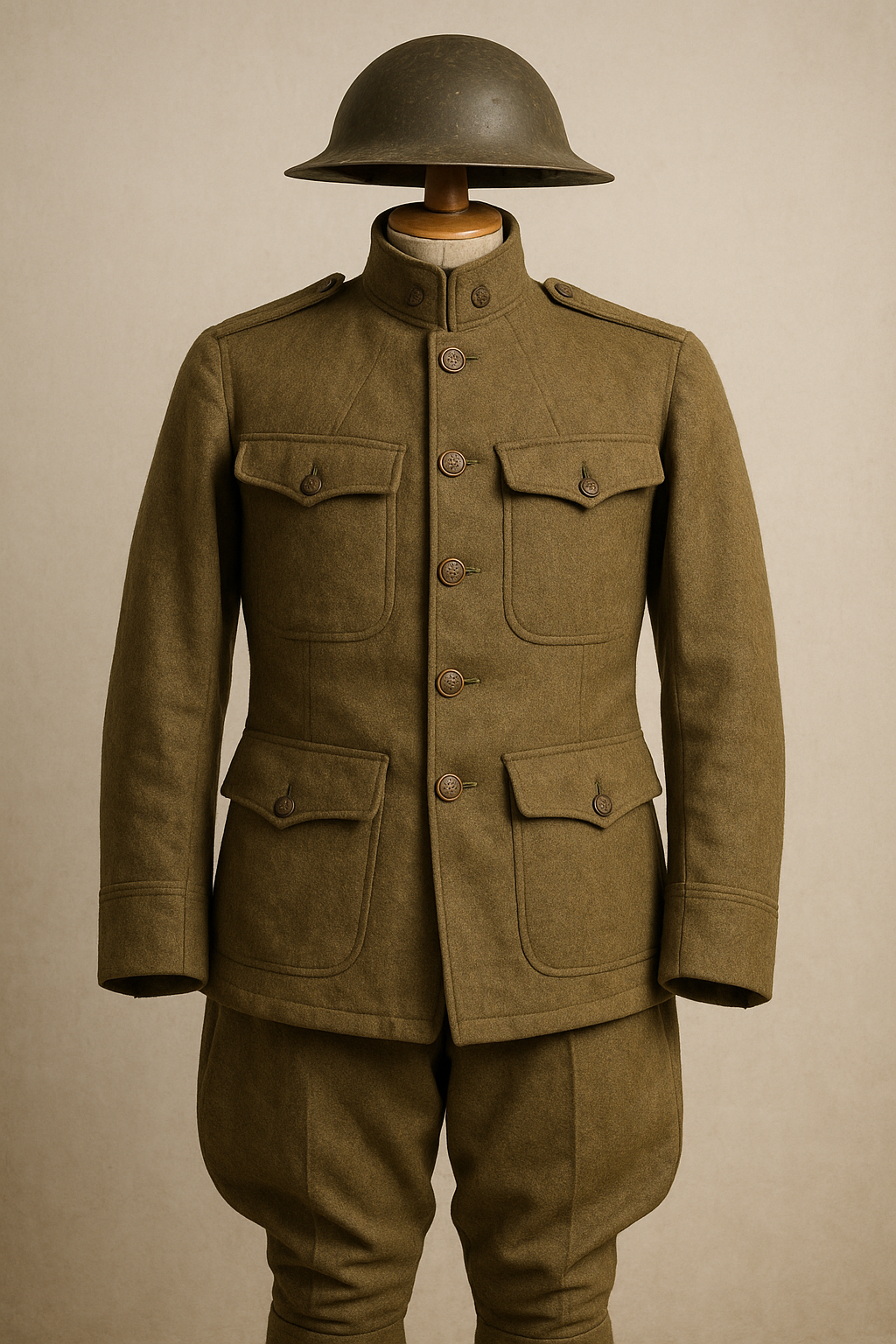
The most recognizable uniform was the M1917 service uniform, commonly worn by the American "doughboy."
Key features included:
-
Olive drab wool tunic
-
Four front pockets
-
Stand-and-fall collar
-
Wool trousers
-
Puttees or canvas leggings
The olive drab color helped soldiers blend with the terrain better than earlier bright uniforms used in earlier wars.
Wool remained the primary material because it kept heat even when damp. While not perfect, it worked better than cotton in cold environments.
Helmet and Gear Innovations
One of the most important upgrades was the M1917 steel helmet, based on the British Brodie helmet design.
According to US Army production records:
-
Over 2 million helmets were produced for American forces.
-
The steel shell protected soldiers from shrapnel and falling debris.
-
The wide brim helped shield the head from fragments coming from above.
Other gear improvements included:
-
Stronger hobnailed boots
-
Gas mask carriers
-
Cartridge belts for ammunition
-
Web equipment for tools and supplies
These upgrades made the American infantryman far better prepared for trench warfare.
Pros & Cons of US WW1 Uniforms
Pros
-
Durable olive drab wool fabric
-
Functional pocket design
-
Steel helmets improved head protection
-
Standardized production for millions of troops
Cons
-
Heavy when wet
-
Limited waterproof protection
-
Wool caused itching and discomfort
-
Boots sometimes wore out quickly in muddy trenches
Real-World Examples: Collectors' Finds and Battlefield Stories
Collectors today still discover original WW1 US uniforms and equipment.
Example 1: Pershing Officer Uniform Auction
A uniform linked to General John J. Pershing, commander of the American Expeditionary Forces, sold through Heritage Auctions for over $12,000 in a military collectibles sale. The uniform featured an olive drab tunic with AEF insignia.
Example 2: Doughboy Uniform on eBay
Original WW1 infantry tunics occasionally appear on eBay. In 2023, a 1918 US Army tunic with division patches sold for around $1,200, depending on condition and historical markings.
Example 3: Museum Collection Example
The Imperial War Museum holds several examples of American doughboy uniforms used during the final months of the war. These uniforms show clear signs of wear, including repaired sleeves and patched elbows.
These real items help historians understand how soldiers used and modified their gear during combat.
FAQs
1. What was the US WW1 soldier called?
American infantry soldiers were often called “doughboys.”
2. What material were WW1 US uniforms made from?
Most uniforms used olive drab wool, which provided warmth and durability.
3. How much did a WW1 US uniform cost?
Government records estimate the cost of a complete uniform set at roughly $30–$35 in 1918, which would equal several hundred dollars today.
4. What helmet did US soldiers wear?
The M1917 steel helmet, based on the British Brodie helmet design.
5. How many uniforms were produced in WW1?
The US Army produced over 3.5 million uniform sets for soldiers.
6. Did American soldiers use boots with nails?
Yes. Many boots used hobnails for grip in muddy terrain.
7. Why were uniforms olive drab?
The color helped camouflage soldiers and reduce visibility in combat.
Conclusion
US World War I uniforms tell a story about adaptation. When American troops entered the war in 1917, their clothing was not fully prepared for trench warfare. Mud, gas attacks, and long marches exposed weaknesses in early designs.
But the army adapted quickly. The olive drab wool uniform, M1917 helmet, improved boots, and better field gear helped American soldiers operate more effectively on the battlefield.
For collectors today, these uniforms represent more than military clothing. They are physical reminders of the soldiers who fought in the trenches of France.
If you plan to collect WW1 uniforms, focus on verified markings, division patches, and documented provenance. Museums and auction houses remain good references for identifying authentic items.
