Introduction: A Story from the Trenches
Imagine standing in a trench near the Somme in 1916. The ground is wet. Artillery shells hit the field ahead. A British officer checks his watch and tightens the leather belt around his waist. Around him, soldiers adjust their puttees and helmets.
Uniforms were not decoration. They were tools for survival.
Early in the war, the British Army used khaki service dress that had already been introduced in 1902. The goal was simple. Hide soldiers better than the bright red coats used in the 19th century. Khaki worked well in mud and fields. But trench warfare brought new problems like gas attacks, constant rain, and heavy equipment.
British casualties were massive. Around 900,000 British and Commonwealth soldiers died during World War I, according to British National Archives and military history records. Many challenges soldiers faced were related to battlefield conditions where clothing and equipment mattered.
Today collectors search for WW1 British officer uniforms and British soldier uniforms for sale because they represent real history. Each tunic, helmet, or belt tells a story of service in one of the largest conflicts in modern history.
Officer Uniform Basics
British officers had uniforms similar to regular soldiers but with key differences.
Officers often purchased their own gear instead of receiving full standard issue kits. That meant better tailoring and higher quality materials.
Typical officer uniform parts included:
-
Khaki service dress tunic
-
Breeches
-
Sam Browne leather belt
-
Boots
-
Puttees or leather gaiters
-
Officer cap or Brodie helmet
-
Rank insignia on shoulder straps
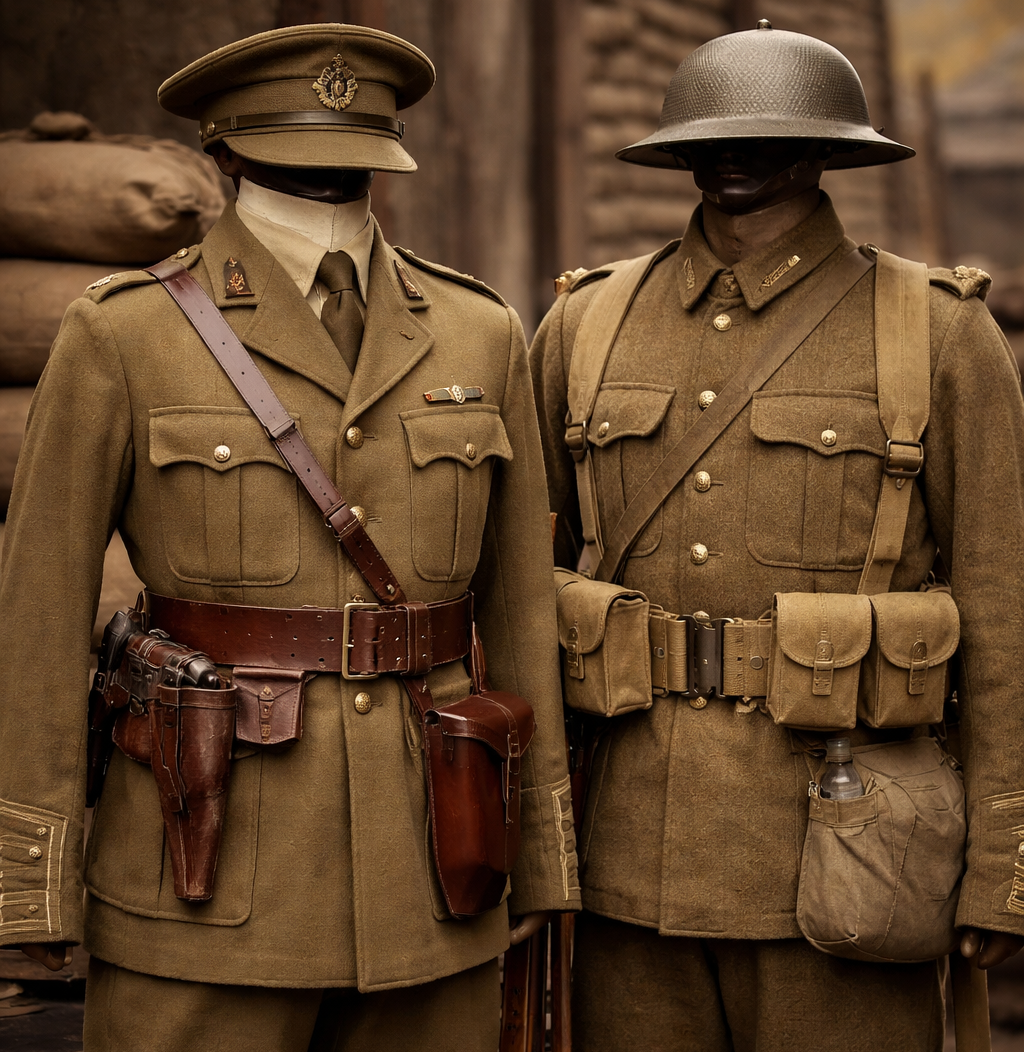
According to the Imperial War Museum archives, officer tunics were usually made from wool serge cloth weighing around 18 to 20 ounces per square yard. The fabric had four front pockets and brass buttons with regimental insignia.
Officers also wore rank symbols called “pips” on their shoulder straps. These small metal stars showed rank levels such as lieutenant or captain.
Collectors today value officer uniforms more than standard soldier sets because they were privately tailored and often survived in better condition.
Complete officer sets can sell from $1500 to $5000 depending on authenticity and regimental markings.
Khaki Service Dress
The khaki service dress became the standard British Army uniform during WW1.
It replaced older bright uniforms because khaki blended into natural environments like fields and dirt roads.
The service dress tunic had these features:
-
Four front pockets with button flaps
-
Stand-and-fall collar
-
Brass buttons
-
Shoulder straps for rank badges
-
Wool fabric construction
The tunic length was usually around 30 to 32 inches depending on soldier height.
Breeches were designed to fit tightly below the knee so soldiers could wrap puttees around their lower legs. These cloth leg wraps were about 9 feet long and 3 inches wide.
The full uniform worked like a tough outdoor work outfit. It kept soldiers warm and allowed movement while carrying equipment.
For collectors searching British soldier uniforms for sale, the khaki service dress tunic is usually the first piece to look for.
Sam Browne Belt Details
One of the most recognizable items in a WW1 British officer uniform is the Sam Browne belt.
This leather belt was designed in the late 19th century by British officer Sam Browne. The belt had a cross strap running from shoulder to waist. This design helped support swords and pistols.
During WW1, officers used the belt to carry:
-
Webley revolvers
-
Map cases
-
Binoculars
-
Field equipment
Typical belt specs included:
-
Brown leather construction
-
Waist belt width around 2 inches
-
Shoulder strap width about 1 inch
-
Brass buckles and hooks
Original WW1 Sam Browne belts often sell between $200 and $900 depending on condition.
Collectors should check leather aging, stitching style, and brass hardware for authenticity.
Soldier Uniform Basics
The regular British infantry soldier, often called a “Tommy,” wore simpler gear than officers.
Standard soldier uniform components included:
-
Khaki wool tunic
-
Wool breeches
-
Puttees
-
Ammunition webbing
-
Boots
-
Brodie helmet after 1916
The Brodie helmet became one of the most famous pieces of WW1 gear.
Introduced in 1916, it was made from manganese steel and designed to protect soldiers from falling shrapnel.
According to British production records, over 7.5 million Brodie helmets were produced during WW1.
Today helmets are common items listed as WW1 British soldier uniform for sale on collector markets.
Original helmets can sell between $150 and $800, depending on paint condition and liner survival.
Pros and Cons of WW1 British Uniforms
Like any equipment, these uniforms had strengths and weaknesses.
Pros
Good camouflage
Khaki blended well with mud and dirt compared to earlier bright uniforms.
Durable materials
Wool serge cloth handled cold weather and rough trench conditions.
Practical storage
Four large pockets allowed soldiers to carry small gear.
Flexible design
Breeches and puttees allowed easier walking in trenches.
Cons
Heavy when wet
Wool absorbed water easily. Soldiers often complained about soaked clothing in trench rain.
Limited protection
Uniforms offered no real protection from bullets or shrapnel.
Slow drying
Wet wool could take many hours to dry in cold conditions.
Despite these issues, the uniform still performed well enough to remain standard throughout the war.
Real-World Examples from the Battlefield
Case Study 1: Battle of the Somme (1916)
During the Battle of the Somme in 1916, British troops attacked German trenches across open fields.
Many soldiers wore standard khaki service dress with puttees and early Brodie helmets.
According to military records, over 57,000 British casualties occurred on the first day alone.
Photos from Imperial War Museum collections show soldiers wearing khaki tunics with ammunition webbing over the chest.
The Brodie helmet introduced that year helped reduce head injuries caused by falling shell fragments.
Case Study 2: Passchendaele (1917)
The Battle of Passchendaele in Belgium became known for extreme mud conditions.
Uniforms were constantly soaked.
Soldiers reported boots sinking into mud up to ankle height.
Puttees helped keep mud out of boots and protected lower legs.
Many surviving uniforms from this battle show heavy wear and staining, which collectors often see as proof of real battlefield use.
Case Study 3: British Officers in the Trenches
Officers at the front lines carried maps, revolvers, and binoculars using their Sam Browne belts.
In trench photos from 1915 to 1918, officers are easily identified by the cross shoulder strap of the belt.
Because officers purchased their uniforms privately, many surviving pieces show custom tailoring and better stitching quality.
Collectors today often search auction sites for WW1 British officer uniforms for sale specifically because of these details.
How Much Do WW1 British Uniforms Cost Today?
Prices depend heavily on authenticity and condition.
Typical collector prices:
-
Original tunic: $400 – $1200
-
Sam Browne belt: $200 – $900
-
Brodie helmet: $150 – $800
-
Full officer uniform set: $1500 – $5000
Many buyers find items on platforms like eBay, militaria auctions, or collector forums.
Replica uniforms are cheaper and usually cost $200 – $500, which makes them popular for reenactments.
Image alt-text idea:
“WW1 British officer uniform tunic for sale with Sam Browne belt”
FAQs About Buying WW1 British Uniforms
How can I spot fake WW1 uniforms on eBay?
Check fabric age, stitching patterns, and brass buttons. Originals often show natural wear and wool aging.
Are replica uniforms worth buying?
Yes. Replicas are useful for reenactments or display when original items are too expensive.
What is the most valuable WW1 British uniform item?
Complete officer uniforms with Sam Browne belts and regimental insignia often bring the highest prices.
Where can collectors buy authentic WW1 gear?
Common sources include militaria auctions, collector forums, antique stores, and online marketplaces.
How should old uniforms be stored?
Store them in dry rooms with low humidity. Avoid plastic bags because wool fabric needs airflow.
Why are WW1 uniforms so popular with collectors?
They represent real battlefield history and the massive global conflict of 1914–1918.
Conclusion: Why These Uniforms Still Matter Today
WW1 British uniforms were built for harsh conditions.
Soldiers needed clothing that worked in mud, cold, and long trench deployments. Khaki service dress, puttees, and Brodie helmets helped soldiers operate in the difficult environment of trench warfare.
Today these uniforms have become historical artifacts. Museums display them. Collectors search for them. Reenactors wear replicas to recreate historical events.
Whether you are looking for a WW1 British officer uniform or a British soldier uniform for sale, the key is understanding the details.
Look for original wool fabric, correct brass buttons, authentic leather belts, and proper stitching. Study historical photos and museum records before buying.
Each uniform carries a story from the trenches of World War I. And when you hold one in your hands, you are holding a piece of history from one of the most important wars of the 20th century.