Introduction – The Collector’s Problem
Are you a history buff or militaria collector hunting for an authentic WW1 British officer uniform? You’re not alone. Many collectors want original pieces from the First World War. But there’s a real problem: finding genuine uniforms isn’t easy.
Original uniforms from 1914–1918 are rare. Most pieces live in museums, private collections, or long-closed trunk storage. And when they do appear online—on eBay, auction sites, or militaria dealers—it’s hard to know what’s real and what’s a replica.
You might ask:
-
How can I tell if a uniform is truly WW1 era?
-
Why do prices vary so much?
-
Where can I buy with confidence?
In this guide, we’ll walk through these challenges, show real auction examples, explain key uniform details from history, and give you solid buying tips.
What Made WW1 British Officer Uniforms Unique?
Key Features
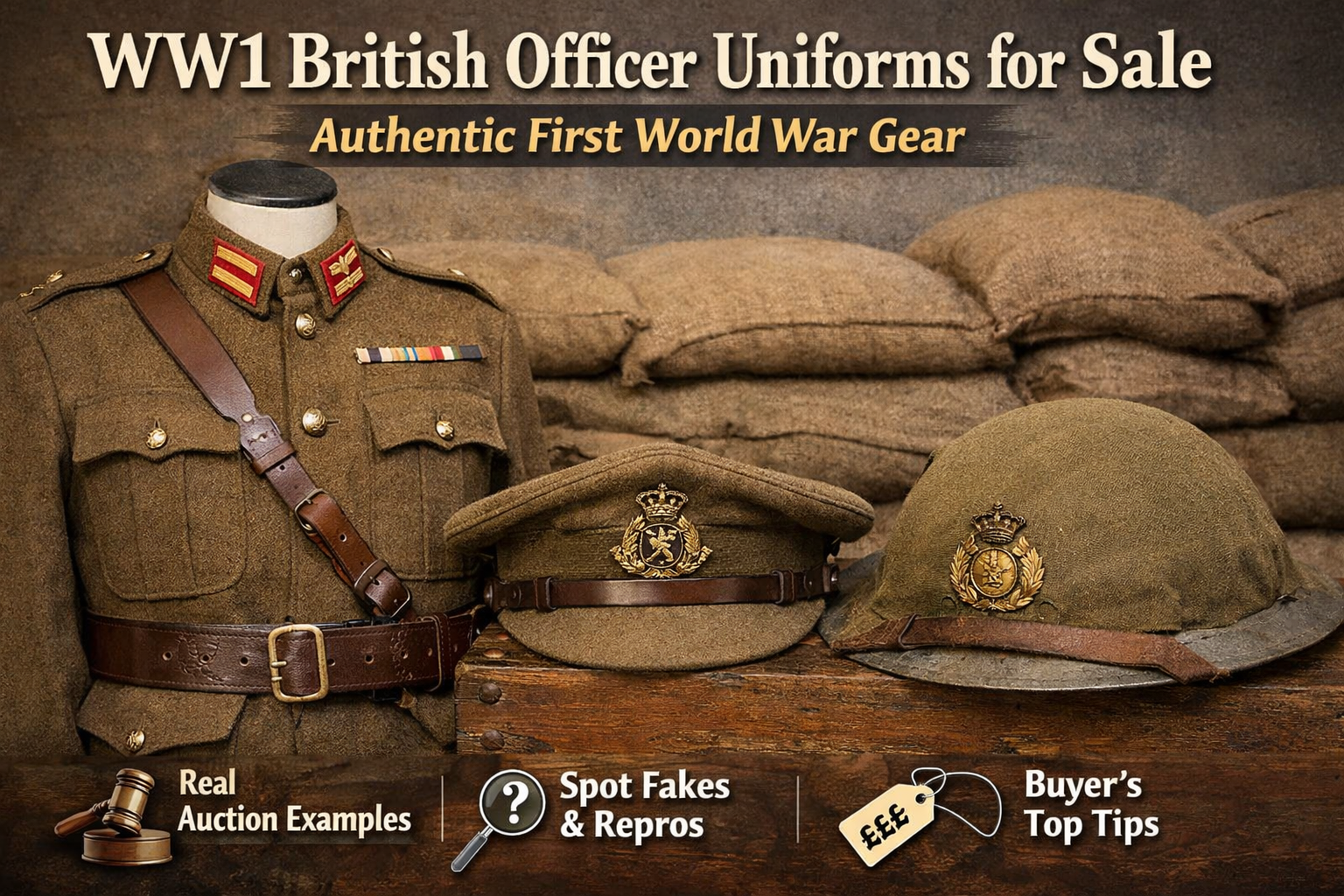
WW1 British officer uniforms had specific elements that distinguish them from post-war gear, reproductions, and other armies’ uniforms. These features are what collectors look for when verifying authenticity.
1. Khaki Service Dress
Officers in the British Army wore a khaki wool service dress instead of the red coats used in earlier wars. This was a practical shift, first widely adopted in the early 1900s and used throughout WW1. The wool serge was cut to fit and dyed a brown-green khaki for camouflage and ease of seam repairs.
2. Tunic Details
The officer’s tunic had four main pockets and often long skirts compared to other ranks. The lapels were open (not buttoned to the neck, unlike standard enlisted tunics). These uniforms also had shoulder straps and pleated pockets designed for field use.
3. Sam Browne Belt
One of the strongest visual cues of an officer’s kit was the Sam Browne belt. It’s a leather belt worn with a supporting shoulder strap that allowed swords or pistols to hang securely. Officers traditionally bought these themselves, so the leather quality and stitching may vary.
4. Gorget Patches
Staff officers often wore gorget patches on their collars to show branch and role. Different colours could mean different duties (e.g., scarlet for general staff). Being able to identify these from a photo helps prove historic authenticity.
5. Peaked Caps and Badges
Officers wore peaked caps made from similar khaki cloth, with brass or gilt metal regimental badges and leather chin straps. Variations in badge design can help date a piece or tie it to a specific unit.
Together, these features help you spot originals and spot fakes. But the real challenge is applying this knowledge when you see a listing.
Real-World Examples: Uniforms That Sold Big
Here are some real uniforms that came up for sale in recent years. These help show how authentic British WW1 officer uniforms look in the wild—and what they sold for.
Case Study 1 – Staff Colonels Uniform (Auction, 2025)
In September 2025, a WW1 British Staff Colonels uniform was offered at auction by C & T Auctioneers in Kent, UK. The set included:
-
A four-pocket service dress tunic with regimental brass buttons
-
Gorget collar patches and shoulder rank insignia
-
A medal ribbon bar for the Military Cross
-
A period-correct peaked cap with leather sweatband
-
An apparently original Sam Browne belt with cross strap
-
Tailor’s label inside with owner’s name and date (1917)
Why this matters: the presence of an internal tailor label and period belt supports authenticity. Auction houses rely on historians or specialists to vet items before listing them. These kinds of details are what separate real uniforms from cheap fakes.
Case Study 2 – Staff Colonel Tunic with Helmet (Same Auction)
At the same sale, another lot paired the tunic with a British Brodie steel helmet with the original khaki cloth trench cover and bullion embroidered insignia. The helmet was fitted with the correct oilskin liner and chinstrap.
When uniforms come with associated gear like helmets, belts, and badges, this boosts authenticity and often sale price.
Case Study 3 – Uniform Ensemble Pricing
Auction price databases show that authentic WW1 uniforms can fetch several hundred to several thousand pounds. For example:
-
A WW1 British Officer 1917 pattern uniform, complete with Sam Browne belt and cap, sold for ~£700.
-
A WW1 British uniform ensemble with medals and belt achieved ~£920.
Prices reflect rarity, condition, and documentation. Uniforms with period medal ribbons, confirmed provenance, or named owners often draw higher bids.
Pros of Collecting These Uniforms
Collecting authentic WW1 British officer uniforms can be rewarding. Here’s why:
1. Direct Link to History
Owning a uniform from 1914–1918 is like holding a piece of the past. Materials, tailoring, badges—they all tell a story of the wearer and their regiment.
2. Educational Value
Displaying these uniforms can educate others on military history, the evolution of uniforms, and the reality of First World War conditions.
3. Potential Investment
Well-documented uniforms can hold or increase in value over time. Collectors and museums sometimes pay premiums for verified pieces.
4. Community Recognition
Being part of the militaria collecting community means access to experts who can help verify and preserve your collection.
Cons and Pitfalls to Dodge
But there are real risks:
1. Fakes and Reproductions
Many uniforms sold online are modern reproductions dressed up with old buttons. Some sellers don’t make clear what’s original and what’s reproduction. Without careful inspection, you can pay high prices for a fake.
2. Price Variability
Prices can swing wildly. A modest tunic might sell for a few hundred pounds, while a full officer group with documentation can go for thousands.
3. Condition Issues
WW1 uniforms often show wear—moth holes, faded fabric, missing insignia. Condition affects value. That’s normal for pieces over 100 years old, but it must be factored in.
4. Legal and Ethical Concerns
Always confirm that the uniform was legally acquired and not stolen or looted. Some countries have restrictions on militaria export.
5. Confusing Listings
Online marketplaces sometimes mix originals and replicas. Descriptions may be vague. Always ask for close-up photos of details (inside labels, stitching, buttons).
Where to Buy WW1 British Uniforms Today
Here are places to search for authentic WW1 British officer uniforms—with tips to help you judge quality.
Top Tips for Buying
1. Auction Houses
Specialist auction houses (like C & T Auctioneers) often vet items before listing. Look at past lots and hammer prices. Auction catalogs usually provide measurements and provenance.
2. Military Antiques Dealers
Reputable dealers will know uniform specs and offer certificates of authenticity. Ask what parts are original.
3. Online Marketplaces (Be Careful)
Sites like eBay might have uniforms, but descriptions can be poor. Always ask:
-
What is original versus reproduction?
-
Can you see maker’s marks or internal labels?
-
Are buttons and insignia correct for date and regiment?
4. Expert Communities
Forums and groups for militaria collectors can help you identify items before purchase. Post photos and ask experienced members to weigh in.
5. Documentation Matters
Original paperwork, medals, or service records linked to a uniform significantly boost authenticity.
FAQs
1. How do I tell if a WW1 officer uniform is real?
Check for correct materials (khaki wool), period details like Sam Browne belt, correct badge patterns, and internal labels or maker marks. Compare to official WW1 specs.
2. Why are Sam Browne belts important?
Officers wore them in WW1. They were privately purchased, not issued, so belt quality and details help verify authenticity.
3. Can replicas have value?
Replicas have value for display or reenactment, but authentic originals are worth more to collectors.
4. What’s a common price range?
Smaller items may sell for £300–£700, complete uniforms with documentation can sell for £900+ or more.
5. What should I avoid when buying online?
Avoid listings without close photos, details on original parts, or any provenance.
6. Are there laws about owning these uniforms?
Check local laws. Some countries restrict militaria export or import.
Conclusion – Solve the Problem, Buy with Confidence
We started with the challenge: finding authentic WW1 British officer uniforms is hard. There are fakes, confusing listings, and a lot of uncertainty.
But it doesn’t have to be guesswork. Now you know:
-
What uniform features matter historically
-
Real pricing examples from recent auctions
-
Where and how to buy with confidence
With the right questions and a careful eye, you can add a genuine piece of First World War history to your collection.
Ready to look for your first authentic WW1 British officer uniform? Start with auction catalogs and militaria dealer listings. And when you spot something promising, ask for close-up photos of the belt, badges, and internal labels.
