Introduction: The Problem of Trench Warfare
Picture this: French soldiers huddled in muddy trenches, freezing in the cold, drenched by endless rain. The constant threat of enemy fire and the mental strain of warfare left many troops in dire conditions. While the horrors of trench warfare are often remembered for the battles, it was the daily struggle of survival that took a toll. One of the primary challenges for the soldiers was their uniform, which, despite being designed for comfort and protection, often failed to meet the harsh realities of the battlefield.
With over 1.4 million French soldiers lost during World War I, it’s clear that every element of their combat experience, including the uniforms, played a role in their survival—or their tragic demise. The French military’s uniform design had its strengths, but it also came with significant flaws. In this post, we’ll dive into the design, use, and impact of the French uniforms in WWI, focusing particularly on the iconic French greatcoat, and examine how these garments helped—and sometimes failed—their wearers.
The Problem: Trench Warfare’s Toll on French Troops
World War I was brutal for all involved, but French soldiers faced particularly harsh conditions. By the end of the war, around 8 million French soldiers had been mobilized, and of these, over 1.4 million would perish. The toll wasn’t just from battle—many died from disease, malnutrition, or exhaustion, exacerbated by the horrific trench warfare conditions. The trenches themselves were cold, wet, and muddy, making it impossible for soldiers to maintain any comfort or dryness, no matter how hard they tried. The uniform was supposed to provide protection against these elements, but as we’ll see, it was often more hindrance than help.
The most significant issue that soldiers faced was the inability to stay warm and dry during long, grueling stints in the trenches. The French military’s greatcoat, a key part of the uniform, was supposed to provide warmth and shelter from the cold. However, it was not without its drawbacks. While it offered some protection against the elements, it also contributed to the soldiers’ discomfort and struggles.
Agitating Factors: Uniform Shortcomings Exposed
The Greatcoat: A Case of Good Intentions, Poor Execution
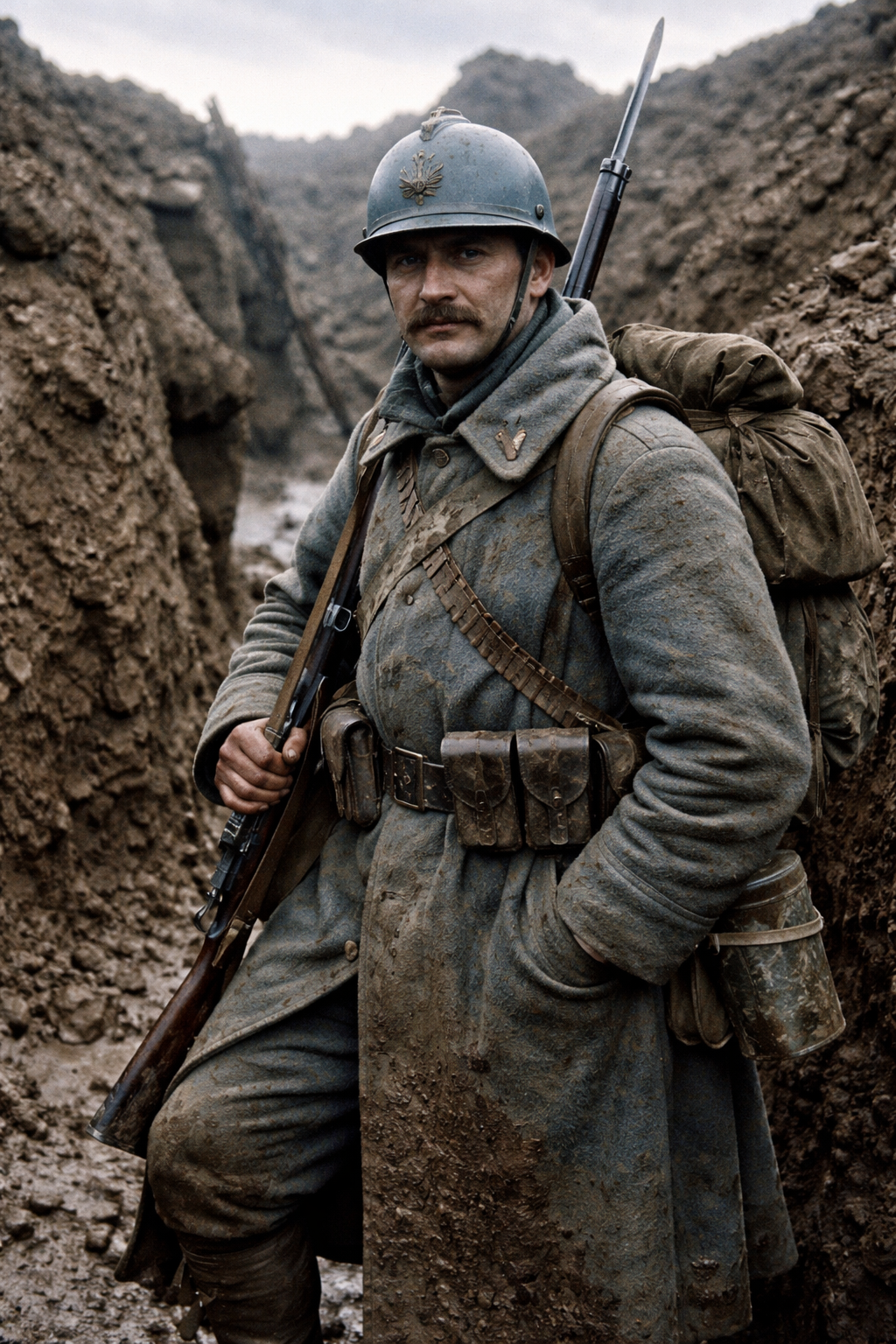
One of the central components of the French soldier’s uniform was the M1912 greatcoat. Designed to be knee-length and made from a wool blend, the greatcoat was intended to protect the wearer from the cold, damp conditions of the trenches. It weighed between 1.5 to 2 kilograms (3.3 to 4.4 pounds), providing some insulation for soldiers enduring freezing temperatures.
However, the greatcoat came with serious shortcomings. The most glaring issue was its tendency to absorb and retain mud and water, making it even heavier and more uncomfortable in the wet trenches. Soldiers often found themselves struggling with the added weight and the coat’s inability to dry quickly. In a world of constant rain, mud, and poor hygiene, the wool greatcoat, while providing warmth, quickly became a liability.
Furthermore, the coat’s length, though protective against the cold, hindered movement in the tight and cramped trenches. Soldiers needed to be agile and nimble, and the greatcoat sometimes limited their mobility, particularly when they needed to quickly respond to attacks or move to safer positions.
The Solution: Key Features of WW1 French Uniforms
Despite the setbacks, the French uniform was designed with several features that were vital in the harsh environment of the trenches. While some of these elements worked well, others, like the greatcoat, faced harsh criticism.
Horizon Blue Fabric and Design Basics
One of the standout features of the French uniform was its distinctive color—Horizon Blue. Introduced in 1915, this shade of blue-gray was designed specifically for the French army to blend in with the color of the sky and landscape. The goal was to provide some level of camouflage, though it was not as effective as hoped.
The uniform included a short jacket, blue trousers, and a distinctive helmet (the Adrian helmet), which we'll discuss later. The Horizon Blue fabric was a significant step away from the traditional red and blue uniforms, which were not suited for modern warfare. The move to Horizon Blue marked a shift toward more practical, battlefield-oriented design, though it was still limited in terms of camouflage effectiveness.
The Greatcoat: Pros, Cons, and Real-World Use
Let’s take a deeper look at the French greatcoat and break down its pros and cons:
Pros:
-
Warmth: The wool blend offered much-needed insulation against the cold, which was essential for surviving the freezing trench environment.
-
Length: The knee-length design helped protect the soldier's lower body from the elements.
-
Durability: Despite the issues with water retention, the greatcoat was built to last and could withstand the harsh wear and tear of trench warfare.
Cons:
-
Mud Retention: As mentioned, the greatcoat’s tendency to absorb mud and water made it heavy and uncomfortable.
-
Limited Mobility: The greatcoat’s bulk and length hindered soldiers’ ability to move quickly, which was a significant disadvantage in the confined spaces of the trench.
-
Slow Drying: The wool didn’t dry quickly, and soldiers often found themselves stuck with wet coats for days on end.
Despite these flaws, the greatcoat remained a crucial part of the French soldier's uniform, offering some protection, but ultimately contributing to the soldiers' discomfort.
Features Breakdown: Key Elements of the French Uniform
Here are 8 key features of the French WWI uniform:
-
Adrian Helmet: The Adrian helmet, introduced in 1915, was one of the first steel helmets in modern warfare. It provided much-needed head protection, reducing casualties from shellfire and shrapnel.
-
Horizon Blue Uniform: A distinctive blue-gray fabric designed for partial camouflage, making it less conspicuous in the trenches.
-
Puttees: Worn around the lower legs to protect against mud and cold, though they were often difficult to keep dry.
-
M1912 Greatcoat: As discussed, the heavy wool coat provided warmth but became a burden in wet conditions.
-
Leather Boots: Provided essential protection against the elements and offered durability for long marches.
-
Tunic and Trousers: The tunic was short and practical, designed to be worn with the distinctive blue trousers.
-
Canteen and Gas Mask: Essential survival gear for soldiers in the trenches, used to carry water and protect against chemical warfare.
-
Belt and Pouches: Used to carry essential supplies like ammunition, food, and personal items.
Pros & Cons Table: Comparing French, British, and German Uniforms
| Feature | French Uniform | British Uniform | German Uniform |
|---|---|---|---|
| Helmet | Adrian Helmet | Brodie Helmet | Pickelhaube Helmet |
| Uniform Color | Horizon Blue | Khaki | Field Grey |
| Greatcoat | M1912 Wool Blend | Wool Blend | Wool Blend |
| Camouflage | Limited Camouflage | Effective Camouflage | Effective Camouflage |
| Comfort | Uncomfortable in Mud | Fairly Comfortable | Fairly Comfortable |
| Protection | Good Cold Weather Protection | Good Cold Weather Protection | Good Cold Weather Protection |
Real-World Examples: Survival in the Greatcoat
One of the most poignant examples of the greatcoat’s importance comes from the Battle of the Somme. In this brutal conflict, French soldiers often had to wear their greatcoats for days on end, enduring the cold and rain. However, the mud became so severe that many soldiers were weighed down by the soaked coats, making it harder to move quickly. Yet, there were instances where the greatcoat helped soldiers survive long enough to retreat from the front lines, providing the warmth and protection they needed in dire conditions.
FAQs
-
How many French soldiers died in WW1?
-
Over 1.4 million French soldiers died during World War I.
-
-
What was the M1912 greatcoat made from?
-
The M1912 greatcoat was made from a wool blend designed for cold weather protection.
-
-
Did the French uniforms provide camouflage?
-
The Horizon Blue uniform was designed for camouflage, but it was not as effective as hoped.
-
-
Why was the French greatcoat problematic in the trenches?
-
The greatcoat absorbed mud and water, becoming heavy and difficult to move in.
-
-
What was the purpose of the Adrian helmet?
-
The Adrian helmet was designed to protect the head from shrapnel and shellfire, reducing battlefield casualties.
-
Conclusion: A Reflection on Uniforms in War
While the French uniforms in World War I had their flaws, they were still a critical part of the soldiers' survival. The greatcoat, despite its limitations, provided some warmth and protection in the brutal trench conditions. As we’ve seen, the French military’s uniform design evolved throughout the war, but the harsh realities of warfare often outstripped even the best-designed gear.
The next time you read about the war or view historical photos of French soldiers, take a moment to consider the impact of their uniforms—how a coat designed for survival sometimes became a symbol of the hardships they endured.
