US Military Uniforms in World War I and World War II
Military uniforms are more than just clothing—they're vital pieces of equipment that protect soldiers and define the strength of a fighting force. From World War I (WWI) to World War II (WWII), the evolution of US military uniforms reflected the changing nature of warfare, with new designs, fabrics, and features aimed at improving comfort, protection, and functionality. This blog post dives into the challenges soldiers faced due to their uniforms and how those problems led to key breakthroughs in military gear during WWII.
Early Challenges: Uniforms Before the World Wars
Before World War I, military uniforms were a reflection of tradition and style more than practicality. Uniforms were often made from heavy wool, designed for ceremonial use rather than combat. However, by the time WWI began, the nature of warfare had drastically changed with the advent of trench warfare, rapid movements, and the constant threat of chemical weapons. The need for functional, durable, and protective uniforms became evident.
World War I US Uniforms: What Soldiers Wore
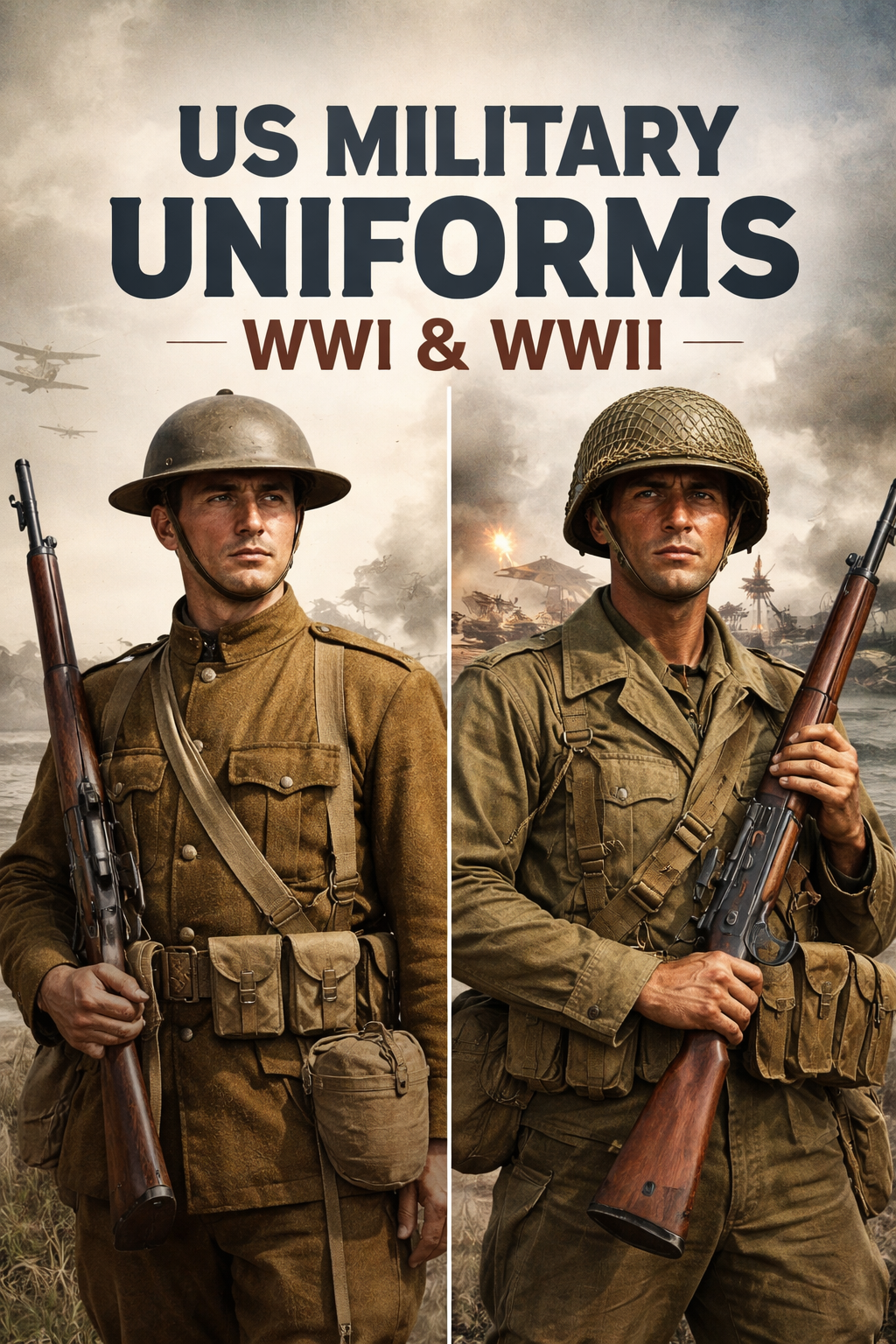
In WWI, the United States Army initially relied on the classic woolen "M1912" uniform, which was worn by both officers and enlisted soldiers. It featured a dark olive drab color, which was considered practical at the time. However, the fabric was often too heavy for the grueling conditions on the battlefield, especially in the trenches. The soldiers' uniforms were prone to retaining moisture, which increased the risk of trench foot and other illnesses.
Soldiers also wore a "Doughboy" helmet (a rounded steel helmet), which provided some protection against shrapnel but was a significant departure from earlier designs. While it was an improvement over soft caps, it still wasn't enough to protect soldiers from all types of head injuries.
The uniforms also lacked the level of comfort that modern soldiers require. The woolen fabric, while warm, was heavy and stiff, and the boots were prone to causing blisters. The standard-issue uniform was a major challenge for soldiers, many of whom found it uncomfortable and ill-suited for the harsh conditions of the war.
World War II Breakthroughs
By the time the United States entered World War II, military leaders recognized that their soldiers needed uniforms that were not only durable and protective but also designed to be practical for fast-moving combat. The experience of WWI had highlighted the shortcomings of earlier uniforms, and the United States began investing in new designs, materials, and features for their combat gear.
Iconic WWII Designs and Features
The uniforms worn by US soldiers during WWII were drastically different from those in WWI. The major breakthrough came with the introduction of the M1941 Field Jacket, which replaced the heavier woolen coats used in WWI. The M1941 jacket was made of lighter, more breathable fabric, which helped soldiers maintain better mobility and comfort in the field.
Additionally, the M1943 uniform, introduced later in the war, featured improved fabrics and better-fitting designs, making it a major step forward in terms of comfort and practicality. This uniform was made of a combination of wool, cotton, and synthetic fabrics, which provided the necessary durability while ensuring soldiers didn't overheat or suffer from wetness as they had in WWI.
Key Features and Materials
One of the major innovations of WWII uniforms was the introduction of the "Herringbone Twill" fabric. This fabric was lightweight, durable, and water-resistant, making it ideal for use in the harsh environments of both the European and Pacific theaters. The uniform's design incorporated a more practical cut that allowed soldiers to move more freely, a significant improvement over the heavy, restrictive designs of the past.
The M1943 uniform also included the introduction of multiple pockets for carrying essential gear and ammunition, which added to the functionality of the uniform. These were paired with durable boots made of leather and rubber, which were designed to withstand the rough terrain soldiers faced.
Pros and Cons of WWII Uniforms
While the WWII US military uniforms were groundbreaking, they weren't perfect. The M1943 uniform was a significant improvement over previous designs, but it still had some drawbacks. For instance, the early versions of the M1943 field jacket were prone to fraying, especially around the cuffs and pockets. Additionally, the new helmets, while offering greater protection, were still not as effective against certain types of shrapnel.
On the other hand, the lighter, more breathable materials used in WWII uniforms were a major boon for soldiers, especially during extended campaigns in hot climates like those in the Pacific. The uniform's fit was also better suited for the physical demands of combat, and the improvements to the design of the helmet ensured better protection than the older "Doughboy" version.
Real-World Examples and Case Studies
D-Day: A Critical Test of Uniforms
The uniforms worn during the D-Day invasion of Normandy in June 1944 were a key real-world example of how US military uniforms had evolved by WWII. The M1943 field jacket, along with the M1 helmet, became iconic symbols of the American soldier. These uniforms, along with the durable boots and other gear, were crucial in helping soldiers survive the grueling conditions they faced on the beaches.
While the uniform performed much better than those used in WWI, there were still challenges. For instance, the humidity and saltwater from the sea caused some of the gear to deteriorate quickly, and the heavy combat load made movement difficult for some soldiers. However, overall, the improved design of the uniform contributed to the success of the operation.
Pacific Theater: Jungle Warfare and Heat
In the Pacific theater, US soldiers faced entirely different challenges. The hot, humid jungles of the islands meant that uniforms had to be lightweight and moisture-resistant. The M1941 jacket and trousers were effective in providing a breathable solution to this problem. However, soldiers still had to contend with the jungle environment, where exposure to heat, humidity, and rain created additional wear-and-tear on their gear. Nonetheless, these uniforms allowed for greater mobility and comfort than the heavy woolen gear of WWI.
FAQs
1. Why were US military uniforms so different in WWI and WWII?
In WWII, the US military recognized the need for more practical and functional uniforms due to the lessons learned from WWI. The harsh conditions of trench warfare in WWI highlighted the shortcomings of the heavy, woolen uniforms.
2. What were the main innovations in WWII military uniforms?
The key innovations in WWII uniforms included the use of lightweight, breathable materials, better fitting designs, and multiple pockets for carrying gear. The M1943 uniform was especially groundbreaking in terms of its design and functionality.
3. How did the M1943 uniform perform in combat?
The M1943 uniform was much more practical and comfortable than earlier designs. It performed well in various theaters, including Europe and the Pacific, but it was not without its issues, such as fraying in some areas.
4. What materials were used in WWII uniforms?
WWII uniforms were made from a mix of wool, cotton, and synthetic fabrics, offering better durability and comfort than the earlier woolen uniforms used in WWI.
5. Were there any drawbacks to the new WWII uniforms?
Despite improvements in comfort and durability, some issues persisted, such as fraying of the uniform material and the difficulty of managing gear in particularly wet or humid conditions.
6. How did the design of the M1943 uniform differ from WWI designs?
The M1943 uniform featured more practical cuts and lighter, more breathable fabrics, designed for increased mobility and comfort in the field. It also introduced additional pockets for gear and better protection in combat.
Conclusion
The evolution of US military uniforms from World War I to World War II represents a significant shift in how soldiers were equipped to face the challenges of modern warfare. From the heavy woolen uniforms of WWI to the lightweight, functional gear of WWII, the changes in uniform design directly impacted soldiers' survival and performance on the battlefield. These innovations, while not perfect, were a crucial part of the American military's ability to adapt and overcome the challenges of both world wars.
As we reflect on these changes, it's clear that military uniforms, though often overlooked, played a key role in shaping the success of US forces during these two world-changing conflicts. The next time you see a WWII veteran’s uniform, remember the comfort, protection, and functionality it provided—thanks to the lessons learned from the hardships of WWI.
