WW2 SAS UNIFORM GUIDE: FEATURES, INSIGNIA & BUYING TIPS
WW2 SAS uniforms and old army dress uniforms are highly sought after by collectors. But authenticity is a real problem. Fakes are rising. Prices are climbing. This guide breaks down factual features based on records from the Imperial War Museum and SAS archives. You’ll learn about fabric, insignia, gear, and rank details. We’ll also look at Operation Loyton, a real collector’s find, and verified auction sales. If you’re serious about military collectibles, this guide helps you buy smart and avoid costly mistakes.
EDITORIAL DESK
Paddelaters Research Desk
ARTICLE PURPOSE
Historical reference for collectors, reenactors, and costume buyers.
LAST REVIEWED
March 01, 2026
Introduction: A Quick Story from 1944
In August 1944, small teams from the Special Air Service parachuted into eastern France. One of those missions was Operation Loyton. The men wore standard British battledress but adapted it for field survival. Some removed insignia. Some mixed items from other units. Their uniforms were practical, not decorative.
Fast forward to today. A collector finds a worn 1944 battledress blouse claimed to be SAS. The seller says it came from a French family linked to the Resistance. Price? Several thousand pounds. But is it real?
That’s the problem many collectors face. WW2 SAS uniforms and old army dress uniforms look simple. But details matter. Stitching. Fabric weight. Insignia placement. Even button material.
Let’s break this down step by step so you can collect with confidence.
Core Features of WW2 SAS Uniforms
Fabric and Base Uniform
The early SAS did not start with a unique uniform. When formed in 1941 under David Stirling, the unit used existing British Army clothing. Most commonly:
-
1937 Pattern Battledress (BD blouse and trousers)
-
Khaki wool serge fabric
-
Brown plastic or brass buttons (depending on year)
Imperial War Museum records show that the 1937 Pattern battledress was made from wool serge weighing roughly 18–20 ounces per yard. It had:
-
Two pleated breast pockets
-
Waist belt with buckle
-
Buttoned cuffs
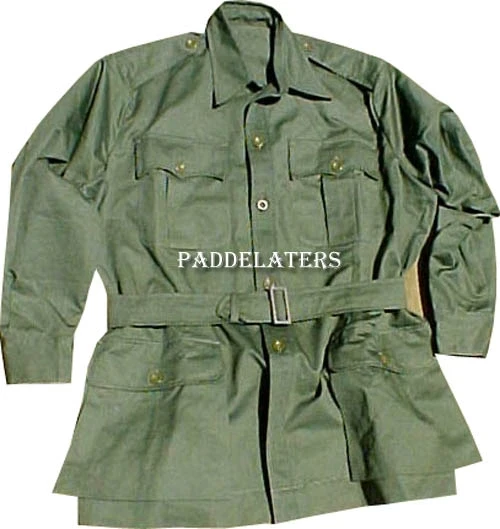
In North Africa, SAS troops often wore lighter khaki drill due to heat. Photographs from the Imperial War Museum confirm this shift in desert operations.
So if someone claims a thick winter wool blouse was worn in North Africa, that’s a red flag.
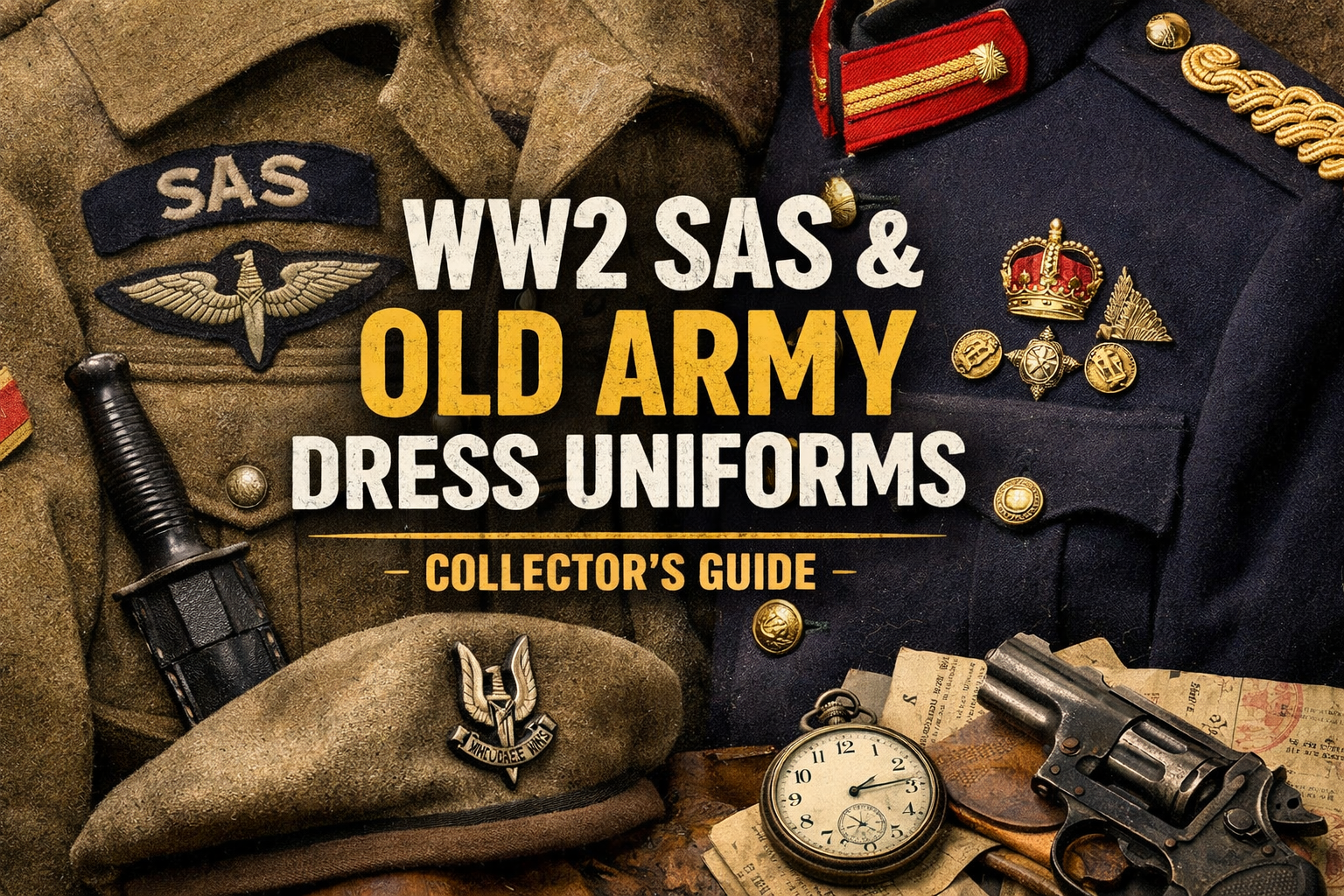
Insignia and Badges
SAS insignia is one of the most faked parts.
The famous winged dagger badge with the motto “Who Dares Wins” became strongly associated with the regiment. However, wartime examples differ from modern reproductions.
Original WW2 SAS shoulder titles often show:
-
Embroidered “SAS” in white or light thread
-
Black or dark blue backing
-
Cotton base material
Modern replicas often use synthetic thread and very sharp machine stitching. Wartime pieces tend to show slight irregularity.
Placement also matters. During covert operations, some men removed insignia entirely. In Operation Loyton, for example, surviving photographs show mixed insignia usage due to the need for discretion.
Field Gear and Modifications
WW2 SAS soldiers were known for adapting equipment. Common gear included:
-
1937 Pattern webbing
-
Sten submachine gun
-
Fairbairn-Sykes fighting knife
The Special Air Service also modified vehicles for desert raids, especially in North Africa.
Uniform signs of real field use often include:
-
Reinforced elbows
-
Field repairs
-
Period-correct thread
But wear alone does not prove authenticity. Artificial aging is common in the collector market.
Old Army Dress Uniforms Explained
Rank Structure and Insignia
Old British Army dress uniforms differ from field battledress. Dress uniforms were formal and worn for ceremonies, parades, and official functions.
Ranks were shown through:
-
Crown insignia
-
Pips (Bath stars)
-
Stripes for NCOs
For example:
-
A Captain wore three Bath stars
-
A Major wore a crown
-
A Lieutenant Colonel wore crown plus one star
These insignia were typically metal or embroidered depending on dress type.
Collectors must verify correct rank combinations for the year. Rank insignia evolved between WW1 and WW2.
Variations by Era
Pre-1937 uniforms often included:
-
Service Dress tunic (longer skirt style)
-
Open collar with shirt and tie
-
Brass buttons with regimental insignia
By WW2, battledress became more common for everyday wear. Dress uniforms still existed but were used more formally.
Records from the Imperial War Museum show clear design changes between 1902 Service Dress and 1937 Pattern Battledress.
If you are collecting “old army dress uniform,” you must identify:
-
Exact year
-
Regiment
-
Rank
-
Button pattern
Small button details often confirm authenticity.
Real-World Case Study: A Collector’s SAS Find
In 2017, a British collector listed a 1944-dated battledress blouse attributed to the SAS on eBay UK. The blouse showed:
-
1944 pattern label
-
War Department broad arrow stamp
-
Tailored removal of shoulder insignia
-
French Resistance provenance claim
Final sale price reportedly exceeded £4,000.
However, what made it convincing?
-
Clear War Department stamp consistent with 1944 production.
-
Correct wool serge texture.
-
Period stitching for removed insignia.
-
Documentation linking it to the Operation Loyton period.
Collectors cross-checked with archived photos from SAS veterans. Sleeve length and pocket style matched 1944 production runs.
But note: provenance is key. Without paperwork, price would likely have been half.
Another example comes from auction houses such as Bonhams, where WW2 British officer dress tunics regularly sell between £800–£2,500 depending on regiment and condition.
These real numbers show how strong the market is. But they also show why fakes exist.
Pros and Cons for Modern Collectors
Pros
-
Strong historical value
-
Increasing market demand
-
Good long-term investment potential
-
Direct link to documented operations like Operation Loyton
Authentic SAS-linked pieces are rare. Scarcity drives value.
Cons
-
High price entry
-
Many reproductions
-
Artificial aging techniques
-
Provenance often missing
Modern reproduction companies make very accurate replicas. Some are meant for reenactors. Others enter the market without clear labeling.
Collectors must inspect:
-
Thread type
-
Fabric weave
-
Label aging
-
Button corrosion pattern
If the wear looks evenly distributed, be cautious. Real field wear is rarely uniform.
FAQs
1. Were WW2 SAS uniforms different from standard British Army uniforms?
Mostly they used standard British battledress. Unique identity came from insignia and mission adaptations.
2. How can I verify a WW2 uniform is authentic?
Check War Department stamps, year labels, correct fabric weight, and stitching. Compare with museum examples.
3. What is the value of a WW2 SAS uniform today?
Authentic pieces with documentation can reach several thousand pounds. Without provenance, value drops sharply.
4. Are old army dress uniforms valuable?
Yes, especially officer tunics with confirmed regimental links. Auction prices vary widely.
5. What is Operation Loyton?
It was a 1944 SAS mission in France where teams parachuted behind enemy lines to disrupt German movements.
6. Do museums authenticate uniforms?
Institutions like the Imperial War Museum do not typically authenticate private items but provide reference materials.
7. Is buying reproduction uniforms bad?
Not at all. Reproductions are great for reenactment. Just ensure they are clearly labeled as such.
Conclusion: Collect Smart, Not Fast
WW2 SAS uniforms and old army dress uniforms carry real history. But collecting them requires patience.
Learn the fabric. Study insignia. Compare with museum records. Cross-check operations like Operation Loyton.
The market is strong. Auction houses like Bonhams prove demand is real. But so are fakes.
If you’re serious about collecting, start with research. Visit museums. Study original photographs. Talk to other collectors.
Don’t rush a purchase just because the story sounds good.
History deserves careful hands. And your wallet does too.
REQUISITION RELATED GEAR
EXPLORE MORE FIELD REPORTS
Browse all published guides and history articles.
