WW1 BRITISH ARMY UNIFORMS: A DEEP LOOK INTO HISTORY
Introduction
Imagine stepping into the muddy trenches of World War 1. The air is thick with smoke, and the ground is littered with debris from days of intense fighting. In such conditions, soldiers needed uniforms that could withstand the harsh environment, keep them comfortable, and, most importantly, help them perform their duties effectively. The British Army uniform, designed during the early years of the 20th century, played a crucial role in keeping soldiers prepared for battle.
From the iconic Brodie helmet to the wool serge tunic, each component of the uniform had a purpose, carefully considered for function over fashion. These uniforms have since become a focal point for collectors and historical reenactors, allowing us to step back in time and understand the grit and resilience of soldiers during one of history’s most devastating wars.
Features of the WW1 British Army Uniform
The British Army uniform during World War 1 was designed with practicality and durability in mind. Let’s break down the key components:
1. Service Dress Tunic (Wool Serge)
The Service Dress was the primary uniform worn by soldiers. It was made from wool serge, a tough, durable fabric that helped provide some warmth and protection from the elements. The tunic had a simple, straight-cut design with four pockets, allowing soldiers to carry essential gear. It was usually a khaki color, which served to camouflage soldiers in the field.
The uniform also had brass buttons that featured the British royal insignia, which made the uniform instantly recognizable as British. Soldiers were often issued with several tunics to rotate through, as the fabric could become quite heavy when wet, particularly during the muddy, waterlogged conditions in the trenches.
2. Brodie Helmet
One of the most iconic pieces of the British Army uniform was the Brodie helmet, introduced in 1915. The steel helmet was designed to protect soldiers from shrapnel and flying debris, a constant threat during trench warfare. The helmet was made from steel, with a wide brim that helped deflect incoming projectiles. It was a significant improvement over the cloth caps that soldiers initially wore, providing essential head protection during the early years of the war.
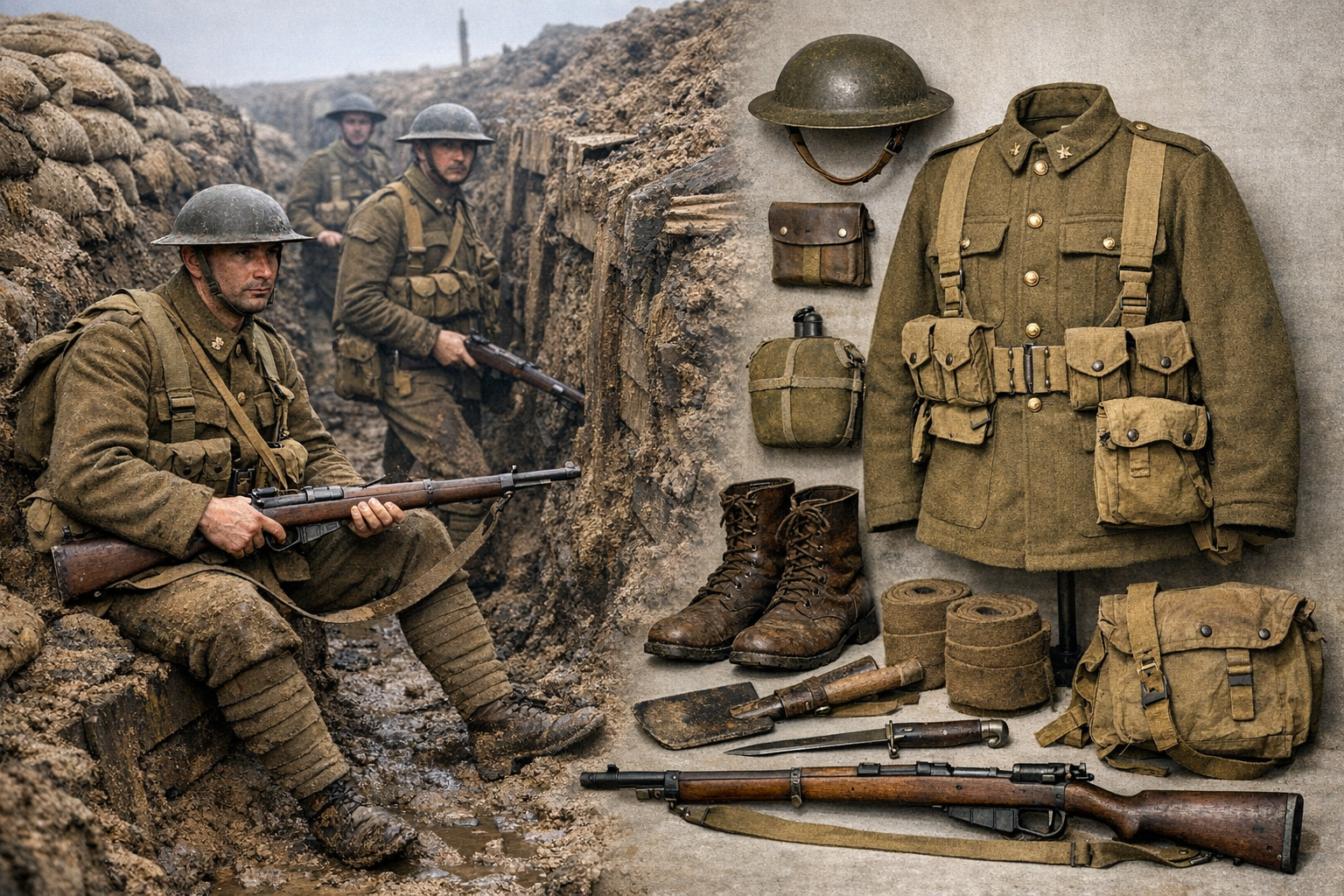
The Brodie helmet was designed to be worn with the uniform’s tunic, and while it wasn’t perfect, it proved invaluable in reducing head injuries.
3. Trousers and Puttees
The trousers were made from the same wool serge as the tunic and were designed to be functional and durable. They were fitted with pockets for carrying small items. To secure the trousers around the calves, soldiers wore puttees, long strips of cloth wrapped tightly around the lower legs to provide support and keep dirt and debris out of their boots. The puttees also helped to keep the soldiers' legs warm and protected from the elements.
4. Leather Boots
British soldiers wore sturdy leather boots during WW1, designed to endure the wear and tear of trench warfare. The boots had a high, laced design that provided support to the ankle and lower leg. These boots were built for walking long distances in muddy conditions, a common challenge for soldiers stationed in the trenches. However, they were not always the most comfortable, especially after days of continuous marching.
5. Webbing and Equipment
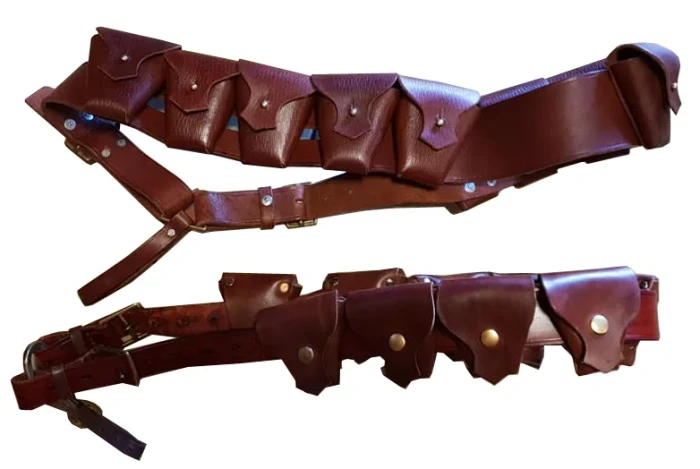
Soldiers wore webbing belts that held their ammunition pouches, canteens, bayonets, and other essentials. This webbing was made from strong canvas, designed to withstand the wear of carrying heavy equipment. Soldiers also carried a haversack to store food and personal items, such as a gas mask.
Each soldier’s uniform was designed to be functional and carry the necessary equipment to ensure they could survive and perform their duties on the battlefield.
Pros & Cons of the WW1 British Army Uniform
Like any military uniform, the British Army’s WW1 uniform had its advantages and limitations. Let’s explore both:
Pros
-
Durability: The wool serge tunic and leather boots were both designed for durability. The uniform was built to withstand rough conditions, such as muddy trenches, long marches, and extended field use.
-
Camouflage: The khaki color helped the soldiers blend into the environment, offering some protection from enemy detection in the trenches and on the battlefield.
-
Protection: The introduction of the Brodie helmet provided essential protection from shrapnel, which was one of the main causes of injury during the war.
-
Functionality: The design of the uniform allowed soldiers to carry essential equipment, such as ammunition, water, and food, without hindering mobility.
Cons
-
Weight and Comfort: The wool serge material could become quite heavy, especially when wet. In the muddy conditions of the trenches, this added weight could become uncomfortable.
-
Limited Flexibility: The uniform wasn’t particularly flexible, which could make it challenging for soldiers to move freely in certain situations.
-
Poor Weather Resistance: While the uniform was durable, it didn’t always provide sufficient protection against extreme cold or wet conditions. Soldiers often had to layer up with extra clothing to combat the elements.
While the uniform was effective for the most part, these limitations meant that soldiers often had to rely on additional gear and clothing to stay warm and dry.
Real-World Examples of WW1 British Army Uniforms in Use
Today, WW1 British Army uniforms are widely used in historical reenactments, museum exhibits, and by collectors. These uniforms help bring history to life, providing an authentic experience for those who wish to understand the daily life of soldiers during the war.
Case Study 1: WW1 Reenactment Groups
In the UK and the United States, WW1 reenactment groups often participate in large-scale events that replicate key battles or everyday life in the trenches. These reenactments require accurate, historically accurate uniforms. Reenactors typically source their uniforms from specialized suppliers or make their own replicas based on historical records.
For example, the British Imperial War Museum offers a wide range of WW1 uniforms and equipment, including the wool serge tunic and Brodie helmets. These items are essential for reenactors, as they help ensure the authenticity of the experience. The accuracy of the uniforms is crucial in helping to educate the public and honor the sacrifices made during the war.
Case Study 2: Collectors and Museums
Collectors of military uniforms often seek out original or well-made replicas of WW1 British Army uniforms for their collections. These uniforms are frequently displayed in museums, where they are used to help tell the story of the soldiers who fought during the war. The Royal Armouries Museum in Leeds, for example, has a well-preserved collection of WW1 British Army uniforms and equipment, allowing visitors to see firsthand what soldiers wore during the conflict.
Accurate replicas, especially of the Brodie helmet and the service dress tunic, are in high demand among collectors. These pieces not only serve as historical artifacts but also as educational tools that allow future generations to learn about the impact of the war.
FAQs: Common Questions about WW1 British Army Uniforms
Why was wool serge used for the uniforms?
Wool serge was chosen because of its durability and ability to withstand the harsh conditions of the battlefield. While heavy, it was one of the best materials available at the time for making functional, long-lasting uniforms.
What was the purpose of the Brodie helmet?
The Brodie helmet was designed to protect soldiers from shrapnel and other debris during battle. Its steel construction provided much-needed head protection, reducing the risk of severe head injuries.
How was the uniform designed to handle the weather?
The uniform was made from wool, which provided some warmth. However, soldiers often had to layer additional clothing underneath to combat the cold, and the uniform didn’t always offer great resistance to wet conditions.
Conclusion
The WW1 British Army uniform was a practical and functional piece of military gear designed to withstand the challenging conditions of trench warfare. While it had its flaws, the uniform played a vital role in protecting soldiers and ensuring they could carry out their duties on the front lines. Today, these uniforms are important historical artifacts, serving as reminders of the sacrifices made by soldiers during one of the most devastating wars in history. Whether worn by reenactors or displayed in museums, the WW1 British Army uniform continues to serve as a symbol of resilience and bravery.
REQUISITION RELATED GEAR
EXPLORE MORE FIELD REPORTS
Browse all published guides and history articles.
