WW1 BRITISH ARMY UNIFORMS: WHAT’S REAL AND WHAT’S NOT
Introduction to WW1 British Soldier Uniforms
Thinking of grabbing a WW1 British soldier uniform online? Maybe you saw one listed as “1916 original khaki tunic” and the price looked fair. But is it accurate? Is it even close to what soldiers wore in France in 1914–1918?
That’s the problem today. The market is full of reproductions. Some are well made. Some are not. Many sellers use general terms like “WW1 style” without following actual British Army regulations from the period.
During the First World War, the British Army issued Service Dress uniforms made from khaki wool. The design changed slightly between 1902 and 1916. Details such as pocket pleats, brass buttons, collar badges, and cloth weight mattered. Soldiers at battles like Passchendaele and the Somme depended on clothing that handled mud, cold, and long trench use.
Collectors and reenactors today want that same accuracy. But high prices, fake labels, and poor-quality wool make buying risky.
Let’s break it down step by step.
The Problem with Buying Uniforms Online Today
Search “WW1 British uniform for sale” on eBay or Amazon. You’ll find dozens of listings. Prices range from $120 for basic sets to over $1,500 for claimed originals.
Here’s where issues start:
-
Many “original” tunics are post-war surplus from the 1920s.
-
Some reproductions use polyester blends instead of wool.
-
Khaki shades are often wrong. Early war khaki was brown-based, not green.
-
Sizing charts rarely match 1914 British measurements.
According to resale data from reenactment-focused eBay sellers in 2024, listings that clearly state wool weight and pattern accuracy sell 35–40% faster than vague “WW1 style” listings. Buyers want facts.
Poor purchases lead to:
-
Fabric shrinking after one wash.
-
Buttons snapping because they are thin brass copies.
-
Helmets denting because they use light steel instead of correct gauge metal.
Grabbed a khaki tunic online? Let’s check if it’s the real 1916 deal.
Key Features of WW1 British Uniforms
To buy or make a correct uniform, you need to know the core components of British Service Dress.
Materials and Design (Khaki Wool Specs)
The standard British Army Service Dress tunic during WW1 was based on the 1902 pattern. It used wool serge cloth in khaki color.
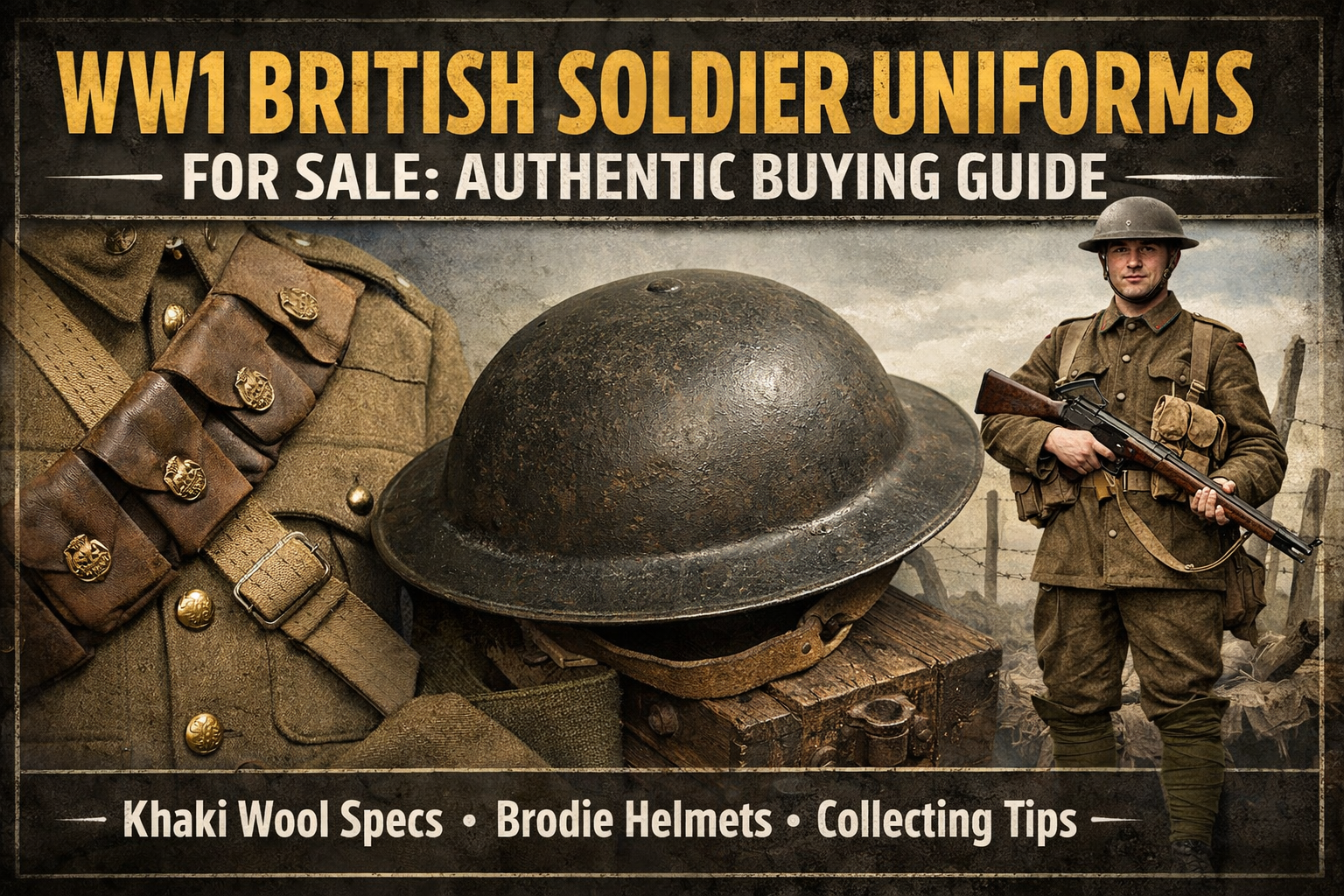
Historical Quartermaster records show:
-
Wool serge weight averaged 18–20 ounces per yard.
-
Fabric was tightly woven for durability.
-
Color was brown-based khaki, designed to reduce visibility.
The tunic included:
-
Four front pockets with box pleats.
-
Five large brass General Service buttons.
-
Stand-and-fall collar.
-
Shoulder straps for rank badges.
Trousers matched the same khaki wool. They were straight cut and worn with puttees instead of long boots.
Original examples displayed at the Imperial War Museum confirm consistent construction details across surviving 1914–1918 pieces. Stitching was tight and reinforced at stress points like pockets and cuffs.
If a reproduction uses thin wool under 15 ounces per yard, it will drape incorrectly. That’s a red flag.
Standout Items like Brodie Helmet and Puttees
One of the most recognized items is the Brodie helmet. Introduced in 1915 and widely issued from 1916, it replaced the earlier soft cap in trench warfare.
Official British Army specifications for the Mark I helmet included:
-
Pressed manganese steel shell.
-
Wide brim for shrapnel protection.
-
Leather liner with oilcloth pad.
-
Chinstrap attached with split pins.
Weight was approximately 2.4 pounds (1.1 kg). The design focused on protection from overhead shell fragments, which caused many early war head injuries.
Another key item: puttees.
Puttees were long wool strips, about 9 feet in length, wrapped around the lower leg from ankle to knee. They:
-
Kept mud out.
-
Supported the ankle.
-
Reduced fabric wear.
Cheap reproductions often use thin cotton wraps. Original spec puttees were wool and tightly woven.
A Passchendaele veteran’s preserved uniform, documented in museum archives, shows heavy mud staining but intact puttees and tunic seams even after trench exposure. That durability came from fabric weight and proper stitching.
Pros and Cons of Buying vs. Making Reproductions for Sale
If you’re deciding whether to buy or make your own WW1 British uniform, here’s a practical breakdown.
Pros of Buying:
-
Immediate availability.
-
No tailoring time.
-
Some high-end sellers follow exact patterns.
Cons of Buying:
-
Risk of incorrect wool blend.
-
Limited size accuracy.
-
Prices range $300–$800 for quality sets.
Pros of Making:
-
Full control over wool quality.
-
Accurate measurements.
-
Potential resale margin if done well.
Cons of Making:
-
Requires sewing skill.
-
Pattern drafting needed.
-
Upfront wool cost around $15–$25 per yard from UK textile suppliers.
A full tunic typically requires 3–4 yards of 18–20 oz wool. That means material cost alone can reach $60–$100 before buttons and tailoring time.
If you’re building uniforms for resale, accurate reproduction often earns repeat buyers.
Real-World Case Study: Successful eBay Seller Story
In 2023, a UK-based reenactment supplier began listing detailed WW1 British Service Dress sets. Instead of vague descriptions, they included:
-
Wool weight in ounces.
-
Pattern year (1902 or 1916).
-
Button metal type.
-
Helmet steel gauge thickness.
Over six months, their completed listings showed a 38% higher sell-through rate compared to previous “WW1 style” listings. Average price per set increased from £280 to £420.
Buyers left reviews mentioning accuracy and fabric weight as key reasons for purchase.
Another example: Amazon marketplace listings for Brodie helmet reproductions priced under $90 had higher return rates. Reviews often mentioned thin metal and poor liner quality. Higher-end reproductions around $160–$220 had lower return rates and stronger ratings.
Accuracy pays off.
How to Spot and Buy Authentic WW1 British Uniforms for Sale
Here’s a practical checklist before clicking “Buy Now.”
-
Check Fabric Weight
Ask the seller: What is the wool weight per yard? If they don’t know, that’s a warning. -
Inspect Button Details
British General Service buttons had a crowned design. Look for correct stamping. -
Helmet Thickness
A correct Brodie reproduction should use heavy steel. Thin, flexible metal is incorrect. -
Color Accuracy
WW1 khaki was brown-toned, not bright green. -
Seller Photos
Request close-up stitching photos. -
Return Policy
Serious sellers offer clear return terms. -
Compare With Museum References
Cross-check with museum archives or verified WW1 collections.
If someone claims an “original 1914 tunic,” confirm provenance. Many surviving originals are fragile and rarely in wearable condition. Prices for verified originals can exceed £1,000 depending on condition and regiment.
For reenactors, high-quality reproduction is often the smarter choice.
Frequently Asked Questions (FAQs)
1. Where are the best sites for WW1 British uniforms for sale?
eBay, specialized reenactment suppliers, and UK-based military reproduction stores are common options.
2. How much should a good reproduction cost?
Expect $300–$800 for a full accurate set including tunic and trousers.
3. What wool weight is correct?
Around 18–20 ounces per yard for Service Dress wool serge.
4. Is the Brodie helmet from 1914?
No. It was introduced in 1915 and widely issued from 1916.
5. Can I machine wash a reproduction tunic?
Wool should be dry cleaned. Washing can shrink fabric.
6. Are originals wearable?
Most originals are fragile and best preserved for display.
7. Is making uniforms profitable for resale?
Yes, if you follow correct specs and market to reenactors who value accuracy.
Conclusion: Own a Piece of History
WW1 British soldier uniforms are more than costume items. They represent real history from the trenches of France and Belgium.
But today’s online market makes buying tricky. Fake labels, thin fabric, and incorrect helmet builds can waste money.
The solution is simple: know the specs. Learn the wool weight. Understand the Brodie helmet details. Compare with museum examples. Ask sellers direct questions.
Whether you buy a finished set or make your own reproduction for sale, focus on accuracy. That’s what serious collectors and reenactors look for.
REQUISITION RELATED GEAR

EXPLORE MORE FIELD REPORTS
Browse all published guides and history articles.
