Introduction
World War Two uniforms often appear in films, museums, and online stores. People recognize the gray German tunic, the officer cap, or the field trousers. But many details get lost or confused. Some believe German soldiers always wore the same uniform during the war. Others think every unit used the same equipment.
The truth is more practical. German military clothing changed several times between 1935 and 1945. Designs evolved as the war expanded across Europe, North Africa, and the Soviet Union. Climate, supply shortages, and battlefield needs forced many adjustments.
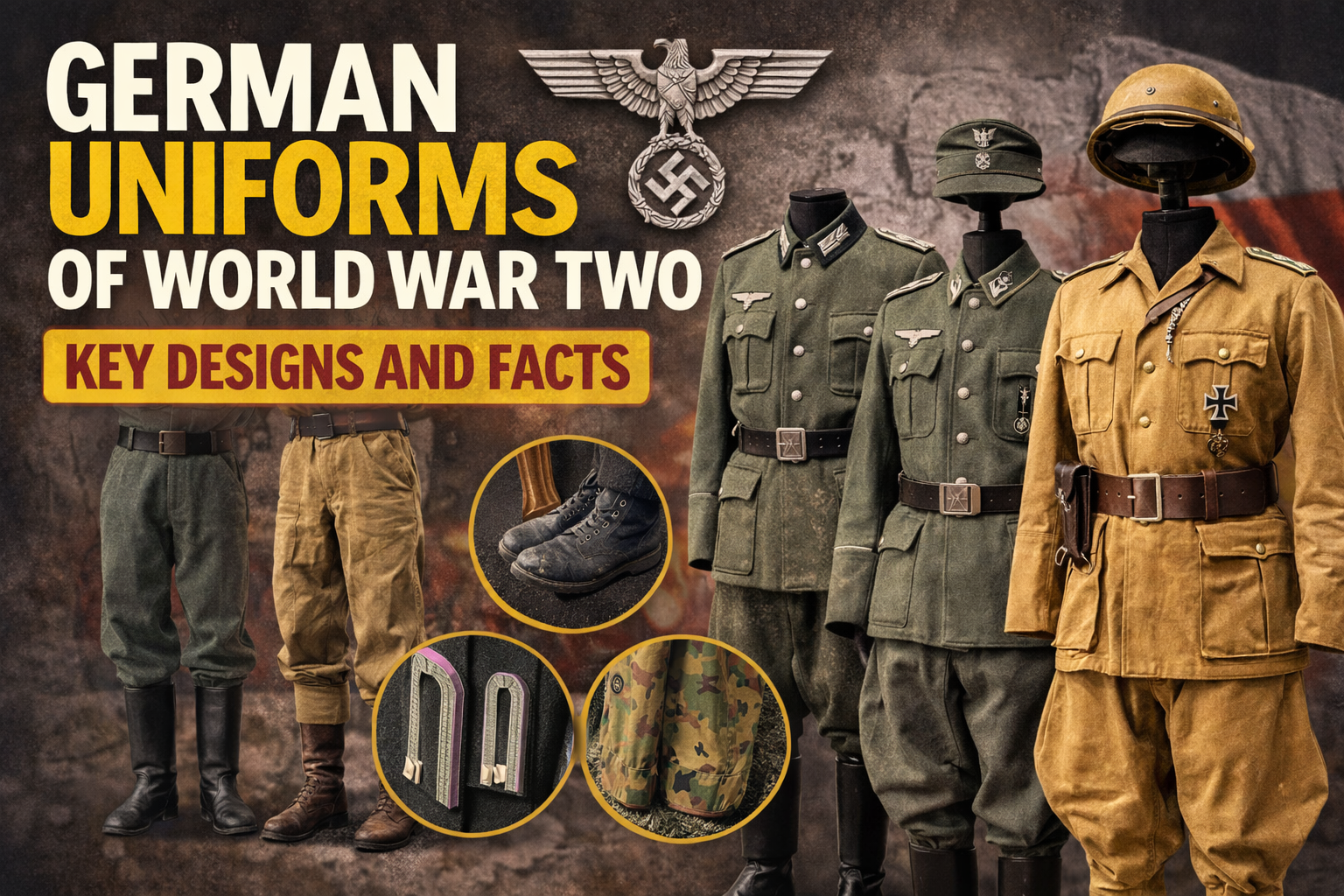
For example, the M36 field tunic introduced in 1936 looked different from later versions such as the M40 or M43 tunics. Pants also changed depending on the unit and the terrain. Soldiers fighting in the desert wore lighter cotton trousers, while troops on the Eastern Front relied on thick wool uniforms for winter survival.
Understanding these uniforms matters for historians and collectors. Real garments tell stories about how soldiers lived and fought. This guide breaks down the designs, materials, and insignia used in German uniforms during World War Two. It also explains how those uniforms performed in real battlefield situations.
Rise of WW2 German Uniforms
When Germany rebuilt its armed forces in 1935, the new military known as the Wehrmacht introduced standardized clothing for soldiers.
The core color of these uniforms was feldgrau, which means “field gray.” It was a gray-green shade designed to reduce visibility in natural terrain.
M36 Field Tunic
One of the most common early war uniforms was the M36 tunic.
Key features included:
-
Feldgrau wool fabric
-
Dark green collar
-
Four front pockets with scalloped flaps
-
Shoulder boards for rank
-
National eagle insignia above the right pocket
This tunic appeared widely during campaigns in Poland (1939) and France (1940).
German uniform production followed strict patterns. Wool fabric weight often ranged between 600 and 700 grams per square meter, which helped maintain warmth.
Nazi Officer Outfits
Officers wore uniforms similar to regular soldiers but with some differences.
Common officer features included:
-
Tailored tunics with fitted waists
-
Silver braid shoulder boards
-
Higher quality wool fabric
-
Officer caps known as Schirmmütze
The officer cap included:
-
A black visor
-
Silver piping
-
Metal national eagle badge
Officers often purchased uniforms privately from military tailors. As a result, small variations appeared between units.
German Pants in WW2
Pants were a critical part of the uniform.
Early war German soldiers wore straight-cut wool trousers. These trousers tucked into boots or gaiters.
Main characteristics included:
-
Feldgrau wool fabric
-
Reinforced seat area
-
Button fly closure
-
Side pockets and rear pocket
For mounted troops and officers, breeches were common. Breeches had wider thighs and tight lower legs to fit inside riding boots.
As the war progressed, trousers became simpler to produce. Later models used fewer buttons and less tailoring due to shortages.
Battlefield Features of German Uniforms
German military clothing balanced durability and function.
Materials
The most common fabric was wool, which kept soldiers warm in cold climates. Cotton fabrics appeared in hot environments such as North Africa.
Uniform parts included:
-
Wool tunic
-
Wool trousers
-
Leather belts and straps
-
Cotton lining
Steel helmets like the M35 helmet completed the uniform.
Insignia System
German uniforms used several insignia pieces:
-
National eagle emblem
-
Collar tabs
-
Shoulder boards
-
Sleeve rank markings
These elements helped identify rank and branch quickly.
For example:
-
White piping often represented infantry units
-
Pink piping marked armored units
Pros and Cons in Historical Context
German uniforms had strengths but also several limitations.
Advantages
Durability
Wool fabric resisted wear and lasted through long campaigns.
Clear identification
Insignia systems allowed fast rank recognition.
Climate adaptation
Special uniforms existed for desert and winter conditions.
Disadvantages
Heavy fabric
Wool became heavy when wet during rain or snow.
Limited camouflage early in the war
Early feldgrau uniforms offered less concealment compared to later camouflage garments.
Supply shortages
By 1944, fabric quality declined due to wartime shortages.
Real-World Examples
Case Study 1: Afrika Korps Uniforms
The Afrika Korps operated in North Africa between 1941 and 1943.
Desert conditions required lighter uniforms.
Key changes included:
-
Cotton tunics in sand color
-
Lightweight trousers
-
Tropical helmets or caps
These uniforms helped soldiers manage temperatures often above 40°C.
Case Study 2: Eastern Front Winter Clothing
German troops on the Eastern Front faced severe winters.
Standard uniforms proved insufficient during early winter campaigns.
Soldiers added:
-
Quilted jackets
-
Fur hats
-
Layered wool trousers
Many also used captured Soviet winter gear.
Case Study 3: Early War M36 Tunics
Photographs from the 1939 invasion of Poland show widespread use of the M36 tunic.
The dark green collar remained a distinctive feature during this early period.
Later uniform models removed the dark collar to simplify manufacturing.
Case Study 4: Late War M43 Uniform
By 1943, Germany introduced the M43 tunic and field cap.
These garments simplified production.
Changes included:
-
Field gray collars instead of green
-
Straight pocket flaps
-
Reduced fabric complexity
This uniform appeared widely during the final years of the war.
FAQs
1. What color were WW2 German uniforms?
Most used feldgrau, a gray-green field color.
2. What was the M36 tunic?
The M36 was an early war German field tunic introduced in 1936.
3. What material were German uniforms made from?
Most uniforms used wool fabric with cotton linings.
4. Did German soldiers wear the same uniform all war?
No. Designs changed several times between 1936 and 1943.
5. What pants did German soldiers wear?
Most wore feldgrau wool trousers, while mounted troops used breeches.
6. How can collectors identify authentic uniforms?
Common checks include:
-
Fabric type
-
Stitch patterns
-
Manufacturer markings
7. Did desert troops wear the same uniform?
No. Afrika Korps soldiers used lighter cotton desert uniforms.
8. Are original WW2 uniforms still preserved?
Yes. Museums and collectors maintain surviving examples.
Conclusion
German uniforms of World War Two developed through practical wartime needs. Early designs such as the M36 field tunic reflected careful planning and standardized materials like feldgrau wool. As the war spread across different climates, new uniforms appeared for desert and winter operations.
The uniforms also changed because of supply pressure. Later garments simplified pocket shapes and fabric use. Pants evolved from tailored breeches to simpler field trousers as production demands increased.
For historians and collectors, these details matter. Small elements like collar color, stitching style, and insignia placement reveal when and where a uniform was used.
Studying real examples from battlefields such as North Africa or the Eastern Front helps explain how soldiers adapted to difficult conditions. Understanding these uniforms provides a clearer view of daily military life during World War Two.