FELDGRAU IN FOCUS: THE HISTORY AND LEGACY OF THE M1907 WW1 GERMAN TUNIC
Introduction
World War I was unlike any conflict before it. Soldiers faced unprecedented challenges in the trenches—mud, disease, and brutal fighting conditions. But what about their uniforms? Early in the war, German soldiers were dealing with problems that went beyond just fighting. Their uniforms weren’t well suited to the harsh conditions of trench warfare, leading to discomfort and tactical disadvantages.
One of the most significant changes in German military uniforms was the introduction of the Feldgrau (Field Grey) M1907 tunic. This simple, yet effective design revolutionized the way German soldiers dressed for battle. It wasn’t just about a color change—it was about functionality, comfort, and practicality in the most challenging of environments. In this guide, we’ll dive into the M1907 tunic's design, materials, and the impact it had on the war. Plus, we’ll show you how today’s high-quality replicas bring that historical accuracy to life, so you can experience it firsthand.
Let's dive in!
What is Feldgrau?
Feldgrau, which translates to “field grey,” refers to the distinctive grey-green color that became iconic for German military uniforms during World War I. Prior to the introduction of the Feldgrau uniform, German soldiers wore a much brighter, more traditional Prussian blue, which proved to be ill-suited for the conditions of trench warfare. The bright color stood out too much on the battlefield, making soldiers easy targets in the muddy, smoke-filled trenches.
In 1915, the German army introduced the Feldgrau color as part of a larger effort to adapt to the evolving nature of the war. The color was chosen because it blended well with the landscape of the Western Front, offering better camouflage in the trenches and fields. The Feldgrau M1907 tunic quickly became the standard for German soldiers, replacing earlier versions, and has since become a symbol of the German forces during World War I.
M1907 Tunic Breakdown
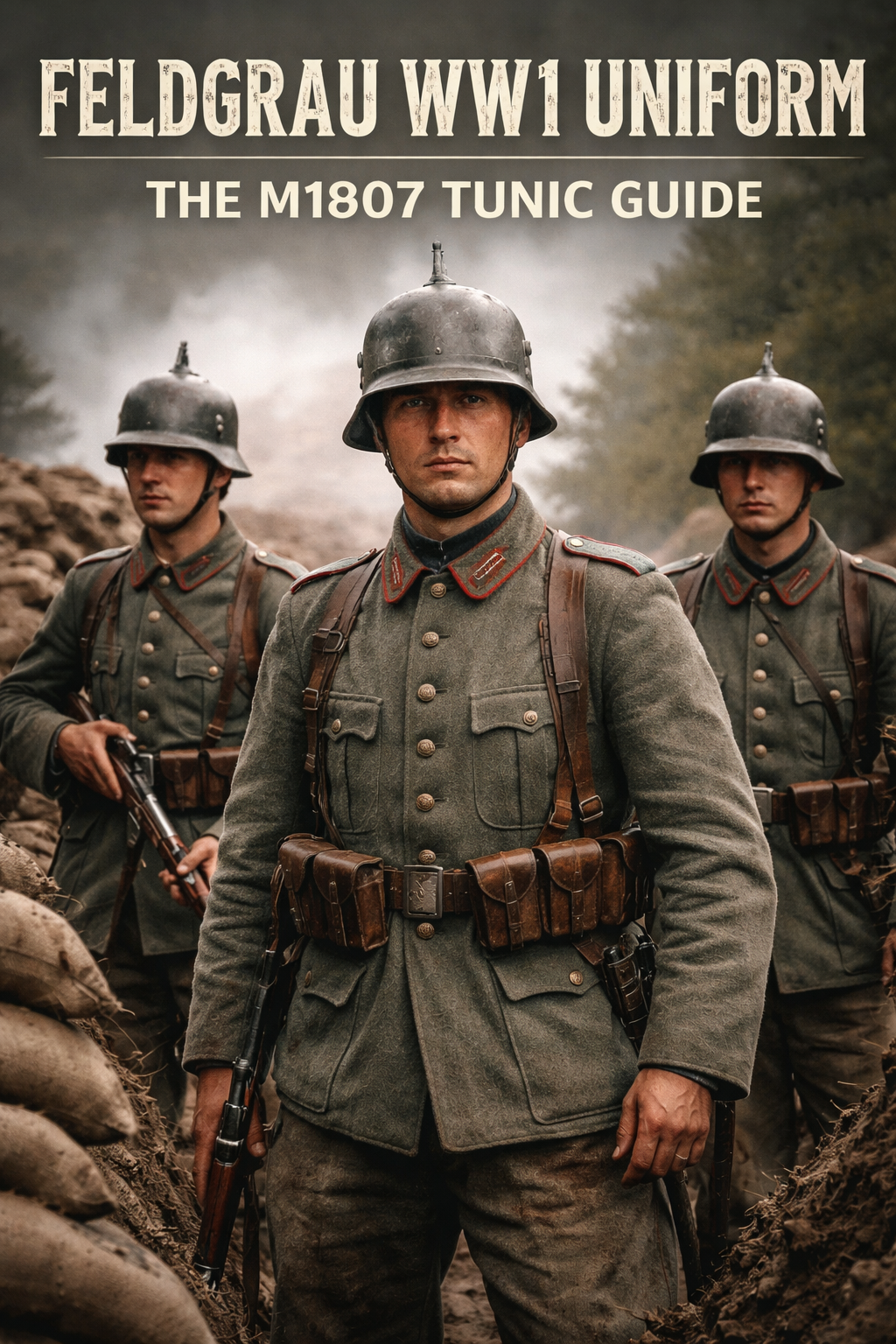
The M1907 tunic was more than just a color change; it was a completely new design tailored to meet the needs of soldiers fighting in the trenches. The tunic was made from a durable wool mix, with a heavy emphasis on practicality. Here’s a closer look at its design:
1. Fabric and Materials
The M1907 tunic was constructed primarily from a wool blend, typically 70% wool and 30% other fibers, which made it warm, yet breathable. The use of wool was essential, as it helped soldiers withstand the cold and wet conditions in the trenches. The tunic’s color, Feldgrau, helped it blend into the muddy, grayish environment, offering better camouflage.
2. Design Features
-
Stand-up Collar: The tunic featured a stand-up collar that was both functional and stylish. It provided extra protection against the elements and helped create a sharp, military appearance.
-
Four-Button Front: A key feature of the M1907 tunic was its four-button front. This made it easy to put on and take off while ensuring a snug fit.
-
Slim Fitting: The M1907 tunic had a slimmer cut than previous versions, which allowed for more mobility. This was crucial in trench warfare, where soldiers had to move quickly and often in confined spaces.
3. Pockets and Epaulets
The tunic included two breast pockets and a pair of side pockets, allowing soldiers to carry essential gear. The epaulets on the shoulders were used to display the soldier's rank, a feature that made it easy to distinguish officers from enlisted men.
4. Tunic Variants
By the end of the war, different versions of the M1907 tunic had been developed, including variations for different branches of service like infantry, cavalry, and artillery. These variations often included different insignia and small design tweaks, but the basic structure remained largely the same.
Key Features of the M1907 Tunic
The M1907 tunic had several standout features that made it a game-changer for German soldiers on the front lines:
1. Durability
The wool mix used in the M1907 tunic was not just for warmth; it was designed to hold up against the harsh conditions of trench warfare. The constant exposure to mud, rain, and cold meant that soldiers needed clothing that would stand the test of time. Unlike earlier uniforms, which wore out quickly, the M1907 tunic was built to last, making it a more reliable choice for soldiers in the trenches.
2. Comfort
While it may not seem like a priority in the heat of battle, comfort was critical for soldiers who spent days or even weeks in the trenches. The M1907 tunic was designed to allow for a full range of movement. Its slimmer fit and lighter fabric were an improvement over earlier designs, giving soldiers the flexibility to fight and move without unnecessary bulk.
3. Practicality
The tunic’s four-button front and simple design made it easy to wear and maintain. The pockets provided space for essential gear, while the epaulets kept rank distinctions clear. In short, the M1907 tunic was made to be as functional as it was efficient, ensuring soldiers could focus on the battle rather than their uniforms.
Uniform Components
Beyond the tunic itself, German soldiers’ uniforms in World War I were made up of several components that all worked together to improve performance and comfort in the trenches.
-
M1915 Helmet: Known as the "Pickelhaube" in its earlier form, the helmet underwent significant changes during the war. The M1915 steel helmet offered much better protection from shrapnel and debris than the old spiked helmets.
-
Trousers: Soldiers wore greyish-green trousers to match their tunics, made from a similar wool blend. These trousers were designed to be practical for combat, with reinforced sections for added durability.
-
Boots: Leather boots were standard, designed for long marches and extended periods of standing in wet, muddy conditions.
-
Belt and Equipment: The belt, used to carry ammunition and other essential tools, was another critical part of the soldier's gear. The Feldgrau uniform allowed for these accessories to be worn comfortably without interfering with movement.
Pros & Cons of the M1907 Tunic
Pros
| Benefit | Details |
|---|---|
| Comfortable Fit | Slimmer design for better mobility. |
| Durable Material | Wool blend construction held up well in tough conditions. |
| Practical Features | Stand-up collar, epaulets, and multiple pockets made it functional. |
| Improved Camouflage | Feldgrau color offered better camouflage in the muddy trenches. |
Cons
| Drawback | Details |
|---|---|
| Less Breathable in Heat | The wool blend, while great for cold, could be uncomfortable in warmer weather. |
| Limited Versatility | The tunic’s design was mostly suited for infantry soldiers, not for other branches. |
Real-World Examples
The M1907 tunic saw widespread use throughout World War I, and you can find evidence of its effectiveness in several significant battles.
1. Prussian Infantry at the Battle of the Marne (1914)
Though the M1907 tunic wasn’t introduced until later in the war, the development of the Feldgrau color started in earnest after the early battles of the war. The contrast between the earlier blue uniforms and the new Feldgrau tunics was stark, but it proved to be more effective for blending into the landscape.
2. Bavarian Troops in 1918
By the war’s end, Bavarian and other regional forces had fully embraced the M1907 tunic. The design had become a symbol of their resilience during the war, allowing soldiers to stay more comfortable as they fought through the final months of the conflict.
3. Modern Reenactments
Today, collectors and reenactors bring the M1907 tunic to life, using replicas to honor the history of World War I. Whether for educational purposes or historical reenactments, the tunic remains a popular piece for those seeking authenticity.
FAQs
1. What fabric was used for the M1907 tunic?
The M1907 tunic was made from a wool blend, typically 70% wool and 30% other fibers, providing both warmth and durability.
2. Was the M1907 tunic used by all German soldiers?
No, different versions of the tunic were made for various branches of the military, including infantry, artillery, and cavalry.
3. How did the M1907 tunic improve trench warfare?
The tunic's practical design and camouflage color helped soldiers stay more comfortable and concealed in the trenches, contributing to improved effectiveness in combat.
4. Are M1907 tunic replicas available for reenactments?
Yes, high-quality replicas of the M1907 tunic are available for reenactors, offering an authentic and historically accurate experience.
5. What was the main advantage of Feldgrau over earlier uniforms?
Feldgrau provided better camouflage in the muddy and greyish landscape of the Western Front, making it harder for soldiers to be spotted by enemy forces.
Conclusion
The M1907 tunic was a game-changer for German soldiers during World War I. It addressed the practical challenges of trench warfare with its durable fabric, comfortable fit, and effective camouflage. Whether you're a collector, reenactor, or history enthusiast, a replica of this iconic uniform brings you closer to understanding the real impact of these changes.
Ready to add a piece of history to your collection? Grab your replica today at Paddelaters.com, and experience the M1907 tunic for yourself!
REQUISITION RELATED GEAR
EXPLORE MORE FIELD REPORTS
Browse all published guides and history articles.
