THE SIGNIFICANCE OF THE M1917 HELMET IN PROTECTING AMERICAN SOLDIERS
Introduction
The uniforms worn by American soldiers during World War I are iconic, instantly recognisable for their unique style and practical design. Known as the Doughboy uniform, the gear was integral to the American Expeditionary Force (AEF) that played a critical role in the eventual Allied victory. While the focus during the war was naturally on the battlefield and the soldiers’ bravery, the uniforms they wore were also a vital aspect of their daily lives, providing comfort, protection, and functionality in one of history’s most brutal conflicts.
In this blog post, we will explore the history, features, advantages, and drawbacks of the WWI US AEF uniforms. We’ll also provide real-world examples of soldiers in action, answer frequently asked questions, and wrap up with a look at the enduring legacy of these uniforms.
The History and Importance of US AEF Uniforms
When the United States entered World War I in 1917, the military was still developing its standardised gear and uniforms. Unlike the entrenched European armies, which had decades of experience with combat gear, the US Army had to quickly adapt to modern warfare's challenges. This was especially evident when General John J. Pershing led the American Expeditionary Force (AEF) into the conflict, tasked with reinforcing the exhausted and depleted Allied forces in Europe.
The term "doughboy" refers to the typical American soldier of WWI, and it’s primarily linked to the uniform and gear they wore. These uniforms became not just a symbol of American strength but also represented the swift and efficient adaptation to the new type of warfare. The AEF uniforms were designed to address the challenges of trench warfare, where soldiers needed durable, comfortable, and protective clothing for long stints in the trenches and on the move.
Key Features of Doughboy Uniforms
The US AEF uniform was designed with practicality and functionality in mind. Let’s take a closer look at the key elements that made up these iconic uniforms.
The M1912/1917 Service Coat
One of the standout features of the Doughboy uniform was the service coat, often referred to as the M1912 or M1917 coat. Made from olive drab wool, the coat was designed to be durable and weather-resistant, ideal for the harsh conditions of trench warfare. The coat had a slim fit and featured a stand-up collar, epaulets for rank insignia, and four patch pockets on the front for storing small items.
The Trousers
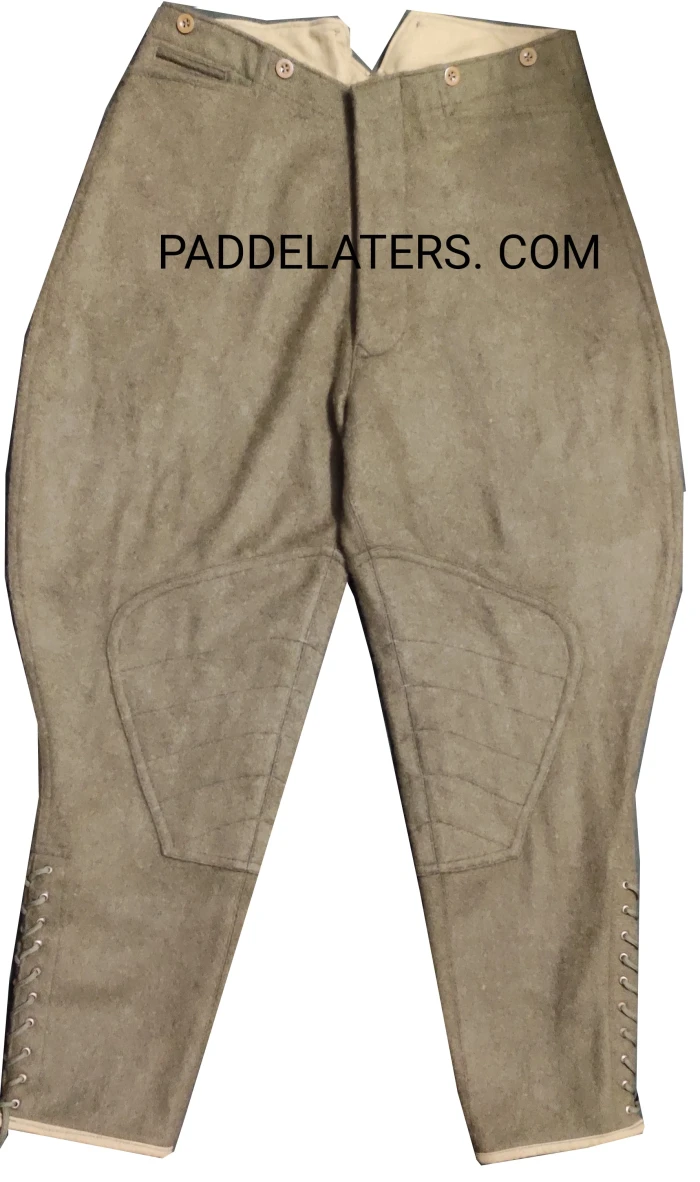
The trousers, which were part of the standard uniform, were also made from olive drab wool and had a straight-leg cut. These were designed for comfort and ease of movement, especially when soldiers had to crawl through the mud and manoeuvre around the trenches. The trousers featured a high waist and were often worn with a leather belt.
The Brogan Boots
Comfortable footwear was crucial in WWI, especially for soldiers who had to march long distances or stand for hours in the mud and rain. The brogan boots worn by doughboys were sturdy leather boots that came up just above the ankle. They were designed to provide protection, support, and comfort for soldiers enduring the harsh conditions of trench warfare.
The M1917 Helmet
The American soldiers wore the M1917 helmet, often called the “Doughboy helmet”. Its distinctive shape was designed to offer protection from shrapnel, which was one of the most common injuries in WWI. The M1917 helmet was made of steel and had a rim around the edge to protect the neck and face. Its design was influenced by the British Mk I helmet, but it was modified to suit the American soldiers’ needs. The helmet featured a liner and chin strap, ensuring it stayed secure during battle.
The Gas Mask
Another essential component of the US AEF uniform was the gas mask, a critical piece of gear due to the widespread use of chemical weapons during WWI. Soldiers carried their gas masks in a canister, often attached to their belts. The masks themselves were made of rubber and had a filter to protect against toxic gases. This gear was an essential part of the uniform, given the constant threat of gas attacks in the trenches.
The Cartridge Belt and Pack
Soldiers were equipped with a leather cartridge belt to hold ammunition, as well as a pack for carrying additional supplies. The pack was designed to be worn on the back and could carry items such as rations, extra clothing, a shovel, and even a blanket. The cartridge belt allowed soldiers to keep ammunition easily accessible during combat.
Pros and Cons of WWI US AEF Gear
Like any military uniform, the AEF gear had both advantages and drawbacks. Let’s break down the pros and cons of the Doughboy uniforms.
Pros
Durability
One of the major strengths of the AEF uniform was its durability. The wool fabric used for the service coats and trousers could withstand the elements, making it suitable for prolonged exposure to rain, mud, and cold temperatures. The leather boots were tough and could endure the harsh conditions of the battlefield.
Protection
The M1917 helmet provided a significant level of protection against shrapnel and other battlefield debris. While it wasn’t perfect, it greatly reduced head injuries, which were a significant concern in trench warfare. Additionally, the gas mask was a crucial innovation, providing protection from chemical weapons, which were used extensively during the war.
Functionality
The uniform was designed with functionality in mind, with features like multiple pockets for storage, a belt for holding ammunition, and a pack for carrying additional supplies. The gear allowed soldiers to carry what they needed while still being able to move effectively.
Comfort
Although the wool fabric could be itchy, the uniform was designed for comfort during long hours in the field. The loose-fitting nature of the coat and trousers allowed for freedom of movement, and the boots provided much-needed support during long marches and constant standing.
Cons
Weight
One of the biggest drawbacks of the uniform was its weight. With all the gear attached to their belts and carried in packs, soldiers were often weighed down by the heavy equipment. This could be exhausting, especially during long marches or when needing to move quickly during combat.
Limited Weather Protection
While the uniform was durable, it wasn’t always ideal for extreme weather conditions. The wool could become heavy and uncomfortable when wet, and soldiers had little protection against extreme cold or heat.
The Helmet’s Lack of Comfort
Though the M1917 helmet offered crucial protection, it was often uncomfortable to wear for long periods. Soldiers sometimes reported that the helmet was too tight, and the chinstrap could chafe. These minor issues could add to the fatigue and discomfort soldiers experienced.
Real-World Examples of Doughboy Uniforms in Action
The Doughboy uniforms were worn in some of the most significant battles of World War I, and real-world examples can help us understand how the gear held up in combat situations.
The Battle of the Argonne Forest
One of the largest and most important battles for the American forces during WWI, the Battle of the Argonne Forest (1918) saw the AEF face off against German forces in one of the most brutal and prolonged conflicts of the war. American soldiers, wearing their Doughboy uniforms, fought for weeks in the trenches, enduring everything from poison gas attacks to intense artillery bombardment. The uniforms and gear they wore allowed them to protect themselves against these dangers and keep fighting in incredibly harsh conditions.
Sergeant York
One of the most famous American soldiers of WWI, Sergeant Alvin York, earned the Medal of Honour during the war. York's bravery in capturing a large number of German soldiers during the Meuse-Argonne Offensive was pivotal, and his Doughboy uniform became iconic as he became a symbol of American heroism.
FAQs on US AEF Uniforms
How were WWI US AEF uniforms distributed?
Uniforms were issued by the army and were designed to be standardised for all soldiers. Initially, there were some issues with uniform shortages, but the military eventually ramped up production. Soldiers often received their gear upon arrival at training camps or as they prepared to head overseas.
How did the US AEF uniforms compare to those of other nations?
The US AEF uniforms were generally simpler in design compared to those of the British or French forces. The M1917 helmet, while effective, was less advanced than the British Mk I. However, the uniform’s practicality and simplicity were appreciated by American soldiers.
How did soldiers care for their uniforms?
The care of uniforms involved basic maintenance like cleaning and mending. Wool uniforms required regular washing to maintain their durability, while the leather boots needed to be oiled to prevent cracking. In the field, soldiers were responsible for keeping their uniforms as clean as possible, though this was often difficult given the muddy conditions.
Conclusion: Legacy of the Doughboy Uniform
The Doughboy uniform is an enduring symbol of the American soldier’s contribution during World War I. While the uniforms weren’t without their flaws, they played an essential role in keeping soldiers safe and functional during the intense and often gruelling conditions of trench warfare. Today, the uniforms remain a symbol of the bravery, sacrifice, and resilience of the American soldiers who wore them.
From the iconic M1917 helmet to the heavy wool service coats, these pieces of military gear are a reminder of the challenges soldiers faced and the sacrifices they made in the pursuit of victory. Whether you’re a history buff or simply interested in military gear, the history of WWI US AEF uniforms offers a fascinating insight into the past.
REQUISITION RELATED GEAR

EXPLORE MORE FIELD REPORTS
Browse all published guides and history articles.
