Introduction: Overloaded Men in the Mud
In the early years of the Great War, British soldiers carried far too much gear with no smart way to manage it. Rifles, ammo, food, tools, and water all hung from loose leather straps. In muddy trenches, this gear slipped, twisted, and fell off. Men stumbled under weight while shells burst overhead. This was the problem.
The agitation came fast. During heavy fighting like the Somme, old kits failed. Ammo pouches bounced open. Leather rotted in wet trenches. Soldiers wasted time fixing gear instead of staying alert. Wet coats and soaked clothes made trench foot common.
The solution was practical, not flashy. The 1908 pattern webbing set gave soldiers a stable way to carry gear. The WW1 British trench coat kept rain out and warmth in. Together, they changed how the Great War British uniform worked in real trench life.
Great War British Uniform Gear Basics
The Great War British uniform was built for mass armies. Millions of men needed gear that worked, could be made fast, and survived rough use. By 1916, Britain focused on cotton webbing, wool clothing, and simple steel hardware.
Uniform gear was not about looks. It was about balance, weight, and staying dry. Soldiers carried rifles, bayonets, ammo, water bottles, rations, and tools every day. The move from leather to webbing reduced rot and weight. The trench coat added a weather layer missing early in the war.
Together, webbing and coat formed a working system that supported long days in trenches.
What is 1908 Pattern Webbing Set?
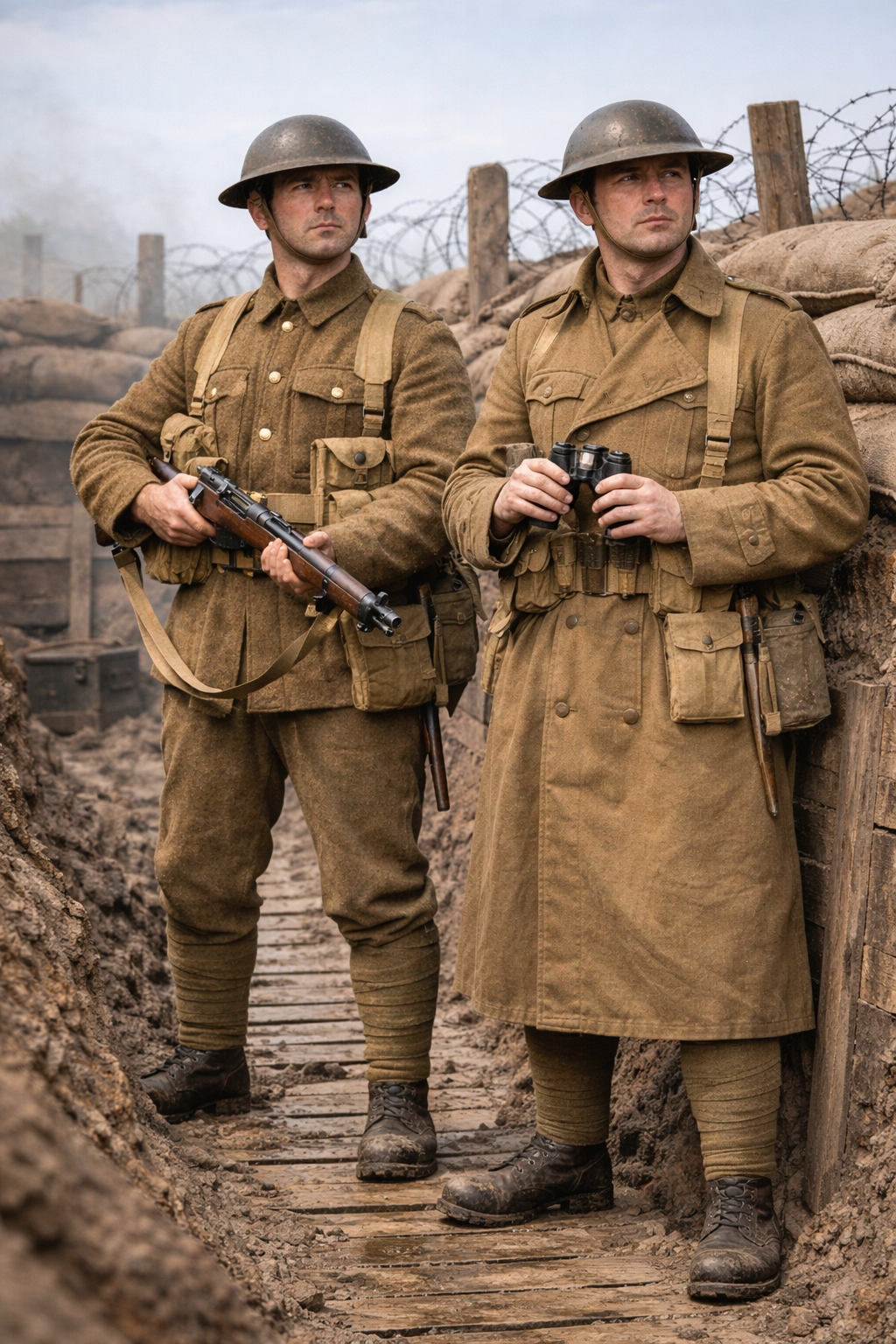
The 1908 pattern webbing set was a full load-carrying system made from woven cotton. It replaced leather gear that failed in mud. The set included a belt, shoulder braces, two large ammo pouches, bayonet frog, water bottle carrier, entrenching tool cover, and small pack.
Each ammo pouch held five chargers of rifle rounds. That meant ten chargers ready at hand, giving quick access in battle. Weight was spread across shoulders and hips, not hanging from the waist.
Records show about 2.5 million 1908 webbing sets issued by 1916. This scale proves how much trust the army placed in it.
How 1908 Webbing Changed WW1 Soldier Loadouts
At Ypres, constant rain turned trenches into mud rivers. Old leather kits soaked water and stretched. The 1908 webbing held shape when wet and dried faster. Soldiers could crawl, climb, and fire without loose straps.
Reports noted fewer dropped pouches and better movement under fire. Load balance helped men march longer with less strain. This made the WW1 British webbing equipment one of the most successful gear changes of the war.
WW1 British Trench Coat: Design & History
The WW1 British trench coat grew from army needs before the war. Burberry developed gabardine, a tight-woven cotton that blocked rain but still breathed. Officers adopted it first, then wider issue followed.
The coat featured a storm flap, belt, shoulder tabs, and deep pockets. It was worn over wool tunics to keep rain off. While not fully waterproof, it dried faster than wool alone.
The coat helped keep men warmer and drier in trenches, often credited with reducing exposure that led to trench foot. It became a key part of the British army trench coat WW1 story.
Features of 1908 Webbing & Trench Coat
The 1908 webbing belt was about two inches wide, strong enough to hold full loads. Shoulder braces crossed the back to spread weight. Brass fittings resisted rust better than steel.
Ammo pouches closed with simple straps. The small pack carried rations and spare socks. The entrenching tool sat low to avoid snagging.
The trench coat used large buttons for use with gloves. Epaulettes held rank tabs. The belt cinched the waist to block wind. Length reached below the knee for coverage without dragging in mud.
Pros & Cons for Reenactors and Collectors
Pros:
Webbing is strong and practical. It spreads weight well and looks correct. Trench coats add a complete Great War look and real weather protection.
Cons:
Brass parts can tarnish in humid areas. Cotton webbing needs cleaning after use. Trench coats can feel heavy in Indian summers. Still, these limits reflect real wartime use.
Real-World Examples
During Somme trials in 1916, units tested fully loaded 1908 sets over long marches. Reports showed fewer repairs than leather kits. This confirmed the design worked under stress.
Today, reenactors in Delhi and other cities use paddelaters.com replicas at events. Reproduction 1908 webbing and trench coats match original layouts but use stronger stitching. Indian buyers value local shipping, GST clarity, and custom sizing support.
FAQs
What goes in 1908 pattern webbing?
Ammo, water bottle, bayonet, rations, entrenching tool, and small personal items.
Was 1908 webbing better than leather?
Yes. It resisted rot, held shape, and spread weight better.
Who wore WW1 British trench coats?
Mostly officers at first, later wider use in cold and wet areas.
Are trench coats accurate for reenactment?
Yes, when cut and fabric match period designs.
Where can I buy reproduction 1908 webbing in India?
You can order from paddelaters.com with India shipping and GST support.
Do replicas come in custom sizes?
Yes, many sellers offer size options for comfort.
Conclusion: Why This Gear Still Matters
The Great War British uniform evolved because soldiers needed better tools to survive. The 1908 pattern webbing set solved load problems. The WW1 British trench coat helped fight cold and wet. Together, they made trench life more manageable.
For collectors and reenactors, these items show smart design under pressure. Modern reproductions let you use them without risking originals. If you want accuracy, comfort, and support in India, order your set from paddelaters.com today.