WWI AMERICAN UNIFORMS: HISTORY, TRENDS & HOW TO BUY AUTHENTIC GEAR
🪖 WWI American Uniforms: History, Trends & How to Buy Authentic Gear
Did you know that over 4.7 million Americans served in WWI, but many wore uniforms made of British wool?
If you're a WWI enthusiast, collector, reenactor, or just fascinated by military history, understanding the WWI American uniform is essential. More than just fabric and buttons, each uniform tells a story of innovation, necessity, and national identity.
📜 H2: A Brief History of WWI American Uniforms
🧵 The Pre-War Influence
Before the US formally entered World War I in 1917, the American military wore uniforms more suited for parades than battle. When war erupted, the need for functional combat gear reshaped the American soldier's appearance.
- Model 1912 & 1917 Service Coats: These were inspired by British designs but adjusted for American practicality.
- The early versions had standing collars, which were later replaced by open collars for better movement.
🎖️ Evolution Through Necessity
As trench warfare changed the nature of combat, so too did the uniform evolve:
- Wool became standard due to its warmth and durability.
- Puttees (woolen leg wraps) were used to protect soldiers’ legs.
- Steel helmets were introduced in 1917, based on the British Brodie design.
❗ Did You Know? Early WWI American soldier uniforms were dyed a mustard brown, but due to inconsistent dyeing methods, color shades varied drastically.
🎨 H2: What Color Were American Uniforms in WWI?
The most common question asked by collectors is:
“What color were American uniforms in WWI?”
The Official Color: Olive Drab
While “olive drab” was the official answer, the reality was more complex.
- Olive Drab No. 33: A yellow-brown shade, leaning toward khaki.
- Variants ranged from greenish-brown to light tan, depending on wool quality and dye batch.
- Environmental exposure (mud, rain, and sun) also affected the color tone.
Modern Tip:
🎯 When buying an authentic or reproduction American WWI uniform, look for listings that mention "OD No. 33" or show close-up images for color accuracy.
Pitfall to Avoid:
Don’t assume darker equals authentic. Many post-war reproductions are too green, mimicking WWII styles instead of WWI.
🛠️ H2: Actionable Steps to Identify and Buy Authentic WWI American Uniforms
Whether you're building a collection or preparing for a reenactment, here’s how to spot genuine WWI American uniforms:
✅ Step-by-Step Guide
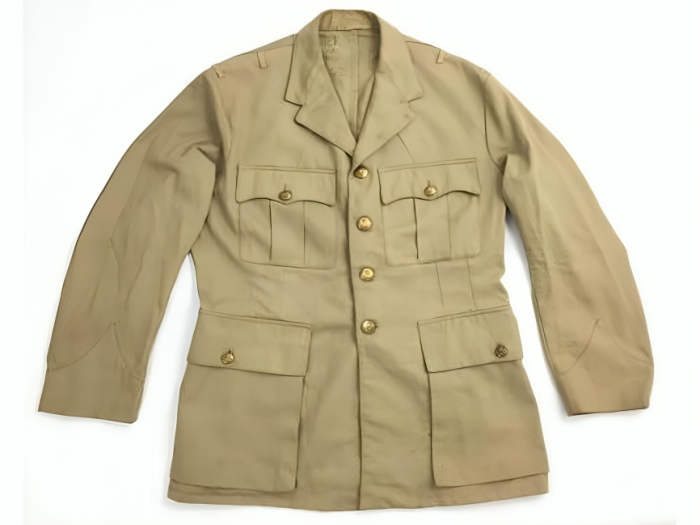
- Start with the Jacket (Tunic)
- Look for Model 1917 labels.
- Check for bronze collar discs: “U.S.” and branch insignia (infantry, engineers, etc.)
- Real tunics often have hand-stitched repairs or fading.
- Inspect the Buttons
- WWI buttons are domed bronze with an eagle design.
- WWII or later uniforms often use flat or stamped buttons.
- Know the Labels
- Inside labels should include contract dates (1917–1918).
- Manufacturer tags often include “Q.M.C.” (Quartermaster Corps).
- Helmet Check
- Authentic WWI helmets have a raw edge, unlike WWII ones with a rolled edge.
- Original liners were leather with felt padding.
- Compare With Reproductions
- Some modern reproductions are so accurate they’re used in museums.
- Stick to trusted suppliers: What Price Glory, At the Front, and IMA-USA.
⚠️ Common Pitfalls
- 🧥 Buying WWI-style costumes instead of accurate replicas.
- 📦 Ignoring provenance: Always ask about the source of the uniform.
- 🧼 Over-cleaning: Using bleach or modern detergents can ruin authentic wool.
📈 H2: Current Trends in WWI Uniform Collecting & Reenactments
The market for WWI American uniforms has seen a resurgence due to:
- 📺 Increased media interest (e.g., They Shall Not Grow Old, 1917).
- 🎖️ Centennial anniversaries are prompting historical events and reenactments.
- 🛍️ Online marketplaces are making gear more accessible — but also more risky.
Popular Trends:
- WWI trench reenactments with full uniform kits.
- Digital archiving of uniforms using 3D scans and VR.
- Restoration of original gear with period-correct materials.
🧠 Pro Tip: Join online communities like Great War Forum or Reddit’s r/MilitaryCollecting for insights and group buys.
🧰 H2: Tools & Resources to Deepen Your Knowledge
Here are a few essential tools and communities for anyone interested in WWI American uniforms:
Websites:
- US Militaria Forum
- Military Trader
- Great War Forum
Books:
- Doughboy War: The American Expeditionary Force in World War I by James H. Hallas
- Uniforms, Equipment and Weapons of the American Expeditionary Forces in World War I by Bret Werner
Museums with Authentic Displays:
- National WWI Museum, Kansas City
- Smithsonian National Museum of American History
🧭 Conclusion: Step Into the Past with Confidence
Understanding and collecting WWI American uniforms is about more than nostalgia — it's about preserving history, honoring sacrifice, and showcasing the craftsmanship of a pivotal era.
Whether you're buying your first WWI American soldier uniform or upgrading your reenactment kit, being informed helps you avoid fakes, overpaying, or unintentionally disrespecting history.
REQUISITION RELATED GEAR
EXPLORE MORE FIELD REPORTS
Browse all published guides and history articles.
