A SOLDIER’S GEAR: THE TRANSFORMATION OF WORLD WAR 1 AMERICAN UNIFORMS
Introduction: The Challenges of Early WWI Uniforms
When American troops stepped onto the muddy battlefields of Europe in 1917, they weren’t just facing enemy forces—they were also up against their own uniforms. Early World War 1 American uniforms had problems that made life for soldiers even harder. Heavy, uncomfortable, and poorly designed, these uniforms were a far cry from what the troops would eventually come to rely on.
Imagine wearing wool clothing in the dead of summer, trudging through rain, mud, and barbed wire. It wasn’t just a fashion issue—it was a matter of life and death. American doughboys (as soldiers were called) had to adapt quickly to their surroundings, and that meant facing the harsh realities of a uniform not built for the modern battlefield.
As the war progressed, it became clear that the US Army needed to rethink its uniforms. The stakes were high, and small changes made a big difference in soldier survival. Let’s dive into how the uniforms evolved to meet these challenges—and what collectors today are seeking when they hunt for these historic pieces.
The Challenges Soldiers Faced in World War 1 Uniforms
Let’s take a step back in time to the Battle of Meuse-Argonne in 1918. Over a million American soldiers were involved in this intense fight—the largest American operation of World War 1. The terrain was difficult, the weather unpredictable, and the enemies ruthless. But the soldiers faced a hidden enemy: their uniforms.
Soldiers often complained about the discomfort of their wool uniforms, especially in the summer months when the heat could be unbearable. The heavy jackets and trousers would trap sweat, leading to skin rashes and heat exhaustion. On the flip side, in the winter, the wool offered little protection against the cold and wet conditions of the trenches. The uniforms just couldn’t handle the extreme weather conditions.
Furthermore, the uniforms didn’t offer much protection from shrapnel. Soldiers were vulnerable to injuries from flying metal, especially in the open fields or trench warfare. The helmets were useful for some protection, but they didn’t cover enough to be fully effective. Even worse, the standard-issue boots were often prone to wear and tear—sometimes failing during critical moments when soldiers needed mobility the most.
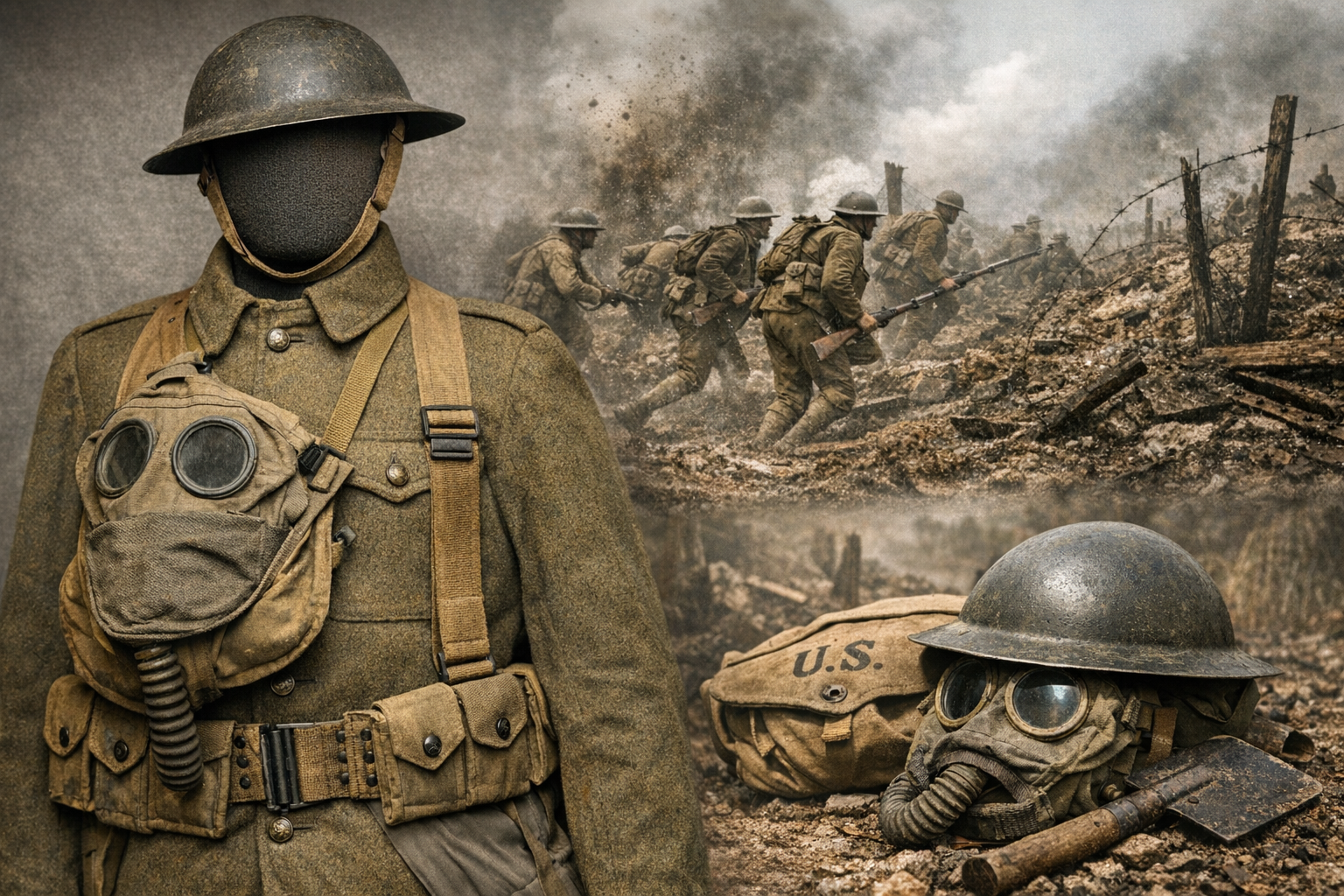
Case Study: Meuse-Argonne, 1918
At Meuse-Argonne, the logistical challenges became obvious. The doughboys didn’t just need better weapons; they needed better clothing. The US Army recognized that their troops were at a disadvantage, and something had to change. The fight wasn’t just against enemy forces—it was about surviving in conditions that were beyond what most soldiers had ever experienced.
Key Features of World War 1 American Uniforms
By the time American soldiers had fought through some of the worst conditions in WWI, the US Army began refining their uniform design. Several key features emerged that made a difference in comfort and practicality.
Olive Drab Uniform Breakdown
The standard World War 1 American uniform was made from wool, and it was dyed in a dull olive drab color. This neutral color helped soldiers blend in with the environment, whether they were in the trenches or on the battlefield. However, the wool itself could be too warm in summer and not warm enough in winter. Despite these issues, the color became iconic, and it helped soldiers avoid detection in many situations.
But the olive drab wasn’t just for camouflage. It was also used because it was a color that could be mass-produced relatively easily, making it a practical choice for wartime. Over time, the uniform’s cut and design were adjusted to offer more mobility and comfort.
Helmet and Gas Mask Details
Two crucial parts of the uniform were the helmet and gas mask. The M1917 helmet, also known as the "doughboy helmet," was a steel helmet designed to protect soldiers from shrapnel. It wasn’t perfect, but it did its job better than the previous cloth headgear.
The gas mask was another vital part of the WWI US uniform. Chemical warfare was a terrifying new threat, and soldiers had to rely on gas masks for protection. The masks were made of rubber and fabric and were carried in a pouch on the soldier’s body. While cumbersome, they helped save countless lives from deadly chlorine and mustard gas attacks.
Pros and Cons of the US Uniform Design
Pros:
-
Practical Olive Drab Color: The uniform's color helped soldiers blend into the environment and was cost-effective to produce.
-
Helmets Offered Protection: The M1917 helmet provided better defense against shrapnel than previous designs.
-
Adaptability: The design of the uniform was modified during the war to improve comfort, mobility, and durability.
-
Gas Mask Protection: The gas mask saved lives during chemical attacks.
Cons:
-
Heavy Wool Fabric: The wool used for the uniforms was too warm in summer and inadequate in winter conditions.
-
Lack of Proper Footwear: The boots were prone to wear out quickly, leaving soldiers vulnerable to trench foot and blisters.
-
Limited Durability: The uniform's durability was an issue, especially during the long, muddy campaigns like those in the Meuse-Argonne.
-
Limited Protection: While the helmet offered some protection, it was far from perfect.
Real-World Examples and Collectible Stories
When you think about the World War 1 American uniform today, you might imagine it as a dusty relic of history. But for collectors, these uniforms are priceless pieces of the past. One notable case is the uniform worn by soldiers under General Pershing during the Battle of Argonne. This uniform was preserved, complete with its helmet and gas mask, and sold for a considerable amount at an auction. The condition and rarity of these items made them a highly sought-after collector’s item.
Another example comes from modern-day eBay collectors. Items like the M1917 helmet and authentic doughboy uniforms can fetch anywhere from $500 to $2,000, depending on the condition and provenance. Some rare pieces, especially those that belonged to higher-ranking officers or were part of significant historical moments, can go for even more.
For anyone interested in military history or historical fashion, the World War 1 American uniform offers a glimpse into the past. The fact that these items are still in demand shows just how much people value the history and sacrifice tied to them.
FAQs About World War 1 American Uniforms
Q: What fabric was used for the World War 1 American uniform?
A: The uniform was primarily made from wool, which provided warmth but was uncomfortable in hot weather.
Q: Why was the uniform olive drab?
A: Olive drab was chosen for its practical camouflage properties, helping soldiers blend into their environment.
Q: What was the purpose of the gas mask?
A: The gas mask protected soldiers from chemical weapons like chlorine and mustard gas during WWI.
Q: How much do authentic WWI US uniforms cost?
A: Prices range from $500 to $2,000, depending on the condition, rarity, and provenance of the items.
Q: Did the uniform change throughout the war?
A: Yes, the uniform design was adapted to improve comfort, mobility, and protection as the war progressed.
Conclusion: Evolution of the WWI American Uniform
The World War 1 American uniform started as a compromise—designed in haste and with limited resources—but by the end of the war, it had evolved to meet the tough conditions soldiers faced. The change from the early wool-heavy uniform to the more functional design of the later years made a huge difference for troops in the field.
For collectors today, these uniforms are a tangible piece of history. Whether you're looking for a pristine gas mask or a well-worn doughboy uniform, these items hold both historical significance and great collectible value.
If you’re a collector or just want to own a piece of military history, check our WWI uniform replicas at paddelaters.com.
REQUISITION RELATED GEAR
EXPLORE MORE FIELD REPORTS
Browse all published guides and history articles.
