THE STORY OF BRITISH MILITARY UNIFORMS IN WW1 AND WW2
Introduction
British soldiers in the World Wars didn’t just fight with rifles and artillery. They fought in uniforms that shaped their identity, safety, morale, and even their chances of survival. What a soldier wore affected how well he blended into the battlefield, how far he could march, and how he handled the cold, mud, and heat of global conflict.
From the muddy trenches of the Somme to the deserts of North Africa and the streets of Normandy, British military uniforms changed dramatically between the First and Second World Wars. This transformation wasn’t cosmetic. It reflected painful lessons learned from combat, logistics, and the lived experiences of millions of servicemen.
Why Uniforms Mattered (Problem)
Uniforms were more than clothing. They were a virtual “toolkit” for identity and survival.
A shared uniform gave soldiers a sense of belonging — crucial for morale in brutal environments. It also prevented friendly fire by helping troops recognize one another across chaotic battlefields. Camouflage and equipment placement directly affected whether a soldier could stay alive, carry what he needed, and move effectively under pressure.
But when uniforms failed — when they chafed, soaked through, froze up, or trapped heat — soldiers suffered. Health, endurance, and confidence collapsed. And those failures drove redesigns that reshaped the British Army between 1914 and 1945.
The Agitation: Discomfort, Shortages & Field Modifications
For all the symbolism and purpose, the uniforms of WW1 and WW2 were rarely comfortable.
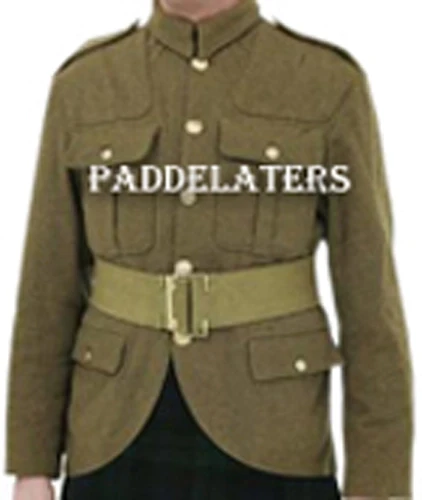
In WW1, the standard 1902 Khaki Serge Service Dress tunic was durable but hot, heavy, and stiff. In winter, it absorbed water like a sponge and became freezing. In summer it trapped heat. Soldiers often replaced government-issued boots with private purchases because blisters and trench foot could become life-threatening.
World War II wasn’t perfect either. The early battledress introduced in 1937 restricted movement and itched badly due to coarse wool. Uniform shortages during the evacuation of Dunkirk meant the reconstituted British Expeditionary Force sometimes deployed again in mixed or outdated gear. In North Africa, the wool serge battledress baked soldiers under desert heat, forcing widespread unofficial swaps to lighter khaki drill uniforms.
Whenever gear slowed men down, they modified it. Sleeves came off. Straps were cut. Pockets were added. Helmets were padded or reshaped. Adaptation became a survival mindset.
The Solution: How Uniform Design Evolved
Uniform changes didn’t happen instantly — they evolved through lessons written in blood.
The adoption of khaki in WW1 replaced bright Victorian colours that had no place on modern battlefields. By 1916, British troops widely used steel helmets (Brodie helmets) after massive head wound rates early in the war. Webbing systems improved load distribution. A focus on insulation and foot care warned the army that comfort was not optional — it was combat capability.
By WW2, those lessons formed a more practical approach. Battle dress replaced the long tunic. The new uniform offered easier movement, more pockets, and better alignment with mechanized warfare. Tropical, Arctic, and airborne variations allowed equipment to match climate and mission, not just tradition. Protective gear improved, and large-scale shortages slowly faded as wartime production stabilized.
Each evolution made survival more likely, and performance more dependable.
Key Features of British Uniforms in WW1 and WW2
WW1: Service Dress and Trench Gear
- Khaki serge tunic and trousers: Heavy wool with stand-and-fall collar
- 1908 webbing equipment: Designed to distribute weight evenly for infantry movement
- Ammunition boots with hobnails: Durable but slippery on metal and stone
- Puttees: Wrapped wool leggings to support calves and block debris
- Steel Brodie helmet (from 1916): Drastically reduced shrapnel fatalities
- Insignia: Regiment patches, rank chevrons, and divisional symbols for recognition
WW2: Battle Dress and Specialized Variants
- 1937 battle dress blouse and trousers: Short wool jacket with large pockets for mobility
- 37-pattern webbing: Configured for riflemen, support weapons, or specialist roles
- Boots with gaiters: Replaced puttees for faster prep and better comfort
- Mk II steel helmet: Updated shape and liner for better shock protection
- Specialized uniforms:
- Khaki drill for desert troops
- Denison smock for airborne units
- White camouflage for Arctic and winter operations
Pros & Cons for Soldiers on the Front Line
BenefitDrawbackCamouflage reduced visibility to the enemy | Wool uniforms overheated in warm climates
Webbing systems kept gear organized | When wet, wool became heavy and slow to dry
Puttees and later gaiters reduced debris entering boots | Puttees took time to wrap and could restrict circulation
Steel helmets saved lives against shrapnel | Offered little coverage from side and neck
Battle dress improved mobility over tunics | Caused itching and discomfort for many soldiers
Specialized uniforms matched environment | Not always supplied in correct numbers early in campaigns
Improvement was real, but it arrived unevenly — and soldiers felt it.
Real-World Examples from British Units
- British Expeditionary Force (1914–18)
Marched into France with wool tunics and soft caps. After early trench casualties, steel helmets and more protective gear became standard. - The Home Guard (WW2)
Suffered major equipment shortages early on. Many drilled in civilian clothes or WW1 leftovers before receiving battledress. - The Desert Rats (7th Armoured Division)
Transitioned from battledress to khaki drill in North Africa because heatstroke rates made adaptation unavoidable. - Airborne Forces (WW2)
Wore Denison smocks designed specifically for parachute infantry — one of the earliest purpose-built combat uniforms in British history.
These case studies show how reality on the battlefield drove change faster than planning on paper ever could.
FAQs for Collectors, Reenactors & History Fans
Are original WW1 and WW2 British uniforms still available for purchase?
Yes, but true originals are increasingly rare and expensive. Auctions, militaria shows, and museum-approved dealers are safest.
How can buyers confirm authenticity?
Check manufacturing stamps, dates, stitching methods, materials, and unit insignia. Reproductions often miss sizing marks or wartime manufacturing patterns.
Is it safe to wear original uniforms?
Not recommended. Wool and stitching can be fragile after 80–110 years. Replicas are better for reenactment.
How do I preserve old uniforms?
Store away from sunlight in breathable containers. Avoid plastic bags, which trap moisture. Acid-free tissue helps protect fabric.
Are replica uniforms accurate for display or reenactment?
High-quality replicas are extremely close to historical originals and far more durable, making them suitable for events and education.
Conclusion: The Legacy of Uniform Evolution
British military uniforms tell a story of learning through hardship. WW1 showed that appearance and tradition could not outweigh comfort and protection. WW2 proved that tailored gear — built around movement, environment, and mission — could make soldiers not only safer but more effective.
Modern British uniforms still echo these lessons: camouflage suited to terrain, modular load-bearing gear, climate-specific clothing, and helmets designed to defeat shrapnel and shock. Each design change stems from the lived experiences of millions of soldiers whose daily survival depended on a simple truth — what you wear in battle matters.
REQUISITION RELATED GEAR
EXPLORE MORE FIELD REPORTS
Browse all published guides and history articles.
