Introduction
Finding authentic female SS uniforms is tough amid fakes flooding markets. If you search online for an SS women's uniform for sale, you will see dozens of listings. Some claim to be original wartime pieces. Others are labeled as “museum grade.” Many are not what they seem.
The problem is simple. Original female SS uniforms are rare. Surviving examples are limited because production numbers were lower than male uniforms. Many were destroyed after 1945. Today, reproductions and altered garments are common.
For collectors, the risk is real. Prices often range from several thousand to tens of thousands of euros or dollars. Without solid research, you can overpay or buy a fake. In this guide, we will look at the history, features, and collectible value of female SS uniforms using documented sources and auction records. The goal is not to glorify the period, but to help collectors understand the facts and make informed decisions.
H2: A Brief History of Female SS Uniforms
H3: Roles in SS Auxiliaries
Women in the SS system were mainly part of auxiliary services. They were not full combat members of the Waffen-SS. Most served as:
-
Aufseherinnen (female guards) in concentration camps
-
Helferinnen (female helpers) in communications and clerical roles
-
Administrative staff in SS offices
Records from institutions such as the Imperial War Museum show that female guards were deployed to camps like Ravensbrück and later to satellite camps from 1939 onward. By 1945, several thousand women had served in such roles.
Their uniforms reflected administrative or guard duties rather than frontline combat. This is important for collectors because many items sold as “female SS uniforms” are actually standard women’s wartime garments with added insignia.
H4: Key Designs from 1939–1945
Female SS uniforms evolved over time. Common types included:
-
Grey or field-grey jackets with skirts
-
White or light-colored blouses
-
Service caps with SS insignia
-
Armbands bearing the SS runes
Unlike male SS uniforms, female versions often used tailored cuts designed for women. Skirts were typically knee-length. Jackets had four front buttons and two breast pockets in some designs.
By 1943–1944, production was influenced by material shortages. Fabrics became coarser. Some late-war examples show simplified insignia stitching. These details matter when evaluating authenticity.
H2: Key Features of Authentic Female SS Uniforms
When reviewing a female SS uniform for sale, focus on factual physical features:
Fabric:
-
Wool or wool-blend in field-grey tones
-
Early-war fabric is thicker and smoother
-
Late-war fabric may appear rough due to shortages
Construction:
-
Tailored waistline
-
Reinforced seams at shoulders
-
Period stitching patterns (machine-stitched, not modern polyester thread)
Insignia:
-
SS runes patch on sleeve (if applicable to role)
-
Rank markings consistent with documented auxiliary ranks
-
Original thread aging consistent with garment wear
Sizing:
-
Smaller cut compared to male tunics
-
Internal labels sometimes include depot markings
-
Wartime numeric size stamps may be present
Collectors often compare suspected originals with archived photographs or documented examples from museum collections.
H2: Pros and Cons of Collecting Female SS Uniforms
H3: Pros
Historical Documentation:
For researchers, these uniforms represent a specific administrative branch of WWII Germany.
Investment Potential:
Auction archives show steady demand in militaria markets. For example, European auction houses have recorded five-figure euro results for complete sets in solid condition.
Rarity:
Fewer were produced compared to male uniforms. Scarcity can increase value, especially for complete sets with matching insignia.
H3: Cons
Legal Restrictions:
In Germany and Austria, display of Nazi symbols is restricted under criminal law. Export rules vary.
In the United States, private ownership is legal, but online platforms restrict listings with visible symbols.
In India, while private ownership is not specifically criminalized, import and customs rules can block shipments containing prohibited political symbols.
Platform Bans:
eBay often removes listings with visible SS insignia unless historically contextualized. Amazon generally does not allow such items.
Ethical Concerns:
These items are tied to a regime responsible for mass crimes. Many collectors focus on historical study rather than symbolism, but public perception remains sensitive.
H2: Real-World Examples and Case Studies
Auction archives provide documented examples of female SS uniforms reaching high prices.
Case Study 1: Hermann Historica Auction (Germany)
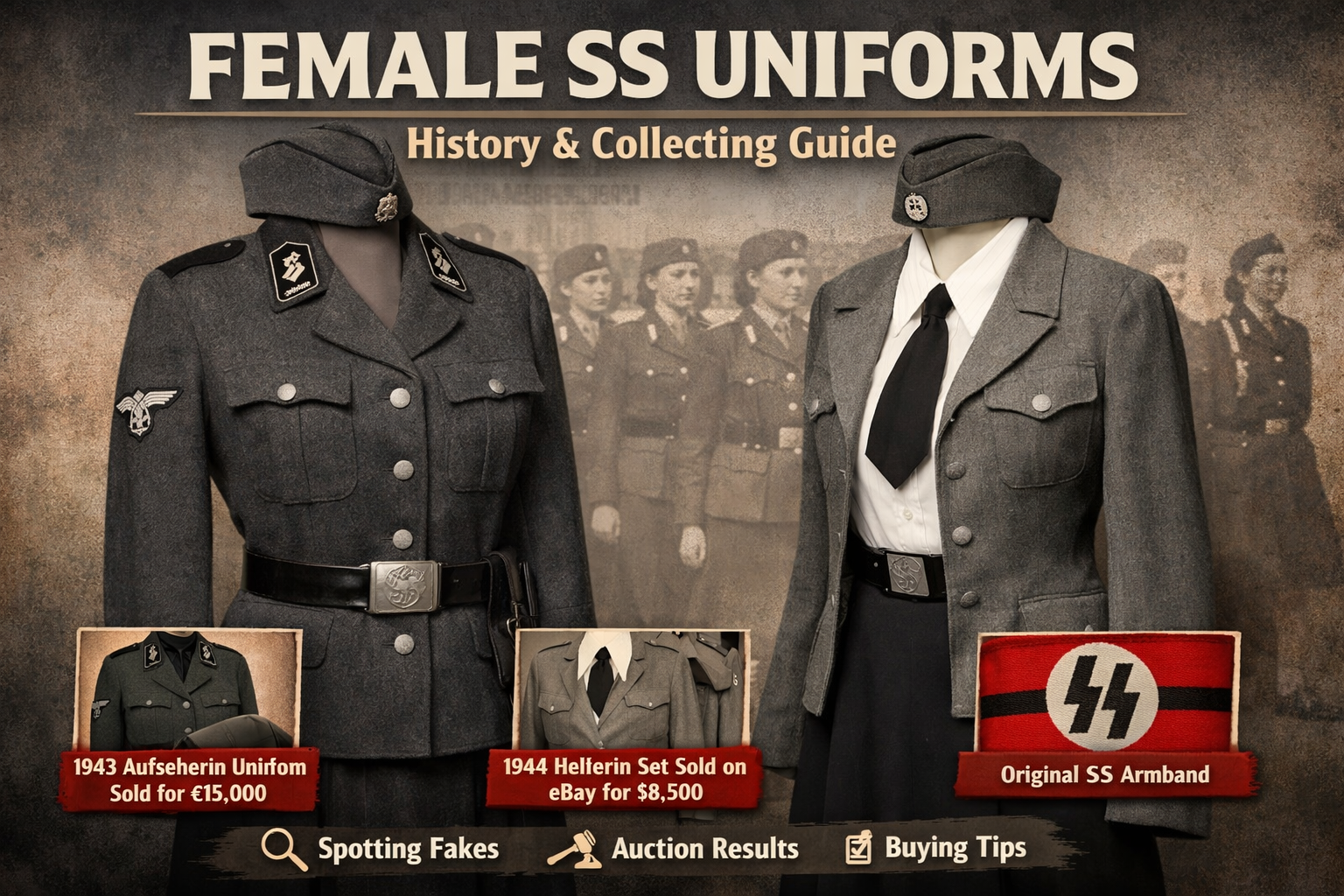
Hermann Historica recorded the sale of a 1943 Aufseherin uniform set for approximately €15,000. The set included jacket, skirt, and insignia. Auction notes cited original stitching and documented provenance.
Case Study 2: eBay Listing (1944 Helferin Set)
An eBay listing in the U.S. market showed a 1944 Helferin communications uniform set priced at $8,500. The listing included period photos and close-up fabric images. The item reportedly sold after several weeks. Documentation details were limited, highlighting the need for careful review.
Case Study 3: International Auction Records
Auction platforms such as Sotheby's have historically handled WWII artifacts, though not frequently SS uniforms due to sensitivity. When rare female auxiliary items appear, they attract global bids.
These examples show that documented provenance increases buyer confidence and final sale price.
H2: Pros, Cons, and Buying Tips
The biggest risk is buying a reproduction sold as original. Many modern replicas are aged artificially. Some sellers add insignia to ordinary German women’s jackets.
Warning Signs of Fakes:
-
Bright white thread on insignia
-
Synthetic lining material
-
No period wear or moth damage
-
Inconsistent rank insignia
Verification Steps:
-
Request high-resolution interior and stitching photos.
-
Compare insignia placement with museum references.
-
Ask for provenance documents.
-
Check seller history and previous militaria sales.
-
For India-to-USA sales, confirm export clearance and customs rules.
If you are buying from India and shipping to the U.S., ensure proper customs declaration. Mislabeling can result in seizure.
For serious collectors, third-party appraisal from militaria experts can reduce risk. It adds cost but may prevent larger losses.
FAQs
1. Are female SS uniforms legal to sell on eBay?
eBay allows historical items but restricts hate-symbol promotion. Listings may be removed if not clearly presented as historical artifacts.
2. How can I tell if an SS women's uniform is original?
Check fabric age, stitching, insignia accuracy, and provenance. Compare with museum references.
3. What is the average price of a female SS uniform?
Documented auction results range from €8,000 to €20,000 depending on condition and completeness.
4. Are reproductions common?
Yes. Many replicas are sold for reenactment or film use. They are far more common than originals.
5. Is it legal to import such uniforms into India?
Indian customs may restrict politically sensitive items. Always check current import regulations.
6. Why are female SS uniforms rarer than male ones?
Fewer were produced. Many were destroyed after 1945.
7. Do complete sets sell for more than individual pieces?
Yes. Jackets, skirts, and matching insignia together typically bring higher prices.
Conclusion
If you are into military history like me, you know that rare uniforms tell complex stories. But when it comes to female SS uniforms, the market is difficult. Originals are scarce. Fakes are common. Prices are high.
The solution is simple but requires patience. Study verified sources. Review auction archives. Compare construction details carefully. Ask sellers direct questions. If something feels off, walk away.
Searching for an SS women’s uniform for sale should not be rushed. With solid research and careful buying steps, you can reduce risk and focus on documented, historically accurate pieces. Smart collecting always starts with facts, not claims.