GERMAN UNIFORMS THEN AND NOW: REAL DIFFERENCES THAT MATTER
Introduction: Why German Uniforms Confuse Collectors
Ever wondered why that WW2 German tunic feels solid while a modern “replica” starts fraying after one event? Or why Bundeswehr gear looks nothing like older German uniforms, even though it comes from the same country? If you collect or reenact, this confusion is common.
Problem: It’s hard to tell originals from copies, and even harder to understand how German uniforms evolved from WW2 to today.
Agitate: Fakes flood the market. Labels are missing. Sellers mix eras. You end up overpaying—or worse, building an inaccurate kit.
Solution: Look at the uniforms themselves. Their materials, cuts, and markings tell the story when you know what to check.
Let’s walk through that story, step by step.
WW2 German Gear: Key Features and History
Fabrics and Construction
During WW2, German Army field uniforms were built for long wear, not comfort. The standard Feldbluse (field tunic) was usually made from heavy wool, often called feldgrau. Early-war versions used higher wool content. As shortages grew, blends with rayon appeared, but the structure stayed strong.
Why does this matter today? Original tunics often keep their shape after 80 years, while many modern copies sag after a few wears. Museums like the Imperial War Museum document these material changes clearly in surviving examples.
Insignia and Rank Details
Insignia followed strict rules. Shoulder boards showed rank. Collar tabs identified branch. Machine stitching was common, not sloppy hand work. Late-war pieces may look rougher, but even then, patterns stayed consistent.
Mini case study 1:
In 2022, an original M40 Feldbluse with intact insignia sold at a European auction for over €2,500. Why? The wool weight, correct thread color, and period-correct buttons matched archive references. Reproductions at the same sale struggled to cross €300.
Sound familiar? Details decide value.
Evolution to Bundeswehr Uniforms
Post-War Reset and NATO Influence
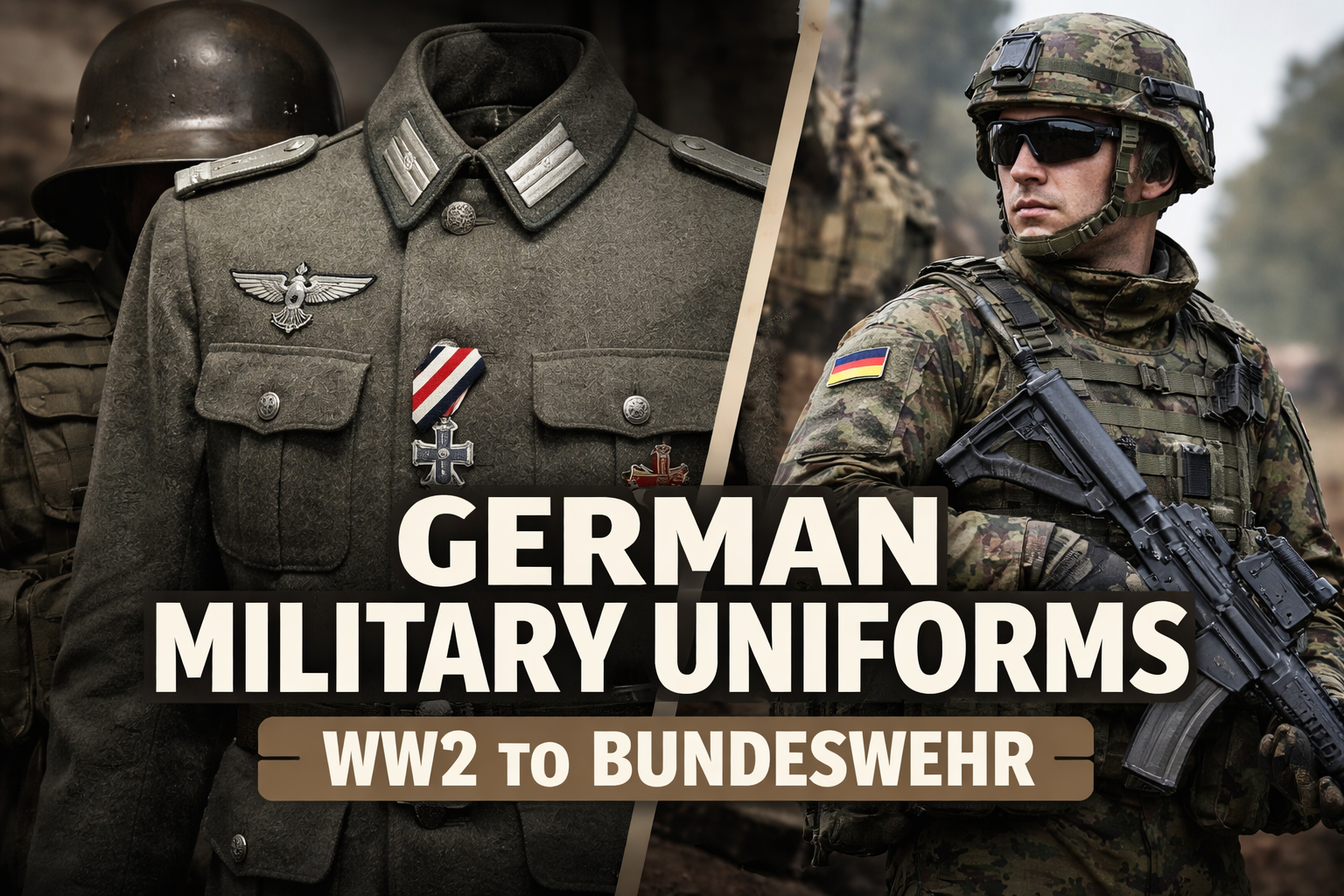
After 1945, Germany didn’t just update uniforms—it started over. When the Bundeswehr formed in 1955, old symbols were dropped. New designs followed NATO standards, focusing on safety, identification, and alliance compatibility.
Gone were collar tabs and branch colors. In came simpler rank systems and standardized cuts.
From Solid Colors to Flecktarn
Early Bundeswehr uniforms used plain olive tones. By the 1990s, Flecktarn camouflage appeared. This wasn’t style—it was testing. Field trials showed Flecktarn worked better in Central European forests than large-pattern camo.
Mini case study 2:
Bundeswehr archive photos show Flecktarn uniforms still in active training use after 20+ years. Soldiers report the fabric resists tearing better than earlier olive sets, even after repeated washes.
That’s evolution driven by use, not looks.
Pros & Cons: Real-World Breakdown
WW2 German Uniforms
Pros
-
Heavy materials with long life
-
Clear construction standards
-
High collector value
Cons
-
Limited sizes
-
Fragile if worn often
-
High risk of fakes
Modern Bundeswehr Uniforms
Pros
-
Lightweight and modular
-
Designed for movement and layering
-
Easier to source genuine surplus
Cons
-
Lower collector value
-
Less visual detail
-
Modern copies often mixed with originals
Mini case study 3:
A Bundeswehr fleece jacket purchased as surplus in 2010 is still used by a civilian outdoors group today. Stitching and zippers remain intact. This shows modern gear trades visual detail for daily durability.
Collector Tips and Examples
How to Check Authenticity (Quick Guide)
-
Fabric: WW2 wool feels dense, not soft. Modern copies feel lighter.
-
Stitching: Originals show even machine lines. Random stitching is a red flag.
-
Markings: Look for depot stamps, size codes, or date marks.
-
Wear patterns: Natural wear appears at elbows and cuffs, not evenly everywhere.
Databases like Griffin Militaria document verified originals, making side-by-side checks easier.
Real-World Example
A collector compared two M43 tunics—one original, one replica. The replica used modern thread that glowed under UV light. The original did not. Simple test, big difference.
Sound familiar? Small checks save big money.
FAQs
Are all WW2 German uniforms wool?
Most early and mid-war field uniforms used wool. Late-war shortages introduced blends, but full cotton field tunics were rare.
Why did Germany abandon feldgrau?
Visibility and alliance standards. NATO integration pushed Germany toward new colors and patterns.
Is Bundeswehr Flecktarn still in use?
Yes. Updated cuts exist, but the pattern remains standard.
Can you safely wear original WW2 uniforms?
Occasionally, yes—but frequent wear damages historic fabric and lowers value.
Are surplus Bundeswehr items collectible?
Some early or limited items are. Most are better seen as practical gear.
Conclusion: Build a Kit You Trust
If you’ve ever bought a “WW2 German tunic” that didn’t feel right, you’re not alone. German uniforms—from WW2 wool Feldblusen to modern Bundeswehr Flecktarn—were built for real use, not display. When you know the materials, markings, and history, the confusion clears fast.
Collect smarter. Compare carefully. And if you’re looking for well-researched, accurate uniform pieces and accessories for collecting or reenactment, check out our shop—built for people who care about facts, not hype.
REQUISITION RELATED GEAR
EXPLORE MORE FIELD REPORTS
Browse all published guides and history articles.
