WW1 HEADGEAR IN FOCUS: HOW THE BRODRICK CAP EVOLVED INTO THE BRODIE HELMET
Introduction: From the Trenches to the Helmets
Imagine dodging shrapnel while advancing across a muddy trench during the Battle of the Somme or Ypres. You’re fully geared, marching in rows, but there’s something missing: protection for your head. In 1914, this was the unfortunate reality for British soldiers. The British Army relied on the Brodrick service dress cap, a design that was more ceremonial than protective. But by 1915, the deadly realities of trench warfare, particularly shrapnel from artillery, would demand a change. That’s when the Brodie helmet made its debut, saving countless lives and marking a key evolution in military headgear.
In this guide, we’ll break down the transition from the Brodrick cap to the Brodie helmet, including specs, features, and how you can find modern reproductions to complete your reenactment gear.
Headgear Woes in 1914
At the outbreak of World War 1, the British Army’s headgear was more about appearance than function. The Brodrick cap, introduced in 1902, was part of the British service dress uniform. It looked sharp and professional but lacked any real protective value. In fact, soldiers facing the grim reality of trench warfare were left vulnerable to the shrapnel and debris that filled the air during bombardments.
The Brodrick Cap Breakdown
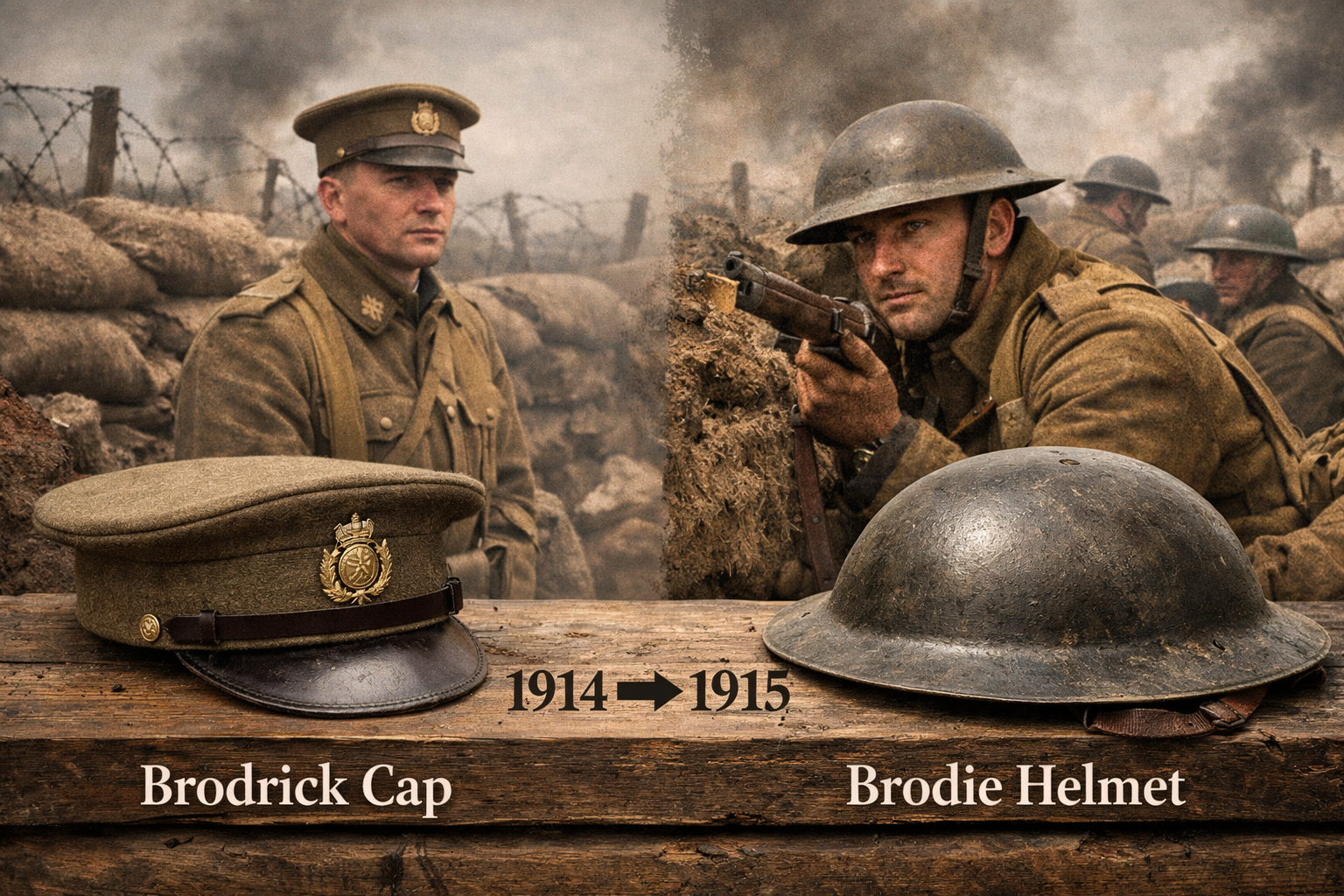
The Brodrick service dress cap was a distinctive feature of British military uniforms. Characterized by its stiff, angular shape, it had a rounded top with a short, flat peak. The body was made of wool, and it featured a brass cap badge representing the soldier’s regiment. While the Brodrick cap looked impressive and was part of the British Army’s everyday attire, it offered little protection against the new kind of warfare unfolding in the trenches.
Its fabric construction made it light, but that was a double-edged sword in battle. The main issue? It couldn't stop a single piece of shrapnel, which became a fatal flaw as the war progressed. Soldiers exposed to artillery bombardments or shrapnel were at serious risk of head injuries, which is why the British Army quickly realized they needed a change.
Enter the Brodie Helmet: Headgear for Survival
By 1915, after several brutal battles and mounting casualties from head injuries, a new solution emerged. The Brodie helmet was introduced, designed to protect soldiers from shrapnel and other battlefield hazards. Unlike the Brodrick cap, the Brodie helmet was all about function over form, but it would go on to save countless lives.
Brodie Helmet Specs
The Brodie helmet was made of mild steel, a material chosen for its durability and ability to withstand shrapnel impact. The helmet's design was simple but effective: it had a deep bowl shape with a rolled rim to deflect shrapnel and provide better coverage. The steel thickness was typically around 0.7 mm, which balanced weight and protection. It featured a leather liner and chinstrap, which allowed for a secure fit.
The helmet's rim had a width of about 2.5 cm, which gave added protection to the neck and ears. Over time, the design evolved, but the core principle remained: protect the head, especially the vulnerable areas. If you’re looking for a WW1 Brodie helmet reproduction, focus on key elements like the thickness of the steel, the liner, and the chinstrap attachments to ensure authenticity.
Brodrick Cap vs. Brodie Helmet: Pros and Cons
Brodrick Cap: Style vs. Comfort
The Brodrick cap might look great, but when it came to functionality, it left much to be desired. It was great for ceremonial purposes, but soldiers quickly realized that a wool cap offered no protection against the dangers of trench warfare. A sharp shrapnel strike could pierce the cap and cause serious injury.
Pros:
-
Visually distinctive and stylish.
-
Lightweight and breathable.
-
Comfortable for non-combat situations.
Cons:
-
No protection against shrapnel.
-
Easily damaged in the field.
-
Inadequate for the trench environment.
Brodie Helmet: Heavy Duty Protection
The Brodie helmet, on the other hand, was a game-changer. It may not have looked as sharp as the Brodrick cap, but its practical design saved lives. While the Brodie helmet was heavier than the Brodrick cap, it was built for survival. Its shape offered more coverage, and its steel construction could absorb the impact of shrapnel. The downside? It was a bit cumbersome compared to the Brodrick, but soldiers quickly learned to adapt.
Pros:
-
Excellent protection against shrapnel and debris.
-
Sturdy steel construction.
-
Adjustable leather liner for a snug fit.
Cons:
-
Heavier than the Brodrick cap.
-
Can cause neck strain if worn for long periods.
-
Less comfortable in hot weather.
Real-World Examples: Loos and Modern Reenactments
One of the first major battles where the Brodie helmet was used in action was at the Battle of Loos in 1915. Soldiers who wore the Brodie helmet were significantly less likely to suffer head injuries than those who didn’t, proving the helmet’s effectiveness. Over time, the Brodie became the standard for British soldiers throughout the war, with the design being adopted by other Allied forces as well.
Fast forward to modern times, and the Brodie helmet remains a key piece of military history for reenactors. WW1 enthusiasts and historical societies have produced a variety of Brodie helmet WW1 reproductions that aim to replicate the original as closely as possible. If you’re a reenactor, make sure to look for helmets with accurate steel thickness, chinstrap configurations, and the right liner construction.
Features Breakdown: What to Look for in Reproductions
Brodrick Cap Details
-
Fabric: The Brodrick cap is typically made from wool or a wool-blend fabric. Look for high-quality materials that replicate the original.
-
Visor: The cap features a flat, stiff peak, usually around 6-7 cm in length.
-
Cap Badge: A brass badge is fixed to the front, indicating the soldier’s regiment.
Brodie Helmet Specs
-
Steel Thickness: The original Brodie helmet’s steel thickness was around 0.7 mm, offering a balance between protection and weight.
-
Liner: The leather liner should fit snugly and securely around the soldier’s head, typically with adjustable leather straps.
-
Chinstrap: The chinstrap should be made of leather and adjustable to ensure a secure fit.
FAQs: Everything You Need to Know
1. How do I know what size Brodie helmet I need?
-
To measure for a Brodie helmet, you should take a head circumference measurement just above your ears. Helmets typically come in sizes 6 ¾ to 7 ¾.
2. What are the authenticity marks on a Brodrick cap?
-
Authentic Brodrick caps often feature a stamped cap badge and may have markings indicating the manufacturer on the inner lining or sweatband.
3. What’s the weight of a Brodie helmet?
-
The Brodie helmet weighs approximately 1.2 to 1.5 kg, depending on the model and materials used.
4. Can I use a Brodie helmet in reenactments?
-
Yes, modern WW1 Brodie helmet reproductions are commonly used in reenactments. Look for models that match the original specs for authenticity.
5. Why was the Brodie helmet so effective in WW1?
-
The Brodie helmet’s design was specifically made to deflect shrapnel and offer better coverage, making it more effective than previous headgear in protecting soldiers.
Conclusion: From Brodrick to Brodie – A History of Protection
The transformation from the Brodrick service dress cap to the Brodie helmet marked a significant evolution in British military headgear. The Brodrick cap, while stylish, couldn’t provide the protection soldiers needed in the face of deadly trench warfare. Enter the Brodie helmet: a practical, life-saving solution that became synonymous with WW1 British military gear.
Whether you’re a reenactor or a history buff, understanding the design and evolution of these headgear pieces is crucial. If you’re looking for authentic reproductions to add to your collection, browse paddelaters.com for quality WW1 British military headgear options, including Brodrick caps and Brodie helmets.
REQUISITION RELATED GEAR
EXPLORE MORE FIELD REPORTS
Browse all published guides and history articles.
