Introduction: A Soldier’s Early War Challenge
Picture a British soldier in 1939. War has just begun. He carries heavy gear, marches long miles, and trains in cold rain. But his uniform is still based on older patterns designed with parade and formal service in mind. The cut is long. The fabric hangs loose. Equipment rubs against cloth that was not shaped for modern, fast-moving combat.
Early in the war, the British Army knew something had to change. Soldiers needed clothing that worked with webbing, not against it. They needed shorter jackets, better pocket placement, and trousers that stayed in place while crawling or running. A British WW2 uniform was not just about appearance. It was about function, comfort, and survival.
That is where the 1937 Pattern Battledress came in. The battledress blouse and trousers became standard for British forces across Europe, North Africa, and beyond. Today, collectors and reenactors look closely at these details. Sites like paddelaters.com reproduce these garments using original specifications such as wool blend fabric, four front pockets on the blouse, and ankle-length trousers with side zips. Let’s break down what made this uniform work.
What Made Battledress a Game-Changer
The 1937 Pattern Battledress was introduced before the war but saw full use during World War II. It replaced the older Service Dress for combat roles. The biggest change? A shorter, waist-length blouse designed to sit neatly above webbing belts.
Instead of a long tunic, the battledress blouse ended at the waist. This prevented bunching under equipment. It also reduced extra fabric that could snag or soak up water. The trousers were high-waisted and designed to work with braces. They were cut to allow movement without being too loose.
This shift was practical. The British WW2 uniform became more about field needs than parade ground tradition.
Blouse Breakdown
The battledress blouse is the most recognizable part of the British WW2 uniform. On paddelaters.com replicas, the 1937 pattern blouse includes:
-
Wool blend fabric
-
Four front pockets
-
Button front closure
-
Adjustable waist tabs
-
Epaulettes for rank insignia
The wool blend was chosen for warmth and durability. Britain expected cold conditions in Europe. Wool holds heat even when damp. That mattered in trenches and open fields.
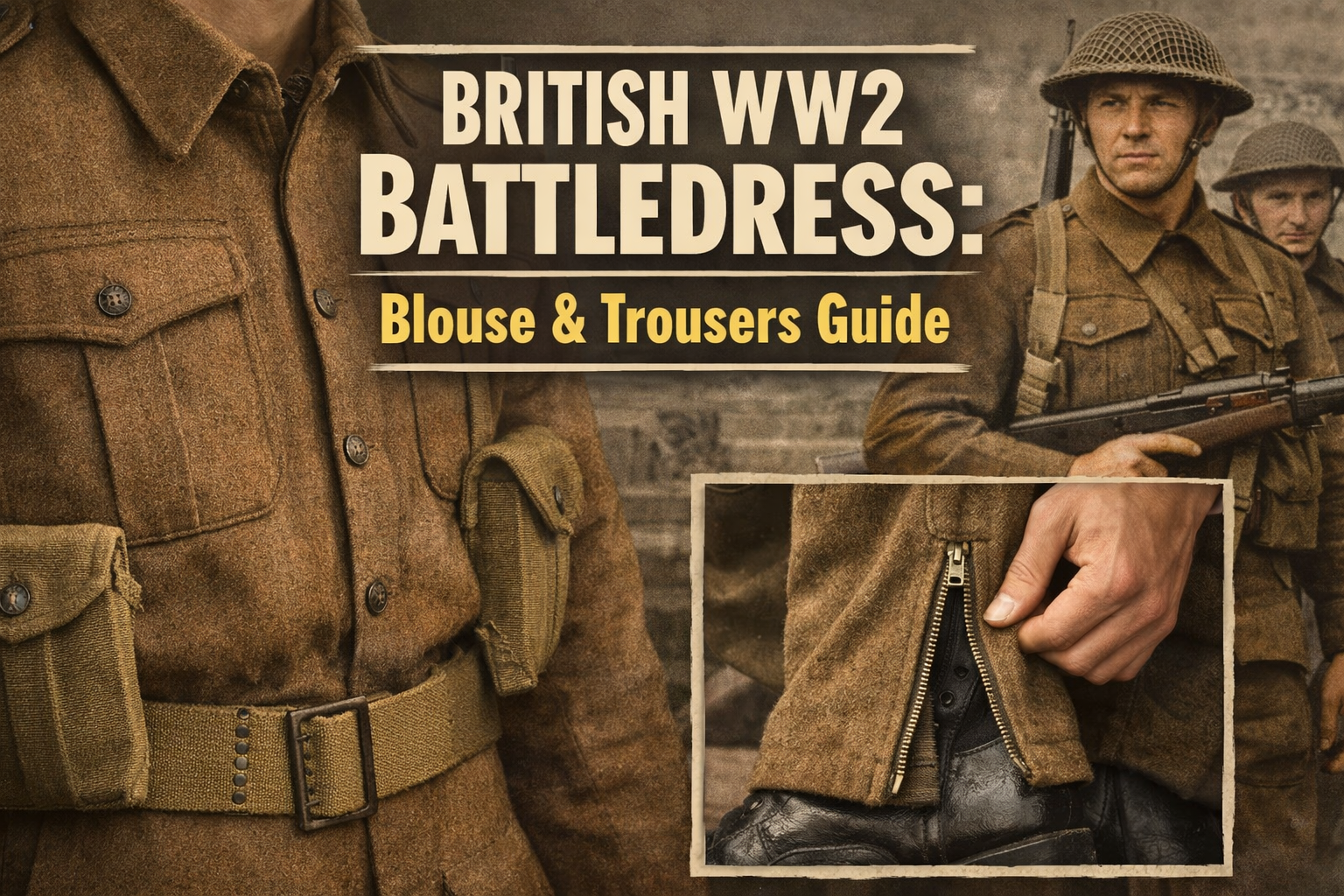
The four-pocket layout was also practical. Two chest pockets and two lower pockets allowed soldiers to carry small items without always relying on webbing pouches. Buttons were large and easy to grip with cold fingers.
The blouse was cut short on purpose. When worn with 1937 Pattern webbing, the belt sat comfortably without pushing the fabric upward.
Trouser Fit for Battle
The battledress trousers were just as important. Replicas on paddelaters.com follow period details such as:
-
Wool blend construction
-
High waist design
-
Ankle-length cut
-
Side zips at the bottom
The side zips allowed the trousers to fit neatly over boots. This kept the lower leg secure and reduced loose cloth. The high waist helped keep shirts tucked and braces in place.
These army trousers replica designs were made for marching, kneeling, and climbing. The fabric was strong enough to handle field use but still flexible enough for movement.
Features of the 1937 Pattern Battledress
Let’s list the key features clearly.
Materials:
-
Wool blend fabric for warmth
-
Heavy weave for durability
-
Designed for European climate
Blouse Design:
-
Waist-length cut
-
Four front pockets
-
Button closure
-
Waist adjustment tabs
-
Epaulettes for insignia
Trousers Design:
-
High waist
-
Straight leg
-
Ankle-length
-
Side zips
-
Brace buttons
This British WW2 uniform design focused on balance. It was not lightweight like modern combat gear. But for the 1940s, it was a major improvement.
Pros and Cons of British WW2 Battledress
Every uniform has strengths and limits. Let’s look at both sides.
Pros
-
Durability: Wool blend fabric handled rough field conditions.
-
Warmth: Suitable for cold climates like Northwest Europe.
-
Practical Cut: Short blouse worked well with webbing.
-
Pocket Space: Four pockets allowed extra storage.
-
Structured Fit: High-waisted trousers stayed in place during movement.
Cons
-
Heat Issues: Wool could feel heavy and warm in hot climates like North Africa.
-
Itch Factor: Some soldiers reported wool irritation.
-
Water Weight: Wet wool became heavier.
-
Limited Camouflage: Standard battledress was plain brown, not patterned.
In desert campaigns, troops often switched to lighter khaki drill uniforms. This shows that the British WW2 uniform evolved depending on region.
Real-World Examples from the War
D-Day and Northwest Europe
On 6 June 1944, British and Canadian forces landed in Normandy. Many infantry units wore standard battledress blouse and trousers under their equipment. Paratroopers often wore Denison smocks over battledress, but the base layer remained the same.
The waist-length blouse worked well with parachute harnesses and webbing. The structured trousers held up during long marches inland.
North Africa Campaign
In North Africa, conditions were different. The wool battledress was sometimes replaced with lighter drill uniforms. However, battledress was still issued, especially for cooler nights. Soldiers learned quickly that climate mattered as much as design.
Italy and Winter Conditions
In Italy, mountain fighting required warmth. The wool blend fabric helped retain heat. Soldiers layered shirts underneath and sometimes added greatcoats. The battledress blouse provided a stable base layer for equipment and insignia.
Replica Case Study: Paddelaters.com Battledress
Collectors today want accuracy. On paddelaters.com, the 1937 pattern battledress blouse replica includes:
-
Correct four-pocket layout
-
Period-style buttons
-
Wool blend fabric
-
Waist adjustment tabs
The trousers replica includes:
-
Ankle-length cut
-
Side zip closures
-
High waist with brace buttons
These details matter. Reenactors use them for living history events. Film productions also rely on accurate army trousers replica designs. Accuracy in pocket count, fabric weight, and cut separates a costume from a proper replica.
For anyone building a British WW2 uniform set, matching blouse and trousers is key. Mixing patterns from different years can look wrong for a specific unit portrayal.
FAQs About British WW2 Battledress
1. How do you size a WW2 battledress blouse?
Measure chest size in inches. Compare with size charts provided by replica makers like paddelaters.com. Battledress was meant to fit snug at the waist.
2. Why was the blouse so short?
The short cut prevented fabric from bunching under webbing belts and equipment.
3. Were all British WW2 uniforms the same?
No. Variations existed for officers, paratroopers, and desert units. But the 1937 Pattern battledress was standard for many troops.
4. Did soldiers wear shirts under battledress?
Yes. A wool or cotton shirt was worn underneath for comfort and layering.
5. Why did trousers have side zips?
Side zips allowed the trousers to fit neatly over boots and reduced loose fabric at the ankle.
6. Was battledress used after WWII?
Yes. Variants continued in use after 1945, with updates to fabric and design.
7. Is wool accurate for reenactment?
Yes. Wool blend fabric matches period specifications and provides correct look and structure.
Conclusion: Why Battledress Still Matters
The British WW2 uniform was not just clothing. It was part of a larger system designed for modern warfare. The 1937 Pattern battledress blouse and trousers solved early war problems. They reduced bulk. They improved movement. They worked with webbing instead of fighting against it.
Were they perfect? No. Wool could itch. Heat could be an issue. But compared to older service dress, battledress was a practical step forward.
Today, collectors and reenactors look for correct details: four front pockets, wool blend fabric, ankle-length trousers with side zips, high waist cut. These are not small details. They define authenticity.
If you are building a display, planning reenactment, or just studying military history, checking accurate replicas like those on paddelaters.com is a smart next step. A proper battledress set helps you understand what British soldiers actually wore in real combat.
History becomes clearer when you see how design met real-world need. And the battledress blouse and trousers are a solid example of that balance between function and field reality.