Dropping the Dress Uniform (Introduction)
In 1939, a young British soldier stood on a cold field in France. He was not wearing a long tunic with polished buttons. He wore a short wool jacket and high-waisted trousers. This was the new 1937 pattern jacket, part of the WW2 British Army battledress system. It was built for war, not parade.
Before 1937, British uniforms still carried design ideas from earlier decades. Long service dress tunics looked smart, but they were not ideal for trenches, armored vehicles, or rapid movement. Soldiers needed something shorter, tighter at the waist, and easier to layer with gear.
When the war began, men of the British Expeditionary Force wore battledress during the retreat to Dunkirk. Later, troops in North Africa and Normandy wore the same system. The design stayed in service because it worked.
If you are searching for a WW2 British army uniform for sale, especially a 1937 pattern jacket, it helps to know why it replaced the old dress style and why collectors still look for it today.
Why 1937 Battledress Changed Everything
The British Army introduced the battledress system in 1937. The goal was clear: create a field uniform that allowed movement, saved fabric, and worked with modern equipment.
The short jacket design reduced bulk. The high waistline worked well with webbing and belts. The fabric was strong enough for field use. It was practical.
Jacket Key Features
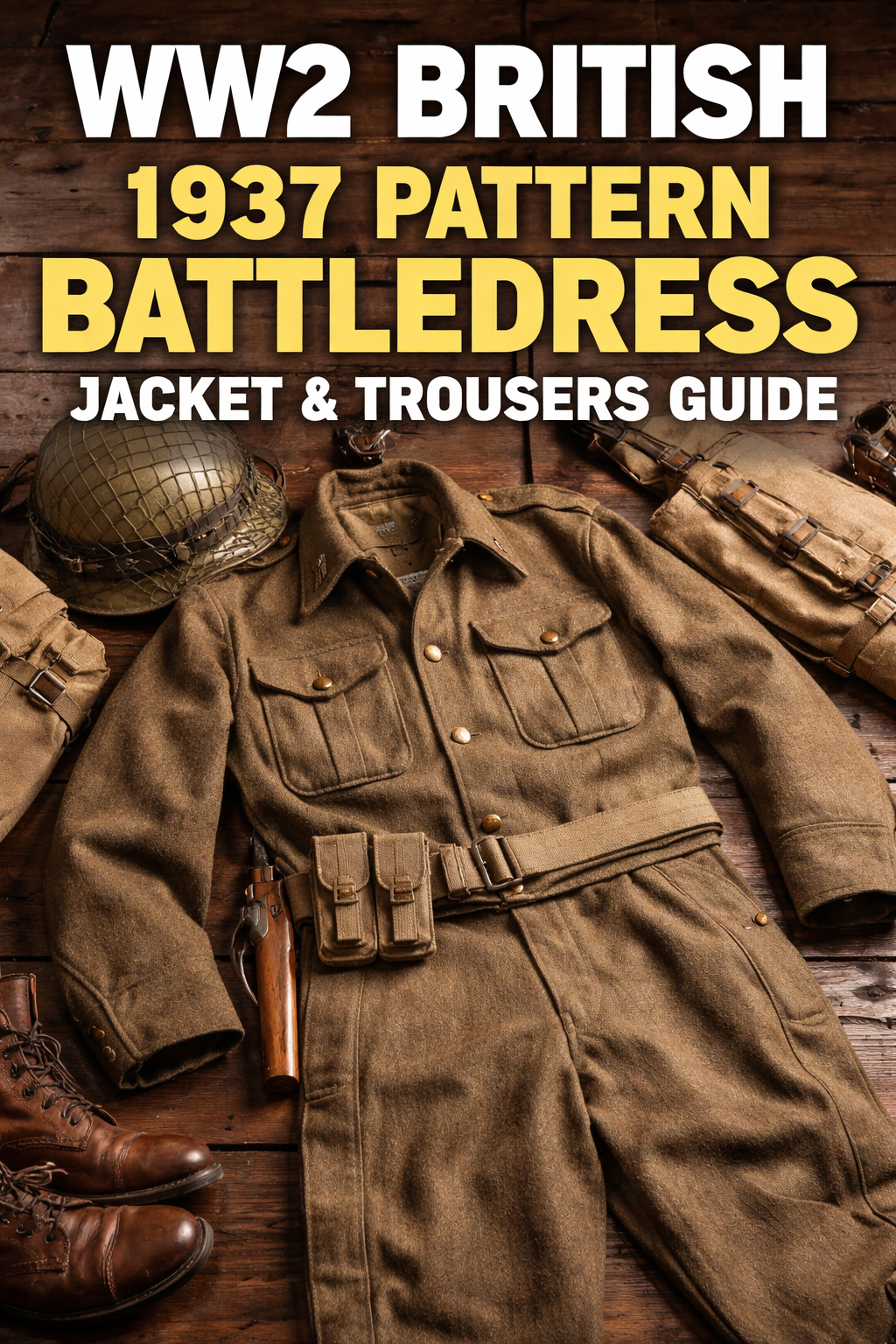
If you look at replica listings from paddelaters.com, the 1937 pattern jacket keeps these core details:
-
Fabric: Wool serge construction
-
Pockets: 4 front bellows pockets
-
Buttons: Brass buttons
-
Fit: Short waist-length cut
-
Sizes: S to XXXL
-
Closure: Button front
-
Structure: Fitted body with internal waist belt
The wool serge material gave structure and durability. The four bellows pockets allowed soldiers to carry small items like field dressings or notebooks. The brass buttons secured the front and pocket flaps.
The waist-length cut was important. It allowed webbing equipment to sit properly without pushing the jacket up. Soldiers could crawl or run without excess cloth getting in the way.
This is why the 1937 pattern jacket became standard across British forces during the early and middle years of the war.
Matching Trousers Breakdown
The trousers were designed to work as a system with the jacket.
Replica versions from paddelaters.com include:
-
Wool fabric to match the jacket
-
High waist fit
-
Ankle taper design
-
Side zip closure
-
Button fly
The ankle fit helped reduce snagging. The design allowed soldiers to wear gaiters or boots comfortably. The high waist allowed suspenders or braces to hold the trousers in place during movement.
Together, jacket and trousers formed a complete field system. When you see a British WW2 battledress set for sale, check that both pieces match in fabric and tone.
Pros & Cons in Real Use
No uniform is perfect. The 1937 battledress solved many problems, but it also had limits.
| Feature | Field Advantage | Field Limitation |
|---|---|---|
| Wool serge fabric | Strong and durable | Can feel heavy when wet |
| Short jacket cut | Better movement | Less coverage in cold wind |
| Bellows pockets | Useful storage | Limited capacity |
| Brass buttons | Secure fastening | Can tarnish over time |
| Ankle-fit trousers | Works with boots | Tight fit for some builds |
In cold European climates, wool helped retain warmth. In wet conditions, it absorbed water and gained weight. In North Africa, heat was a challenge. Still, troops continued to use the system because it was reliable.
Ever wonder why GIs envied Tommy's gear? Early American troops in 1942 noticed the compact British jacket design compared to their longer service coats. The British system had already been tested in active campaigns.
Battle-Tested Examples
The 1937 pattern battledress saw action in many major operations.
At Dunkirk in 1940, British Expeditionary Force troops wore battledress during the evacuation. Photos show soldiers boarding ships in short wool jackets.
In the North African campaign, troops at El Alamein wore battledress adapted for desert use. The standard wool system remained in wide use before lighter desert clothing became common.
On D-Day in 1944, many British infantry units landed in Normandy wearing battledress blouses and trousers. Period photographs confirm the continued use of the 1937 pattern jacket.
This wide operational use explains why collectors search for a WW2 British army uniform for sale that reflects real battlefield history.
When buying a replica, check that the cut matches wartime references. Look for proper pocket shape and waist length. Small details matter.
Common Sizes & Sizing Tips
Replica jackets from paddelaters.com are available from S to XXXL. That range helps reenactors and collectors find a workable fit.
Here are simple sizing tips:
-
Measure chest circumference in inches
-
Compare with listing size chart
-
Account for layering underneath
-
If between sizes, consider comfort for movement
-
Check sleeve length
The original wartime jackets were tailored for soldiers' measurements. Modern replicas often use standard size blocks. Always confirm your chest and shoulder width before ordering a 1937 pattern jacket.
For trousers:
-
Measure waist at natural waistline
-
Confirm inseam length
-
Check ankle opening width
-
Ensure room for movement
A proper fit improves the overall look of a British WW2 battledress set.
FAQs
1. Can I buy a real WW2 British jacket?
Yes, original jackets appear in auctions and military surplus markets. However, prices are high and condition varies. Many buyers prefer a WW2 British army uniform for sale in replica form for reenactment use.
2. What fabric is correct for a 1937 pattern jacket?
Wool serge is the standard material. Replica versions from paddelaters.com follow this traditional fabric choice.
3. How do I care for wool battledress?
Dry clean when possible. Avoid machine washing. Store in a dry area. Use moth protection if keeping long term.
4. Are replicas suitable for reenactment?
Yes. A properly made army jacket replica with correct cut, wool fabric, and pocket design works well for historical events.
5. Did all British troops wear battledress?
Most frontline units did during major campaigns. Variations existed for desert and specialized roles.
6. Is the 1937 pattern jacket still collected today?
Yes. Collectors, film costume departments, and reenactors continue to seek the 1937 pattern jacket and matching trousers.
Conclusion
The move from dress uniform to battledress marked a clear shift in military thinking. Practical design replaced parade style. The short wool jacket, four bellows pockets, brass buttons, and fitted waist became standard for British forces during critical years of WW2.
From Dunkirk to El Alamein to Normandy, the 1937 pattern jacket proved workable in real conditions. It was not perfect. Wool could be heavy. But the system functioned in combat.
Today, if you are looking for a WW2 British army uniform for sale, especially a 1937 pattern jacket, replica sets from paddelaters.com offer the correct wool serge fabric, proper pocket layout, brass buttons, and sizes from S to XXXL. Matching ankle-fit trousers with side zips complete the set.
Whether you are a collector, reenactor, or film costumer, understanding the design helps you choose wisely. Check measurements. Compare features. Confirm fabric. Then build your set.
Want to add a British WW2 battledress to your collection? Explore current listings and review sizing carefully before purchase.