DISCOVERING WWI AMERICAN UNIFORMS: A COMPREHENSIVE GUIDE TO THE AMERICAN SOLDIER’S GEAR
Introduction: The Hidden Stories Behind WWI American Uniforms
Did you know that over 4.7 million American soldiers wore the iconic World War I uniforms, each serving not only as military attire but also as symbols of national pride? The "American Doughboy" became a symbol of the United States' role in the Great War. Yet, despite its historical significance, the details of the WWI American uniforms often go unnoticed. Whether you are a history enthusiast or a collector of war memorabilia, understanding the design, function, and evolution of these uniforms is essential. In this guide, we’ll uncover the key components of the WWI American uniform, their history, and the trends that continue to shape their legacy today.
Section 1: The Anatomy of a WWI American Soldier Uniform
When we talk about WWI American uniforms, we’re referring to a distinct set of clothing that the soldiers wore during their service. These uniforms were not just about style—they had a purpose. They were designed to suit the rigorous conditions of trench warfare, to provide protection, and to boost the morale of the soldiers.
Key Features of the WWI American Soldier Uniform:
- The M1912 Wool Tunic: The wool tunic was the foundation of the uniform. It was both functional and durable. The M1912 design featured a dark olive-drab colour, which provided camouflage in various environments. The tunic had four pockets, making it practical for carrying small items like maps or tools.
- Trousers and Breeches: The soldiers wore wool trousers, which were designed to be tough and functional. In some cases, they wore breeches that ended just below the knee, paired with long stockings and boots. This was especially common in cavalry units.
- The M1917 Steel Helmet: By the end of 1917, the American military adopted the M1917 helmet, inspired by the French "Adrian" helmet. It was designed to offer better protection against shrapnel compared to the soft caps that soldiers had previously worn.
- The Brodie Hat: Before the M1917 steel helmet, soldiers wore a simple Brodie hat. It was made from metal but didn’t offer much protection, leading to the switch to the M1917 helmet.
- Leather Boots and Gaiters: Soldiers often wore leather boots with high gaiters to protect their legs from mud and debris. The shoes were sturdy, but also allowed for ease of movement.
- The M1911 Pistol Holster: The iconic sidearm for American soldiers during WWI was the M1911 pistol, and it had its own leather holster. Soldiers used these holsters to carry the pistols, which were often used for close-quarter combat.
Actionable Tip:
When looking to collect or learn more about American WWI uniforms, it’s crucial to identify these unique elements. Many modern reproductions may lack the authenticity of the original wool tunic or M1917 helmet. Always look for verified sources or experts to guide your collection or historical study.
Section 2: Understanding the Colour and Materials of American WWI Uniforms
One of the most frequently asked questions about what colour American uniforms were in WWI is key to understanding the historical context of the uniforms. The uniforms were designed not only for utility but also for camouflage, to help soldiers blend into their environments.
The Colour Palette of WWI American Uniforms:
- Olive Drab: The primary colour for American uniforms was a shade of olive drab. This colour provided a balance between visibility and camouflage, helping soldiers blend into a variety of settings, from muddy trenches to wooded areas.
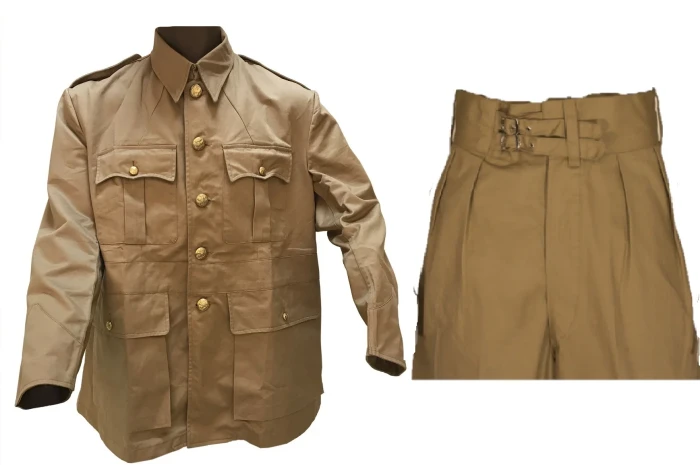
- Khaki and Tan Shades: Early in the war, soldiers were issued khaki uniforms, especially when stationed in warmer climates like the Mediterranean. The fabric was lighter than the standard wool uniforms, providing some relief from the summer heat.
- Leather Accents: The leather boots, belts, and holsters were usually in a dark brown or black colour, designed for durability and functionality.
Actionable Tip:
For those interested in the detailed history of WWI American soldier uniforms, pay close attention to the fabric. WWI uniforms were made from a combination of wool, cotton, and linen. These materials were standard at the time, though the methods of production were not as advanced as today’s textile technology.
Section 3: The Evolution of WWI Uniforms and Their Impact on WWII American Gear
The American WWI uniform had a profound influence on the design of uniforms during World War II. Many of the same principles and designs carried over into WWII gear, albeit with important changes.
How the WWI American Uniform Influenced WWII Gear:
- Helmet Design: While the M1917 steel helmet was revolutionary in WWI, its design was refined in WWII into the famous M1 helmet, which became iconic for American soldiers.
- Jacket and Trousers: The design of the tunic and trousers from WWI evolved into the more rugged and durable M-1941 field jacket and M-1937 pants during WWII. These updates were necessary to accommodate changes in combat strategy, such as greater mobility and the need for warmer clothing in different terrains.
- Field Gear: While the M1911 pistol and leather holsters remained staples, innovations like the M1910 pack system and M1943 field pack were introduced, offering better weight distribution and convenience for soldiers.
Actionable Tip:
If you are collecting or studying WWI uniforms, consider also exploring the transition into WWII. This will give you a deeper understanding of how warfare influenced military clothing and equipment over time.
Section 4: Common Pitfalls in Collecting WWI American Uniforms
While WWI American uniforms are an interesting area of study and collecting, there are some common pitfalls you should be aware of when starting your collection or research.
1. Misleading Reproductions: Many modern reproductions of WWI uniforms look similar to the originals but lack the authenticity that collectors value. Make sure to examine labels, stitching, and material quality before purchasing.
2. Ignoring Provenance: Provenance refers to the history of an item, and when it comes to WWI uniforms, this can add tremendous value. Always ask about the history of the uniform you’re interested in. The more verifiable the provenance, the better.
3. Overlooking Condition: Age and wear affect the condition of military uniforms. While it’s great to find an original WWI uniform, ensure that the condition of the garment or gear is reasonable. A uniform with severe damage may lose much of its value, but in some cases, collectors may still value it for its historical significance.
Actionable Tip:
For the most authentic and valuable collection, work with reputable dealers and always ensure that you verify the item's authenticity. Look for certification or expert opinions if you're unsure about the item's origin.
Conclusion: Why WWI American Uniforms Still Matter Today
WWI American uniforms are more than just clothing; they are pieces of history that tell the story of America’s role in one of the most significant wars in human history. Whether you are a historian, collector, or just someone with a passion for military history, the significance of these uniforms cannot be overstated. By studying the design, materials, and evolution of WWI uniforms, Americans gain valuable insight into the lives of soldiers who fought bravely during the Great War.
Ready to start your own historical journey? Whether you’re beginning a collection, conducting research, or just admiring the craftsmanship of the past, take the first step today to explore the lasting legacy of the American WWI uniform.
REQUISITION RELATED GEAR
EXPLORE MORE FIELD REPORTS
Browse all published guides and history articles.
