Introduction
In 1914, the French Army was caught off guard. Their uniforms, designed with past battles in mind, weren’t built for the harsh realities of World War I. French soldiers marched into battle with bright red trousers—yes, red!—and blue coats, making them easy targets on the battlefield. By 1915, the French had figured out their mistake and introduced a much more effective solution: the Horizon Blue uniform. This blog will take you through the fascinating history of the Horizon Blue tunic, trousers, and coat, explaining how it helped French soldiers survive the brutal trench warfare of WW1.
Early Problems with French Uniforms
Red Pantalons in 1914
Hey, ever wonder why French soldiers wore such bright red pants at the start of the war? In 1914, French troops were outfitted in their traditional blue coats and bright red pantalons (pants). These red trousers, designed for ceremonial and parade use, were not ideal for the realities of a battlefield. The problem? Visibility.
When the war broke out, the French army quickly realized that these red pants made soldiers highly visible, especially in the open fields where early combat took place. From a distance, the bright red color stood out against the green landscapes of the French countryside. The result? French soldiers were prime targets for enemy snipers. The visibility issues were more than just an inconvenience; they were dangerous, leading to unnecessary casualties in the early months of the war.
Trench warfare made matters even worse. As soldiers moved into trenches, the once open battlefields became a web of narrow, muddy trenches where every movement could give away a position. The old uniform’s bright colors simply didn’t cut it anymore. The need for camouflage became critical, and the French Army had to make a change. That change came in 1915 with the introduction of the Horizon Blue uniform.
Horizon Blue Solution
The 1915 Tunic Breakdown
The Horizon Blue uniform, introduced in 1915, was a game-changer. The French Army ditched the red pantalons and designed a new, more functional set of gear, including the Horizon Blue tunic, trousers, and coat. Let’s dive into the specs of the Horizon Blue tunic.
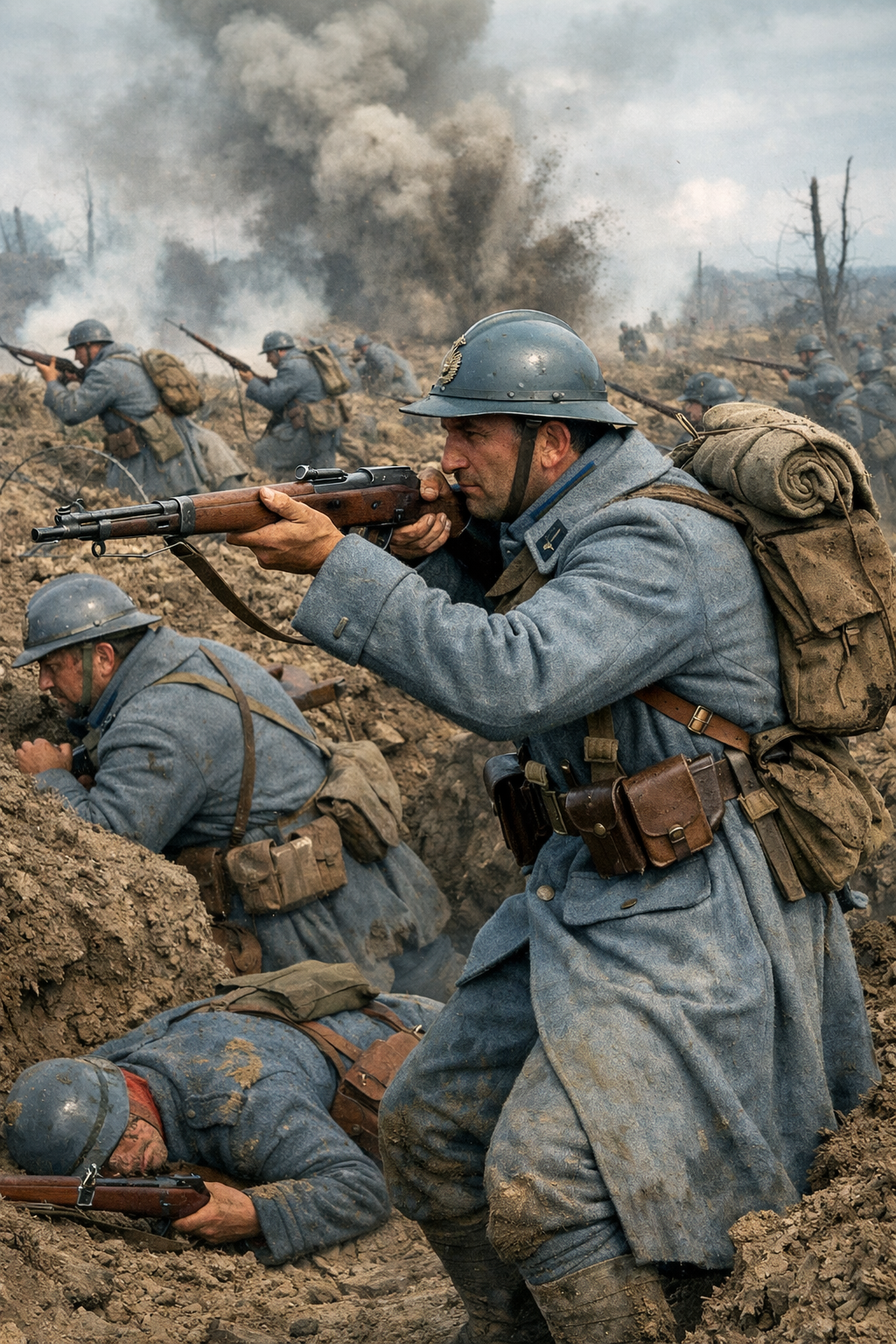
Made from a wool blend, the M1915 tunic was designed for durability and comfort in the trenches. The tunic was not just about the color—it was also practical. It featured a 4-pocket design, giving soldiers ample storage space for their equipment and gear. But what truly set it apart was the color: a muted, gray-blue shade known as "Bleu Horizon." This color was specifically chosen because it blended better with the landscape, providing much-needed camouflage.
The tunic wasn’t just practical in terms of function—it was also built for comfort. The wool fabric kept soldiers warm during the harsh winters and cool in the summer heat. Its practical design helped soldiers adapt to the needs of trench warfare, offering both functionality and protection.
Trousers and Coat Features
Next up are the trousers and the coat. The Horizon Blue trousers were made from the same wool blend as the tunic, and they featured a simple, practical design that was more comfortable and less eye-catching than the old red ones. The color of the trousers, like the tunic, was a soft blue-gray that blended well with the environment, allowing soldiers to move with less risk of detection.
The M1915 coat, also part of the Horizon Blue uniform, was an essential piece of the gear. This coat, known as the "Capote M1915," was a long overcoat that protected soldiers from the elements. Let’s break down its features.
Capote M1915 Coat Specs
The Capote M1915 was made from heavy wool, providing warmth in the bitter cold of the trenches. Its loose design allowed for layering, so soldiers could wear it over their tunic or other clothing. The coat was fitted with a large, high collar to protect the neck and a large buttoned flap that helped shield soldiers from rain and snow. Its simple, functional design made it a staple of the French soldier's kit throughout the war.
Key Features of Horizon Blue Uniforms
The Horizon Blue uniforms were not just about camouflage—they were also designed with the needs of trench warfare in mind. The M1915 tunic, trousers, and coat each had unique features that contributed to the overall effectiveness of the uniform.
One key feature was the practicality of the design. The tunic’s 4-pocket layout provided easy access to essential items like ammunition and maps. The wool blend used in both the tunic and trousers ensured comfort in extreme conditions. The Horizon Blue color wasn’t just for camouflage; it was also symbolic, representing the unity and resilience of the French forces during the war.
Another standout feature was the versatility of the uniform. The M1915 tunic could be easily adapted for different conditions. Whether it was worn under the Capote M1915 coat in the cold winter months or paired with lighter gear in warmer weather, the Horizon Blue uniform proved to be a flexible solution for the ever-changing conditions of the Western Front.
Pros & Cons for Collectors
If you’re a collector or reenactor, the Horizon Blue uniform is a must-have piece. Let’s look at some of the pros and cons.
Pros:
-
Historical Accuracy: The Horizon Blue uniform is a crucial part of WW1 history. If you're looking to recreate an authentic French soldier’s kit, this is the uniform to go for.
-
Versatility: The wool blend used in the tunic and trousers makes it suitable for various weather conditions, which is great for reenactors who need an all-season uniform.
-
Collectible Value: As one of the most iconic uniforms from WW1, the Horizon Blue gear has high collectible value.
Cons:
-
Price: High-quality replicas can be on the expensive side, especially if you want to get an authentic wool blend.
-
Maintenance: Wool uniforms require regular care, such as proper cleaning and storage, to maintain their quality.
Real-World Examples
Horizon Blue uniforms proved their worth during real combat situations. One of the most notable examples is during the Battle of Verdun in 1916. Soldiers who wore the Horizon Blue uniform had a better chance of survival. The camouflage provided by the muted blue shade allowed them to blend in with the environment, making it harder for enemy snipers to target them. This camouflage gave French troops a much-needed advantage in a battle that saw heavy losses on both sides.
Reenactors also use Horizon Blue uniforms to recreate the conditions of WW1 battles, and many report that the uniform helps them feel more connected to the historical reality of the war. By wearing authentic replicas, reenactors not only learn more about history, but they also gain a deeper respect for the hardships soldiers faced.
FAQs
What fabric was Horizon Blue made from?
The Horizon Blue uniform was made from a wool blend, designed to keep soldiers warm and comfortable in the trenches.
How to spot authentic replicas?
Look for high-quality wool blends and accurate details like the 4-pocket design on the tunic and the correct color shade of blue-gray.
Why was the Horizon Blue color chosen?
The Horizon Blue was chosen for its ability to blend into the natural environment, providing better camouflage during trench warfare.
How did the new uniform help soldiers in trench warfare?
The new uniform reduced visibility and allowed soldiers to blend in with their surroundings, making it harder for enemies to target them.
Can I wear Horizon Blue for reenactments?
Yes! Horizon Blue uniforms are commonly used by reenactors for their historical accuracy and practicality.
When were the Horizon Blue uniforms introduced?
The Horizon Blue uniforms were introduced by the French Army in 1915 as a response to the visibility problems posed by the red trousers.
What’s the difference between the M1915 and earlier uniforms?
The M1915 uniform replaced the bright red trousers and blue coat with a more practical, camouflage-friendly design using a wool blend and a muted blue color.
Conclusion
The Horizon Blue uniform was a pivotal development in World War I. It marked the French Army's shift from highly visible, ceremonial uniforms to practical, battle-ready gear that helped soldiers survive the brutal conditions of trench warfare. If you're a history buff or a collector, this uniform is a must-have. Whether you're outfitting yourself for reenactments or simply admiring a piece of history, the Horizon Blue uniform represents the resilience and adaptability of the French forces in World War I.
At paddelaters.com, we offer high-quality replicas of the Horizon Blue tunic, trousers, and coat, so you can own a piece of history. Whether you're adding to your collection or gearing up for a reenactment, we’ve got you covered.