Introduction
When the German Army marched into France in August 1914, they were still wearing the flashy uniforms of the previous century—tight-fitting, shiny, and very much out of place for modern warfare. The Battle of the Marne quickly revealed how out of touch these uniforms were for the brutal realities of World War I. The traditional colors of blue, red, and gold looked striking, but they made soldiers visible targets in the muddy trenches, especially when rifles, machine guns, and artillery could fire with deadly accuracy.
This mismatch between style and practicality led to a major overhaul of German military uniforms. In the heat of battle, the German Army needed something that would offer camouflage, durability, and comfort. The answer? The feldgrau (field gray) uniform, a simple yet revolutionary design inspired by Prussian military tradition. These new uniforms would become the standard for the German Army throughout the war—and remain iconic for military history enthusiasts today. Let’s dive into the evolution of these uniforms and how they were designed to help soldiers survive the horrors of trench warfare.
Early Prussian Uniforms
1914 Issues: Tradition vs. Modern Warfare
In 1914, the Prussian military was still heavily influenced by its traditional military dress. Prussian soldiers wore uniforms designed in the late 19th century, like the famous dark blue tunics with red piping and the tall, glossy pickelhaube (spiked helmet). These uniforms were intended to be impressive on parade fields, not necessarily to withstand the brutal conditions of trench warfare.
When war broke out, soldiers quickly discovered the limitations of these uniforms. The bright colors and ornate detailing, while visually striking, made them easy targets in the battlefield. Add to that the lack of practicality in terms of comfort and durability, and it was clear that change was inevitable.
Key Issues with Pre-War Uniforms
-
Visibility: Bright blue tunics and red trousers made soldiers visible targets for snipers and machine gunners.
-
Weather: The materials, typically wool, were heavy and uncomfortable during the hot summers or wet winters of the front lines.
-
Mud and Dirt: The shiny brass buttons and polished leather equipment looked great in camp, but after days in the trenches, they quickly became caked with mud.
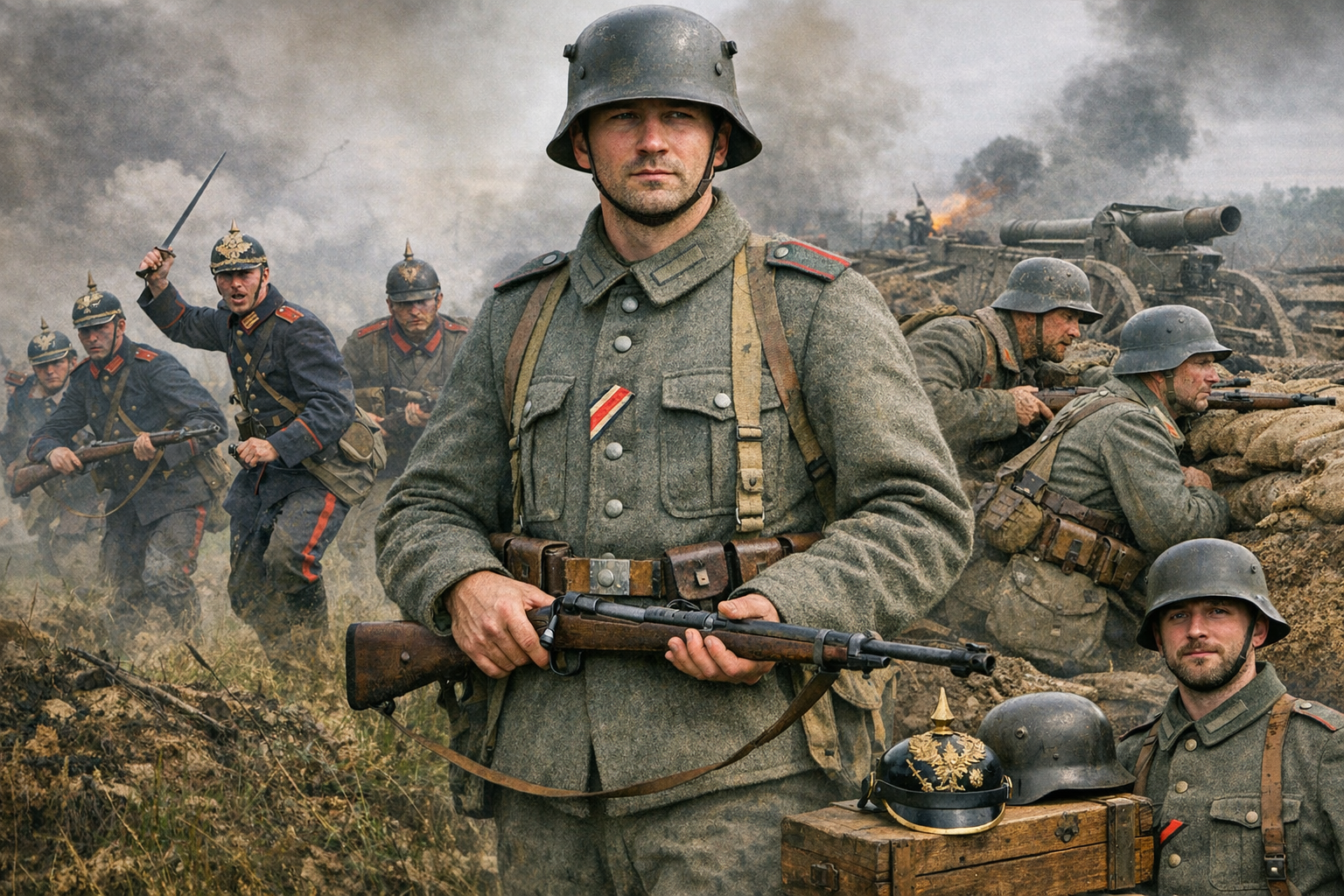
As the war went on, it became evident that the Imperial German Army needed something more practical to face the challenges of modern warfare.
Key Changes in WW1: From Parade to Practical
By 1915, the German Army had begun transitioning from its old parade uniforms to something more suited for the battlefield. The introduction of the feldgrau uniform was one of the most significant changes in military uniform history. But what exactly did the feldgrau design entail?
The Birth of Feldgrau
Feldgrau, literally meaning “field gray,” was a simple, muted color chosen to provide soldiers with some degree of camouflage in the muddy, forested, and crater-filled landscapes of the Western Front. The color was based on the Prussian army’s earlier experience in field conditions, taking inspiration from nature’s own palette.
The change wasn’t just cosmetic—it was strategic. Feldgrau uniforms helped blend soldiers into their environment, reducing visibility to enemy forces. The new design also reflected the need for practicality, with features that allowed soldiers to endure the harsh conditions of trench warfare.
Key features of the M1915 feldgrau tunic:
-
Color: A muted gray-green, designed for camouflage.
-
Material: 65% wool, 35% cotton blend, providing durability and comfort.
-
Design: Four pockets for storing essential items; high collar for neck protection.
-
Shoulder Straps: For officer and rank insignia, ensuring clarity of command even in the chaos of battle.
Feldgrau Tunic Breakdown
Let’s take a closer look at the M1915 feldgrau tunic, which became the staple of German soldiers’ uniforms throughout the war.
1. Material:
The feldgrau tunic was made from a mix of wool and cotton to provide warmth during cold months while also remaining breathable during summer. This balance made it much more practical than the old, heavy wool tunics of the pre-war period.
2. Design and Functionality:
The four-pocket design allowed soldiers to carry basic supplies—such as maps, ammunition, and food—while also ensuring that their hands were free to handle weapons. The tunic’s high collar, a Prussian tradition, provided neck protection from the elements and debris.
3. Shoulder Straps:
Shoulder straps were used to denote rank, a system that ensured clear identification of officers during chaotic moments on the battlefield. These straps were simple yet effective in maintaining order.
Pros & Cons of the Feldgrau Uniform
While the feldgrau uniform marked a significant improvement over earlier designs, it wasn’t without its challenges. Let’s break down the pros and cons:
| Pros | Cons |
|---|---|
| Camouflage: The muted color helped soldiers blend into the environment, reducing visibility to the enemy. | Limited Comfort: Although better than previous uniforms, feldgrau wool could still become uncomfortable after prolonged use. |
| Durability: The wool-cotton blend held up well against harsh conditions. | Slow Production: The shift to feldgrau required mass re-manufacturing, which was slow and costly during wartime. |
| Practical Design: The tunic’s four pockets provided practicality for carrying essential gear. | Slightly Inflexible: The uniform could be stiff at first, and it didn’t offer much flexibility in movement. |
| Cultural Significance: The uniform was a symbol of the Prussian military tradition. | Heat Retention: In warmer climates, the wool-cotton blend could become overly hot and heavy. |
Real-World Examples: Prussian Soldiers in Action
-
The Prussian Guard Regiment at the Battle of Tannenberg (1914):
At the Battle of Tannenberg, the Prussian Guard Regiment, which was among the first to adopt the feldgrau uniform, played a key role in the crushing victory over the Russian forces. The practical design of their new uniforms allowed them to move quickly and stealthily through the forested areas of the battlefield, giving them a tactical edge. -
Infantry at Verdun (1916):
By 1916, the feldgrau uniform had become standard issue for infantrymen fighting in the trenches of Verdun. The soldiers in these fields often faced weeks of mud, cold, and constant bombardment. The uniforms, despite their drawbacks, held up against the elements and kept soldiers warm and protected. -
Modern Reenactors and Collectors:
Today, reenactors and collectors of World War I memorabilia, including those who shop at paddelaters.com, take pride in owning authentic replicas of these uniforms. Wearing a replica of the feldgrau tunic brings history to life and provides a deeper appreciation of the sacrifices made by those who fought in World War I.
FAQs
What made Prussian uniforms different from other armies?
Prussian uniforms were known for their distinctive use of high collars, sharp lines, and shoulder straps denoting rank. They were designed for formality and discipline, but the feldgrau version incorporated practicality with a focus on camouflage.
Where can I buy authentic German WW1 replicas?
You can purchase high-quality, authentic German WW1 replicas at paddelaters.com, where we specialize in crafting historically accurate uniforms for collectors and reenactors.
What is feldgrau?
Feldgrau is a gray-green color that was chosen for its camouflage properties. It replaced the more colorful uniforms from earlier in the war, helping soldiers blend into their surroundings.
Did the feldgrau tunic have any major design flaws?
The main flaw of the feldgrau tunic was its stiffness, which could be uncomfortable in extended combat. However, this was a minor issue compared to the benefits it provided in terms of camouflage and durability.
How accurate are the replicas sold at paddelaters.com?
All our WW1 German uniform replicas are made to the exact specifications of the original designs. Whether you’re a collector or reenactor, our uniforms are designed to provide an authentic experience.
Conclusion
The evolution of the Imperial German Army’s uniform during World War I—from the parade-ready uniforms of 1914 to the practical feldgrau tunic of later years—was crucial for the soldiers who wore them. These changes not only represented a shift in military thinking but also reflected the harsh realities of trench warfare. Today, collectors and reenactors can experience this history firsthand by wearing authentic replicas available at paddelaters.com. If you're looking to add a piece of history to your collection, visit us and explore our range of finely crafted German WW1 uniforms.