THE LEGACY OF THE GERMAN STAHLHELM: IDENTIFYING AUTHENTIC HELMETS FOR YOUR COLLECTION
German WW2 Stahlhelm Helmet: From Battlefield to Collector Favorite
The clang of steel meeting steel, the whizzing of bullets overhead, and the tense moments when soldiers awaited their fate—that’s the context in which the iconic German WW2 Stahlhelm helmet was born. A helmet that not only defined the battlefield but also became an enduring symbol of the past. If you’ve ever stood in front of a real Stahlhelm, or even just held a replica, you’ll know exactly why collectors and history enthusiasts are drawn to it. But with the rise of replicas and fakes in the market, owning a true piece of history has become more challenging than ever.
This post will walk you through everything you need to know about the Stahlhelm helmet—from its battlefield origins to its place in modern collections. Whether you’re a seasoned collector or new to the world of military memorabilia, understanding the nuances of the Stahlhelm is key to avoiding costly mistakes. Let's dive in.
What Makes the Stahlhelm Unique?
The Stahlhelm, or "steel helmet," was designed to provide German soldiers with better head protection during World War I. By the time World War II rolled around, the design had undergone several modifications, resulting in the distinct M35, M40, and M42 models. These helmets were not just protective gear; they became symbols of the German military throughout the war.
Early M35 vs Late M42 Models
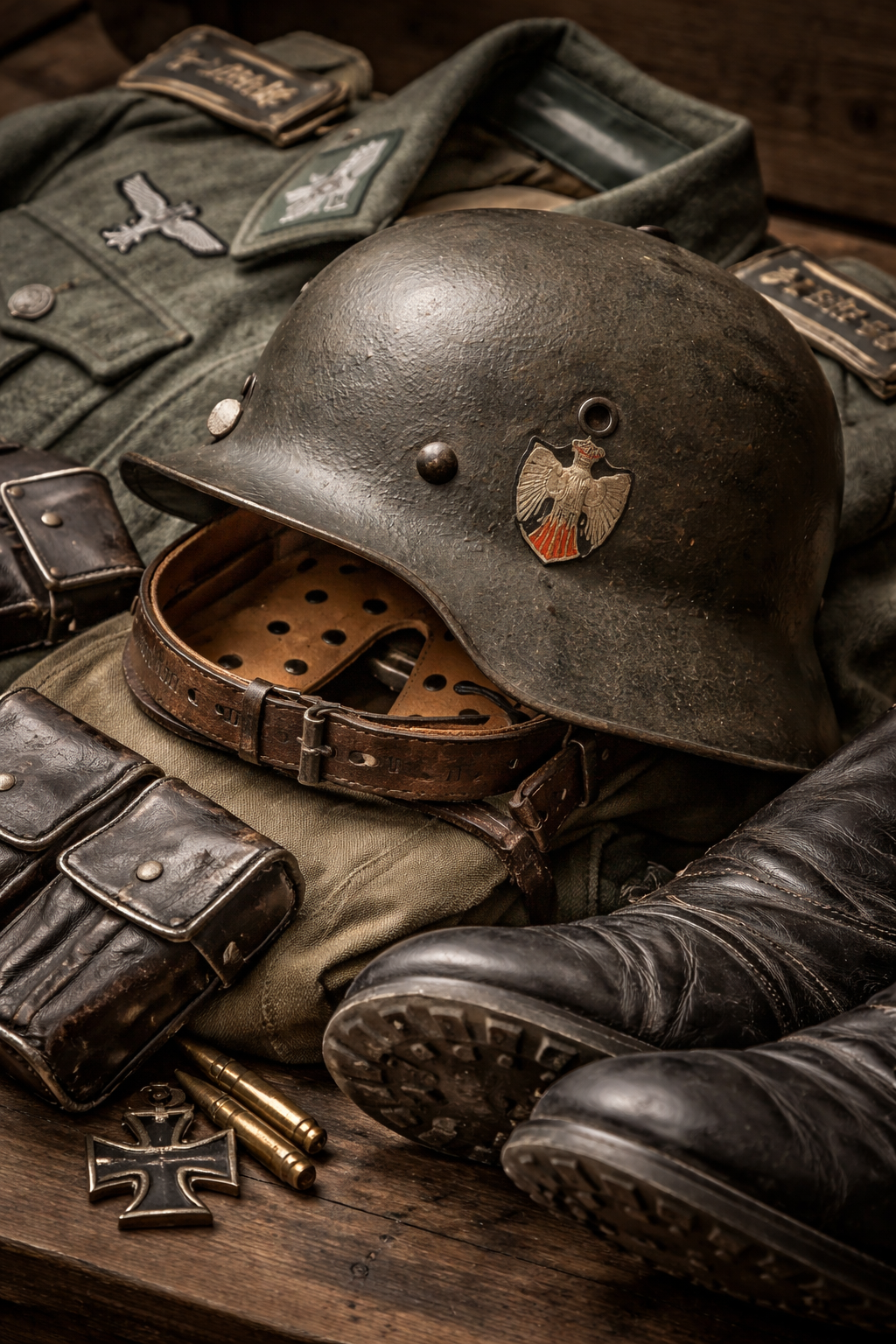
While all Stahlhelms are unmistakable in their shape, the different models from the war have subtle yet important differences. The M35, introduced in 1935, is one of the earliest models and is distinguished by its smooth surface and a distinct, slightly flared brim. The M40 followed in 1940, and it came with fewer rivets and a simpler design to streamline production during wartime. By 1942, the M42 version was introduced. It had an even more simplified design, with a smaller visor and fewer features to save on metal and reduce production time.
-
M35: Smooth, rounded shape, early war issue, typically painted in smooth gray-green or feldgrau.
-
M40: Fewer rivets, simpler design, often matte finishes to reduce visibility.
-
M42: Simplified design, larger production numbers, more angular with a rougher texture.
The M42 was the most commonly used helmet during the war, with production numbers reaching approximately 1 million units in 1944 alone.
Liner and Chinstrap Facts
While the outer shell of the Stahlhelm tells much of the story, the inside of the helmet has just as much significance. The liner is one of the most important features when identifying an authentic helmet. Most German WW2 helmets were equipped with a leather liner that adjusted with a drawstring to ensure a secure fit. The M35 typically had a more elaborate liner, while later models like the M40 and M42 featured simpler, more cost-effective versions.
-
Chinstraps: Early war helmets had leather chinstraps attached with metal buckles. Over time, as resources dwindled, more simplified versions were produced.
-
Liner Pins: Pay attention to the rivets or pins used to hold the liner in place; these often correlate with the production year.
Key Features of the German WW2 Stahlhelm
When it comes to collecting, spotting an original German WW2 Stahlhelm involves understanding the small but significant features that distinguish genuine pieces from replicas. These features are not just for show—they reflect the manufacturing methods and historical periods in which the helmets were produced.
Factory Markings to Spot Originals
One of the most crucial steps in identifying an authentic Stahlhelm is understanding factory markings. These markings provide insight into the helmet's manufacturing source and date of production.
-
Shell Manufacturer Codes: Helmets typically have codes stamped into the steel shell. For example, “NS” referred to the maker "Neue Stahlhelm," while “Q” stood for “Quist,” one of the leading helmet manufacturers.
-
Lot Numbers: These were stamped on the interior or exterior of the helmet and help date it to a specific production batch. The lot number can often be cross-referenced with production records from WW2.
By checking these markings, collectors can confidently authenticate a helmet's origin. When buying a helmet, make sure to request these details from the seller.
Pros and Cons for Collectors
For collectors, owning a Stahlhelm offers both excitement and challenges. The helmet is both a relic of history and a rare collectible that can appreciate in value. However, there are pros and cons to consider when purchasing one.
Everyday Wear vs Display Use
Some collectors choose to wear their Stahlhelm replicas as part of historical reenactments, while others prefer to display them as part of a collection. Both have their merits, but there are differences to keep in mind.
-
Everyday Wear: If you plan to wear the helmet in a reenactment, make sure to invest in a high-quality replica. Fakes often have poor craftsmanship and can be uncomfortable or unsafe for extended use.
-
Display Use: For display purposes, an original or high-quality replica with accurate factory markings, a proper liner, and a chinstrap is essential. You want your helmet to be as historically accurate as possible to maintain its value and historical integrity.
Real-World Examples: Stahlhelm in Action
The Stahlhelm wasn't just a piece of equipment—it was part of the uniform that represented an entire army. From the blitzkrieg to the defense of the Reich, this helmet saw it all. Let’s take a look at how it fit into the larger picture of German military attire.
Pairing with German WW2 Uniform for Sale
When you think of a soldier in the German army, the Stahlhelm was just one part of a larger ensemble. The iconic German WW2 uniform for sale often includes items such as the field-gray tunic, the belt, and, of course, the helmet. If you’re trying to complete a collection, don’t forget the uniform details that make all the difference.
-
Tunic Colors: The feldgrau (field gray) tunic was common, but different branches of the military sometimes had slight variations in color and insignia.
-
Rank Insignia: Look for correct insignia placement—soldiers’ ranks were often denoted by collar tabs, sleeve patches, and shoulder boards.
The proper combination of helmet, tunic, and accessories will bring your collection to life.
Matching German Army Jackboots WW2
If you’re aiming for authenticity, don’t overlook the iconic German army jackboots WW2. These heavy, high-laced boots were standard issue for many soldiers. With their distinctive shape and sturdy construction, they were designed for long marches and combat.
Matching the correct jackboots with your Stahlhelm and uniform gives your collection or reenactment a more complete, historically accurate feel. Whether you’re piecing together a uniform for display or active use, consider purchasing these boots as part of your set.
FAQs
Q: How can I tell if a Stahlhelm is real or a replica?
A: Look for factory codes, lot numbers, and the quality of the liner. High-quality replicas often lack these features.
Q: What are the most common models to collect?
A: M35, M40, and M42 are the most common and historically significant models. M35 helmets are typically rarer and more expensive.
Q: Should I wear my Stahlhelm?
A: While it’s tempting to wear a helmet, ensure it's a well-made replica for comfort and safety, especially if you plan to reenact.
Conclusion
Owning a piece of history is an exciting experience, but the journey to finding an authentic German WW2 Stahlhelm helmet is filled with challenges. The key is in the details—the factory markings, the liner, and the chinstrap all tell the story of the helmet’s origins. Whether you're buying a German WW2 uniform for sale, searching for German army jackboots WW2, or simply adding to your collection, make sure you’re investing in authenticity.
For those looking to start or complete their collection, consider shopping for high-quality replica helmets and uniforms at paddelaters.com. Don’t just settle for any helmet—choose a piece that will stand the test of time and truly represent the history it once witnessed.
REQUISITION RELATED GEAR
EXPLORE MORE FIELD REPORTS
Browse all published guides and history articles.
