Introduction (Problem → Agitate → Solution Hook)
Uniforms can decide how long a soldier lasts in combat. In World War 1, German troops marched into industrial warfare wearing gear designed for earlier battles. Wool uniforms soaked up rain. Leather helmets failed against steel shells. Soldiers paid the price in comfort and survival. Fast forward to today, and German soldiers face heat, dust, and long patrols in places far from Europe. The problem changed, but the risk stayed the same: the wrong uniform can cost lives.
The pain points are clear when you look at history. In 1914–1916, thousands of German soldiers suffered from exposure and head injuries. Reports collected by the Imperial War Museum show how quickly early uniforms broke down in trench warfare. Modern missions exposed new problems too, such as heat stress and mobility limits in armored gear.
The solution came through steady redesign. From feldgrau cloth to Flecktarn camouflage, German uniforms evolved step by step. Let’s dive in and see how World War 1 gear compares with what German soldiers wear today.
World War 1 German Uniforms: The Basics
Key Features and Materials
World War 1 German uniforms centered on function, but with limits set by old ideas.
Main elements included:
-
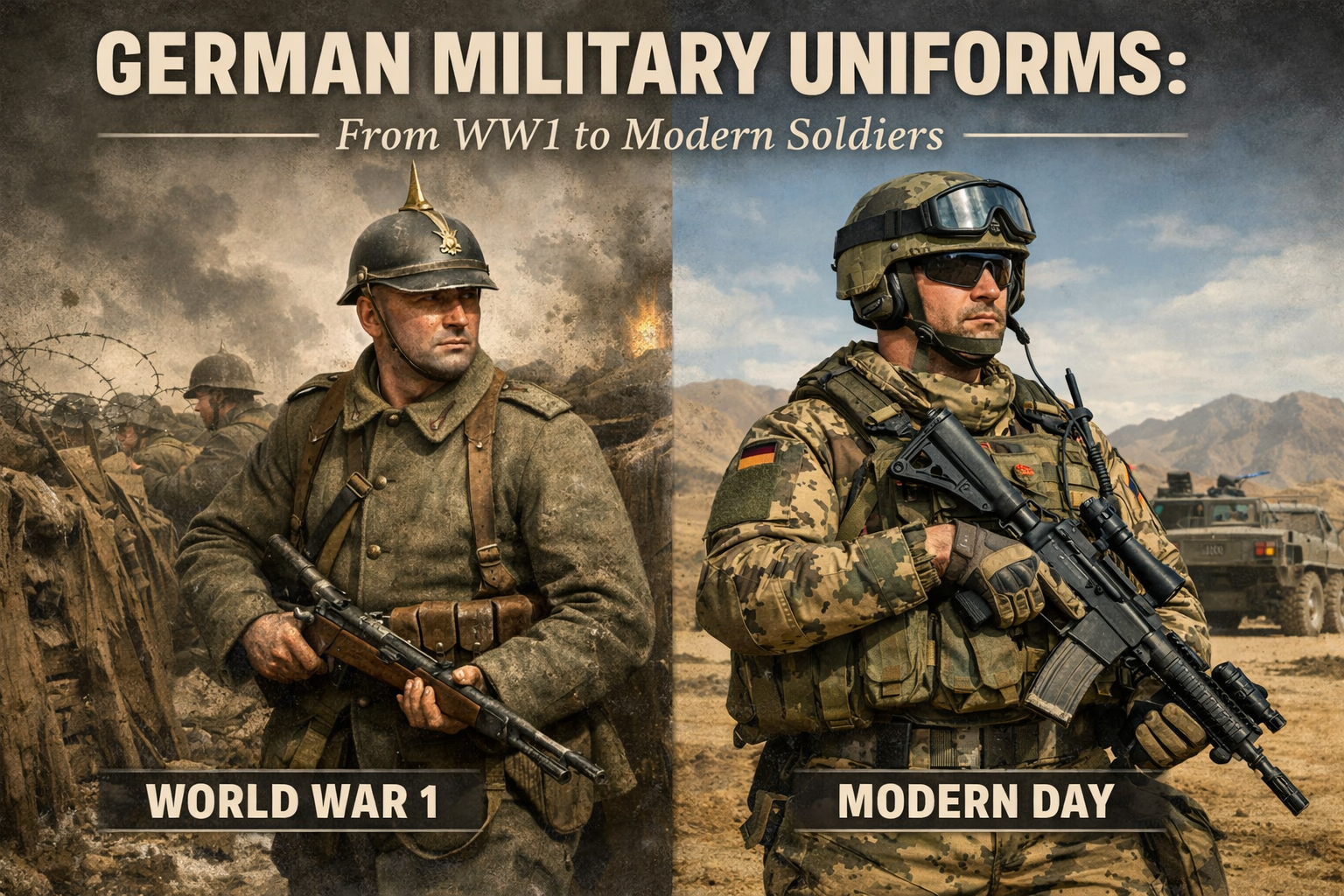
Feldgrau tunic: Wool cloth dyed gray-green to reduce visibility compared to bright 19th-century colors.
-
Pickelhaube helmet: Boiled leather helmet with a metal spike, later replaced in combat zones.
-
Wool trousers and puttees: Warm but heavy when wet.
-
Leather boots: Durable, but slow to dry.
The feldgrau color was a big step forward. German army regulations introduced it widely by 1910. Wool helped in cold weather, but it absorbed water and mud. A soaked tunic could double in weight. Leather Pickelhaube helmets looked strong but offered almost no protection from shell fragments. By 1915, battlefield reports showed head wounds were a major cause of death.
Real-World Case Study: Somme 1916
During the Battle of the Somme in 1916, German soldiers spent weeks in flooded trenches. Archive photos and medical records show the cost. Wool uniforms stayed wet for days. Soldiers reported skin infections and trench foot. Head injuries were common before the steel helmet appeared in large numbers.
Germany introduced the Stahlhelm in 1916. According to tests preserved in the Imperial War Museum archives, the steel helmet reduced fatal head injuries by a large margin compared to leather helmets. Soldiers who received Stahlhelms had better survival rates during artillery bombardments. This case shows how uniform design directly affected outcomes in battle.
Modern German Soldier Uniforms: What Changed
Key Features and Tech Upgrades
Today’s German soldiers serve under the Bundeswehr. Their uniforms focus on protection, comfort, and flexibility.
Key features include:
-
Flecktarn camouflage: Introduced in the 1990s, designed to work in European forests and mixed terrain.
-
Combat shirts: Lighter torso fabric for heat control, reinforced sleeves for protection.
-
Modern helmets: Made from aramid fibers, tested against fragments and small-caliber threats.
-
Modular body armor: Plates and pouches added or removed based on mission.
Bundeswehr specifications show that modern fabrics dry faster and manage sweat better than wool. Camouflage patterns break up the human outline at different distances. Helmets are tested to stop fragments that would easily pass through WW1 headgear.
Real-World Case Study: Afghanistan Deployment
German troops deployed to Afghanistan faced heat, dust, and long patrols. Early reports noted problems with heavy armor and heat stress. The Bundeswehr adjusted uniforms by improving ventilation and issuing lighter combat shirts.
Field feedback showed fewer heat-related injuries after these updates. Modular armor allowed soldiers to balance protection and movement. This case highlights how modern uniforms adapt faster than WW1 systems ever could.
Pros and Cons Comparison
World War 1 German Uniforms
Pros:
-
Warm in cold weather
-
Simple to produce
-
Feldgrau reduced visibility compared to older bright colors
Cons:
-
Heavy when wet
-
Poor head protection early in the war
-
Limited comfort in long trench conditions
Modern Bundeswehr Uniforms
Pros:
-
Better protection from fragments
-
Lighter, breathable materials
-
Flexible for different climates
Cons:
-
More complex and costly
-
Requires training to use modular systems well
FAQs
1. Why was feldgrau important in WW1?
It reduced visibility compared to bright uniforms. This helped soldiers blend into terrain better.
2. Did the Pickelhaube protect soldiers?
Not well. It was mostly symbolic and failed against shell fragments.
3. When did steel helmets appear?
Germany introduced the Stahlhelm in 1916 after heavy head injury losses.
4. What makes Flecktarn effective?
Its small color spots disrupt outlines at different ranges.
5. Are modern uniforms heavier?
With armor, yes. Without armor, modern fabrics are often lighter than wool.
6. Can civilians buy replicas?
Yes. Many accurate replicas exist for collectors and reenactors.
Conclusion
The problem of bad uniforms is clear in German military history. In World War 1, soldiers wore gear that struggled against mud, cold, and shell fire. The pain was real, seen in injury records and battlefield reports. Over time, these lessons shaped better designs. Modern Bundeswehr uniforms solve many old problems with tested materials, better helmets, and flexible systems.
If you are a history fan, reenactor, or collector, understanding these changes helps you choose accurate replicas and appreciate what soldiers faced. Learning the facts shows why uniform design matters more than style. Dive deeper, study the details, and explore replicas that reflect real history—because every stitch tells a story.