EXPLORING THE WW1 BRITISH UNIFORM HISTORY AND AUTHENTIC REPRODUCTIONS
WW1 British Uniform History – A Collector’s Guide
The WW1 British uniform history reflects a pivotal shift in military attire during the early 20th century. Moving away from the brightly colored tunics of earlier conflicts, the British Army adopted functional khaki uniforms designed for trench warfare.
Today, the First World War British uniform remains a sought-after piece among reenactors, collectors, and history lovers alike. At Paddelaters.com, we’ve spent over eight years perfecting the art of authentic reproduction, ensuring every detail matches the originals.
Historical Significance of the WW1 British Uniform
The uniform introduced in 1902 marked a turning point in British military dress:
- Function over form – Khaki wool serge offered concealment in muddy battlefields.
- Adaptation to trench life – Heavy-duty materials protected soldiers in cold, wet conditions.
- Distinctive identity – The service dress tunic and WW1 cap became instantly recognizable symbols of the Great War.
From the Western Front to the Gallipoli campaign, the WW1 British uniform was both a practical necessity and a badge of honor.
Key Features to Look for in a WW1 British Uniform
When exploring WW1 British uniform history and sourcing reproductions, authenticity is key.
Essential details include:
- Material: Wool serge in khaki-drab.
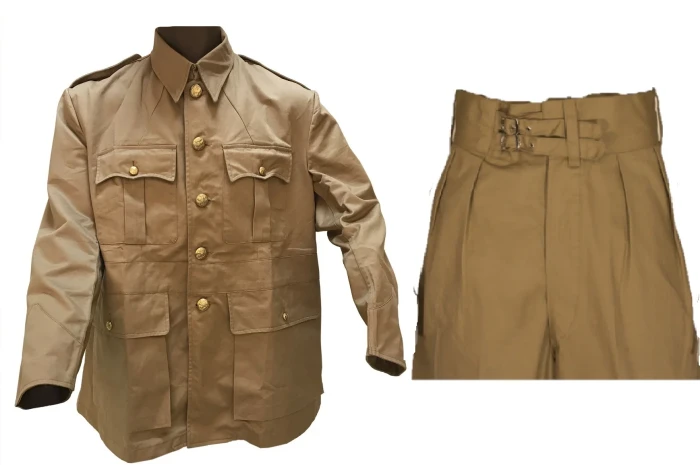
- Cut: Stand-and-fall collar, pleated breast pockets, reinforced elbows.
- Buttons: Brass General Service design.
- Headgear: Peak cap or Brodie helmet.
- Accessories: 1908 pattern webbing and ammunition pouches.
Officer vs. Enlisted Uniforms – A Comparison
FeatureOfficer UniformEnlisted Uniform
Material Quality: Finer wool, custom tailoring, Standard-issue wool serge
Insignia Rank stripes, cuff embellishments, Minimal insignia
Accessories: Sam Browne belt, revolver holster, Webbing and rifle pouches
Price Range $$–$$$ $–$$
Primary Use Today: High-end reenactments, historical collections. General reenactments, museum displays
Practical Uses of WW1 British Uniforms
- Reenactments: Authenticity enhances storytelling and audience engagement.
- Film & Theatre: Accurate costumes boost production value.
- Museum Exhibits: Bring WW1 history to life for visitors.
- Private Collections: Preserve military heritage.
For comparison with later designs, explore our WW2 British soldier uniforms.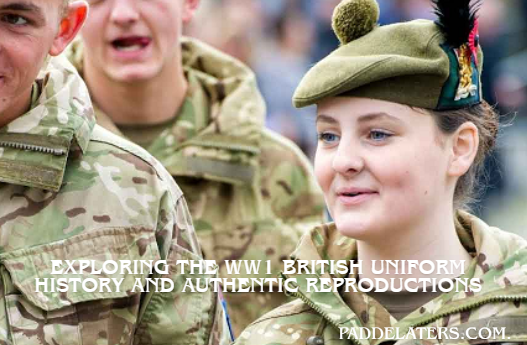
Top Tips for Choosing a High-Quality WW1 British Uniform History
Consideration It MattersPaddelaters.com Advantage
Authenticity enhances historical accuracy and value—research-based patterns.
Material Quality, Durability, and comfort Wool sourced to period specifications
Craftsmanship, Long-lasting wear, and a realistic look. Skilled tailoring
Vendor Reputation Ensures product quality and reliability, 8+ years of trusted service
Fit & Comfort Important for active use in reenactments. Custom sizing available
Beyond the Infantry – Other British Military Attire
- World War 1 Pilot Costume: Featuring leather jackets, goggles, and flying helmets, these represented a new era of aerial warfare.
- Guards Uniforms UK: Ceremonial dress with deep historical roots, contrasting the practical khaki of the trenches.
FAQs
1. What makes a WW1 British uniform historically accurate?
Correct materials, colors, patterns, and insignia placement. See our buyer’s guide.
2. Can I wear a reproduction uniform for reenactments?
Yes. Our uniforms are made for both display and active wear.
3. How do WW1 and WW2 British soldier uniforms differ?
WW2 uniforms used lighter fabrics and more practical pocket arrangements.
4. What accessories complete a WW1 British infantry look?
1908 webbing, WW1 cap, puttees, and boots.
5. How should I care for a wool WW1 uniform?
Dry clean only; store in a cool, dry space.
6. Are officer uniforms worth more than enlisted ones?
Yes—due to finer materials and limited production.
7. Do you ship worldwide?
Yes, with secure packaging to protect your purchase.
Conclusion & Call-to-Action
The WW1 British uniform history represents more than a style—it’s a story of endurance, innovation, and identity. Whether for reenactment, display, or collection, authenticity is the key to preserving this legacy.
Browse our WW1 British uniform collection today and own a piece of history.
REQUISITION RELATED GEAR
EXPLORE MORE FIELD REPORTS
Browse all published guides and history articles.
