WHY THE FRENCH WW1 UNIFORM CHANGED TO HORIZON BLUE
Introduction: Why the French WW1 Uniform Still Matters
When people talk about the World War 1 French military uniform, one color stands out: horizon blue. This uniform became a symbol of the French soldier, called the Poilu. At the start of WW1 in 1914, French soldiers wore bright red trousers and dark blue coats—clothes that looked sharp but didn’t work well on the battlefield. After just a few months, heavy losses made it clear that changes were needed.
The French horizon blue uniform wasn’t just a style change. It was a response to modern war, with machine guns, long-range artillery, and trench fighting. This article will explain how and why the French WW1 uniform changed, what it was made of, how it worked in real battles, and why it still matters to historians, collectors, and reenactors today.
Using real examples from museums, archives, and reenactment groups, we’ll look at both the good and bad sides of this famous uniform—clearly, factually, and without making things too complicated.
The Problem: Old Uniforms in a New War
Bright Colors on a Dangerous Battlefield
At the start of WW1, French soldiers wore:
- Dark blue coats (capote)
- Bright red trousers (pantalon rouge)
- Soft kepi caps
These uniforms made soldiers easy to spot. Against machine guns and artillery, this was dangerous. French losses in 1914 were some of the highest in the war.
Military reports from the Battle of the Frontiers showed that being visible played a big role in the number of deaths. German soldiers wore field-grey uniforms, which were harder to see.
Modern War Needed Practical Clothes
WW1 wasn’t a short war. It turned into a long trench war. Soldiers lived in mud, rain, cold, and constant danger. The French uniform needed to:
- Be less visible
- Keep soldiers warm and protected
- Be easy to make in large numbers
Old designs didn’t meet these needs.
The Agitation: Heavy Losses Forced Change
Pressure from the Front
By late 1914, French leaders could no longer ignore the problem. Soldiers complained about being easy targets. Officers said red trousers could be seen even in fog and smoke.
French army studies showed that lighter, neutral colors blended better with the horizon—the place where land meets sky. This led directly to the adoption of bleu horizon.
Fast Changes During Battle
Unlike changes in peacetime, this shift happened during war. Factories had to:
- Change dye formulas
- Adjust textile production
- Supply millions of uniforms quickly
This urgency is why early horizon blue uniforms sometimes had small differences in color.
The Solution: The Horizon Blue French WW1 Uniform
Key Features of the WW1 French Military Uniform
Horizon Blue Capote (Coat)
The main coat, called the capote modèle 1915, was made of wool dyed horizon blue.
- Long cut for warmth
- Double-breasted front
- Large pockets for gear
- Thick wool to protect against cold and wind
The color made soldiers less visible than before, though it wasn’t true camouflage.
Trousers and Puttees
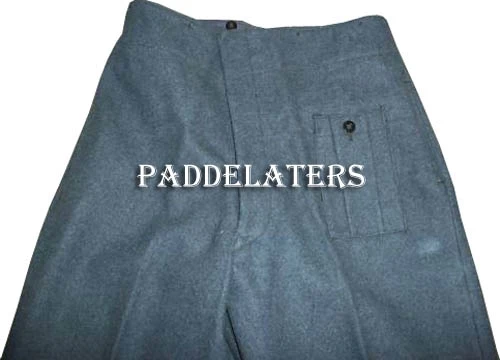
Red trousers were replaced with horizon blue or blue-grey ones.
- Wool trousers for warmth
- Wool puttees wrapped around the lower legs
- Offered ankle support and protection from mud
This setup was practical but took time to put on.
Adrian Helmet (Model 1915)
One of the most important upgrades was the steel helmet.
- Introduced in 1915
- Made of pressed steel
- Designed to stop shrapnel, not bullets
- Had a front badge showing the unit
French army data shows head injuries dropped after its introduction.
Equipment and Webbing
French soldiers carried:
- Leather cartridge pouches
- Bread bags (musette)
- Water canteens (bidon)
- Bayonet and rifle (Lebel or Berthier)
Most gear was brown or black leather, which needed regular care.
Real-World Examples and Case Studies
Case Study 1: Musée de l’Armée, Paris
The Musée de l’Armée has several original horizon blue uniforms from Verdun. Many coats show:
- Field repairs
- Faded dye from weather
- Reinforced elbows
These details show the uniform was used hard and often changed by soldiers.
Case Study 2: Verdun Battlefield Photos
Photos from Verdun (1916) show French troops blending better into the landscape than in 1914. While not invisible, horizon blue made them less noticeable against smoke and earth.
Case Study 3: Modern Reenactment Groups
French and European WW1 reenactment groups say:
- Horizon blue uniforms are heavy but warm
- Wool works well in cold, wet conditions
- Long coats are uncomfortable in summer events
Their feedback matches what real soldiers said.
Pros and Cons of the French WW1 Uniform
Advantages
- Less visible than early-war uniforms
- Warm and strong wool construction
- Steel helmet greatly improved safety
- Designed for fast wartime production
Limitations
- Heavy wool caused heat stress in warm weather
- Horizon blue still stood out in muddy trenches
- Leather gear wore out quickly in wet conditions
- Limited protection against modern weapons
The uniform was better, but not perfect.
Frequently Asked Questions (FAQs)
Why was the French WW1 uniform blue?
Horizon blue was chosen because tests showed it blended better with the landscape and sky than darker or brighter colors.
When did France fully adopt the horizon blue uniform?
The change started in late 1914, with most soldiers wearing it by 1915.
Was the Adrian helmet bulletproof?
No. It was mainly designed to protect against shrapnel and falling debris.
Did all French units wear horizon blue?
Most front-line units did, but colonial troops sometimes wore different versions for their climate.
Is original French WW1 uniform still available today?
Yes, but original pieces are rare and expensive, usually found in museums or private collections.
Conclusion: What the French WW1 Uniform Tells Us
The French WW1 uniform shows a hard lesson. Early mistakes in visibility and protection cost lives, forcing fast changes. The French horizon blue uniform wasn’t perfect, but it marked a big step toward practical, battlefield-ready military clothing.
Through museum pieces, wartime photos, and reenactment experience, we see that this uniform balanced tradition, industrial limits, and urgent survival needs. It remains one of the most famous uniforms of WW1 and a lasting symbol of the French soldier’s strength.
For historians, collectors, and enthusiasts, the French WW1 uniform is more than just clothes—it’s proof of how armies adapt when theory meets reality.
REQUISITION RELATED GEAR

EXPLORE MORE FIELD REPORTS
Browse all published guides and history articles.
