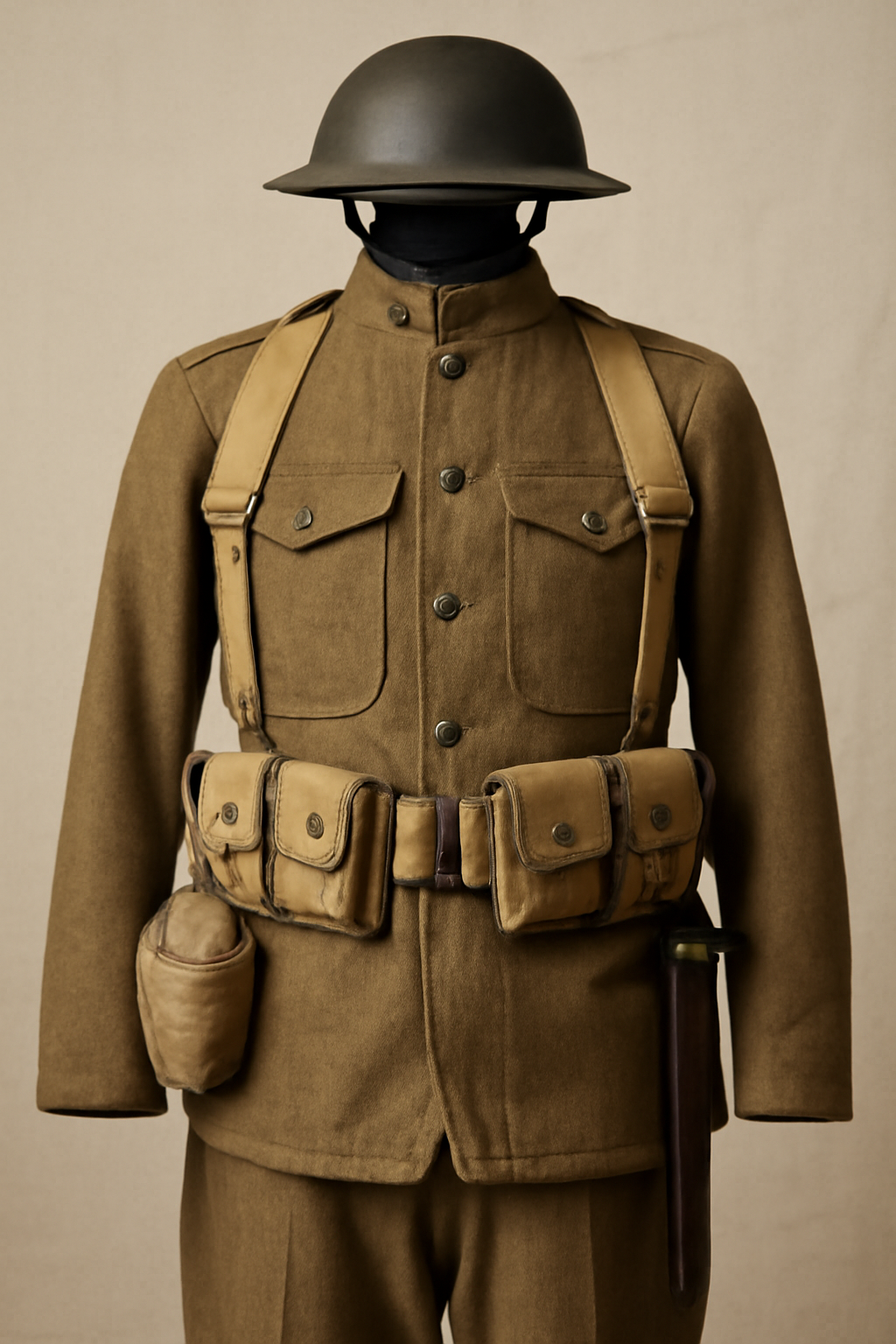
"US ARMY WW1 UNIFORM: HISTORY, COLLECTING TIPS & MODERN TRENDS FOR WAR HISTORY BUFFS"
Introduction: Why the US Army WW1 Uniform Still Captivates 100+ Years Later
Did you know that over 4.7 million Americans served in World War I, and nearly every one of them wore some variation of the now-iconic US Army WW1 uniform?
Whether you're a military history enthusiast, a reenactor, or a collector, the WW1 US Army uniform offers a fascinating glimpse into the equipment, identity, and tactical needs of American forces during “The War to End All Wars.”
In this guide, we’ll dive deep into the components of the uniform, how it evolved, where to find authentic or replica gear, and what mistakes to avoid. You'll also discover current trends like living history reenactments and digital museum archives.
Let’s start from the bottom up.
The Evolution of the US Army WW1 Uniform
Understanding the US Army uniform WW1 design requires knowing its European influences and rapid battlefield-driven changes.
Key Historical Influences
- Inspired heavily by British military fashion.
- Designed for trench warfare and mass mobilization.
- Transitioned from colorful pre-war styles to utilitarian olive drab.
Core Components of the Uniform
The typical WW1 uniforms US Army soldiers wore included:
- Tunic (M1912 or M1917 Service Coat) – High-standing collar, four pockets.
- Trousers (Breeches) – Tightly fitted at the calves, designed to be worn with puttees or leggings.
- Puttees or Wrap Leggings – Wool strips wrapped around the lower leg.
- Steel Helmet (M1917 "Doughboy") – Based on British Brodie helmet.
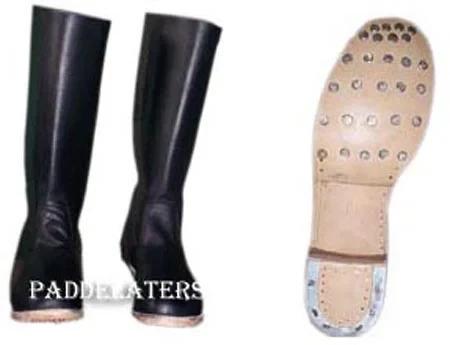
- Shoes/Boots – Hobnail boots or trench boots (late war).
- Overcoat – Heavy wool, often reaching mid-shin.
- Web Gear – Ammo belts, canteen holders, and first-aid pouch.
Each piece reflected function, not fashion—optimized for harsh conditions and mass production.
Actionable Guide: How to Collect or Reproduce a US Army WW1 Uniform
Whether you’re building a display, participating in reenactments, or filming historical documentaries, you want authentic gear—but also practical and legal.
1. Decide: Original vs Reproduction
- Originals are rare, expensive, and often too fragile to wear.
- High-quality reproductions offer durability and visual accuracy for reenactors.
Pro tip: Many museums and reenactment units prefer mixing both—original accessories with replica uniforms.
2. Focus on Accurate Sourcing
Avoid generic surplus stores when you want historically correct items. Look for:
- Reputable WW1 militaria dealers.
- Online marketplaces with solid reviews (e.g., eBay, Hessen Antique).
- Military collectors’ forums.
3. Check Key Authenticity Markers
When evaluating pieces, look for:
- Quartermaster stamps and dates inside tunics or leggings.
- Correct stitching (machine-made, not hand-sewn).
- Wool quality and olive drab tone consistency.
4. Don’t Forget the Details
Many beginners forget the following critical parts:
- Collar discs (infantry, artillery, etc.).
- Campaign hat or overseas cap.
- WW1 dog tags (rounded aluminum style).
- Mess kit and canteen for realism.
Common Pitfalls When Collecting or Reenacting WW1 US Army Uniforms
Even experienced collectors make mistakes. Here are a few traps to avoid:
⚠️ Mistake #1: Buying from Unverified Sellers
Some online sellers advertise fantasy items or mix eras. Always check provenance.
⚠️ Mistake #2: Mixing WW2 Gear
Don’t confuse M1941 jackets or later field gear with WW1 pieces—they differ in both style and material.
⚠️ Mistake #3: Overlooking Unit-Specific Differences
Uniform details varied by unit, especially among:
- Infantry vs artillery vs signal corps.
- Officers vs enlisted men.
⚠️ Mistake #4: Assuming US Marines Wore Army Uniforms
Did the US Marines wear Army uniforms in WW1?
Not exactly. Marines had their own uniform but wore similar gear when deployed under Army command in France. This sometimes leads to misidentification in vintage photos.
Modern Trends: Reenactments, Museums & Digital Archiving
The World War 1 ww1 US Army dress uniform isn't just a relic—it's part of living history. Here's how enthusiasts are keeping the legacy alive today:
Reenactment Communities
Groups like the Great War Association host immersive events where people wear accurate gear, perform drills, and demonstrate trench warfare.
What you’ll need to join:
- Authentic-looking reproduction uniform.
- WW1-era rifle (real or deactivated).
- Proper training on behavior, marching, and etiquette.
Digital Preservation
Museums are increasingly digitizing their collections:
- The National WWI Museum & Memorial (Kansas City) has a growing online archive.
- Smithsonian offers 3D scans of uniforms and gear.
WW1 Uniform DIY & Cosplay
A rising number of enthusiasts are creating uniforms for film, cosplay, or educational videos. TikTok and YouTube now feature creators explaining how to wear, maintain, and interpret WW1-era dress.
How to Start Your Own WW1 US Army Uniform Collection (Checklist)
Here’s a simple roadmap if you’re just getting started:
✅ Choose a soldier type: Infantry? Officer? Medic?
✅ Research specific unit patches and insignia.
✅ Start with basic items: tunic, breeches, puttees, helmet.
✅ Join online WW1 history forums or Reddit groups.
✅ Attend militaria shows or history expos.
Conclusion: The US Army WW1 Uniform—Where History Meets Hands-On Learning
The US Army WW1 uniform is more than wool, brass, and olive drab. It’s a portal into the lived experiences of American soldiers who crossed oceans to fight in trenches a century ago.
Whether you’re collecting, reenacting, or just fascinated by military design, understanding this uniform gives you a richer connection to history.
So go ahead—start your journey. And remember: every item tells a story.
Call to Action:
🎖️ Ready to dive deeper? Join a local WW1 reenactment group or visit your nearest military museum this weekend. Share this article with a fellow history buff—and start building your own piece of the past.
REQUISITION RELATED GEAR
EXPLORE MORE FIELD REPORTS
Browse all published guides and history articles.