Introduction
Thinking about buying a French Foreign Legion uniform? Or maybe you’re just curious about their history?
Here’s the problem. Many people jump in without knowing the facts. They see a “Legion kepi for sale” online and assume it’s correct. Later, they find out it’s the wrong shade, wrong badge, or not even close to real specs. Some pay double the normal price.
The same happens with history. The Legion has a long record, but online info is often mixed with myths. If you don’t know what happened at Camerone in 1863 or how many volunteers joined in WW1, it’s hard to separate truth from marketing.
Let’s fix that. We’ll walk through real Legion history and break down the uniform parts clearly. Then we’ll talk about how to buy smart.
A Quick Legion History
The French Foreign Legion was created in 1831 by King Louis-Philippe. Its purpose was simple: recruit foreign volunteers to serve in the French Army, mainly in overseas campaigns.
Early Campaigns and Camerone 1863
One of the most famous events in Legion history is the Battle of Camerone on 30 April 1863 in Mexico. Around 65 Legionnaires, led by Captain Jean Danjou, were surrounded by about 2,000 Mexican troops.
By the end of the fight, most Legion soldiers were dead or wounded. Only three were left standing and able to fight. They refused to surrender unless they could keep their weapons and care for their wounded. Camerone became a symbol of loyalty and discipline. Every year on 30 April, the Legion celebrates Camerone Day.
If you see a seller referencing Camerone on a uniform listing, now you know why.
World War I
In World War I, thousands of foreign volunteers joined the Legion. Around 40,000 foreign volunteers served in the French Army during WW1, many through the Legion. Heavy losses were recorded, especially in 1915 during major offensives in Champagne and Artois.
The Legion was later reorganized into the Régiment de Marche de la Légion Étrangère (RMLE), which became one of the most decorated units of the war.

World War II and Beyond
In WW2, Legion units fought in North Africa and later in campaigns linked to Free French forces. After 1945, the Legion was heavily involved in Indochina (1946–1954) and Algeria (1954–1962).
Today, the Legion remains active, with units like the 2e REP (2nd Foreign Parachute Regiment). It has taken part in operations in Mali and other African regions.
Understanding this timeline helps you know which uniform era you’re buying.
Uniform Parts Explained
When someone searches for a “French Foreign Legion uniform for sale,” they usually mean one of three things: parade uniform, field uniform, or pioneer gear.
The White Kepi (Képi Blanc)
The white kepi is the most recognized item. Legion recruits receive it after basic training.
It includes:
-
White cotton cover
-
Dark blue band
-
Metal grenade insignia
Original kepis are issued items. Most for sale online are replicas. Check:
-
Correct shape (not too tall)
-
Proper badge placement
-
Accurate shade of white
Cheap versions often use thin fabric and incorrect stitching.
Parade Uniform
The traditional parade uniform includes:
-
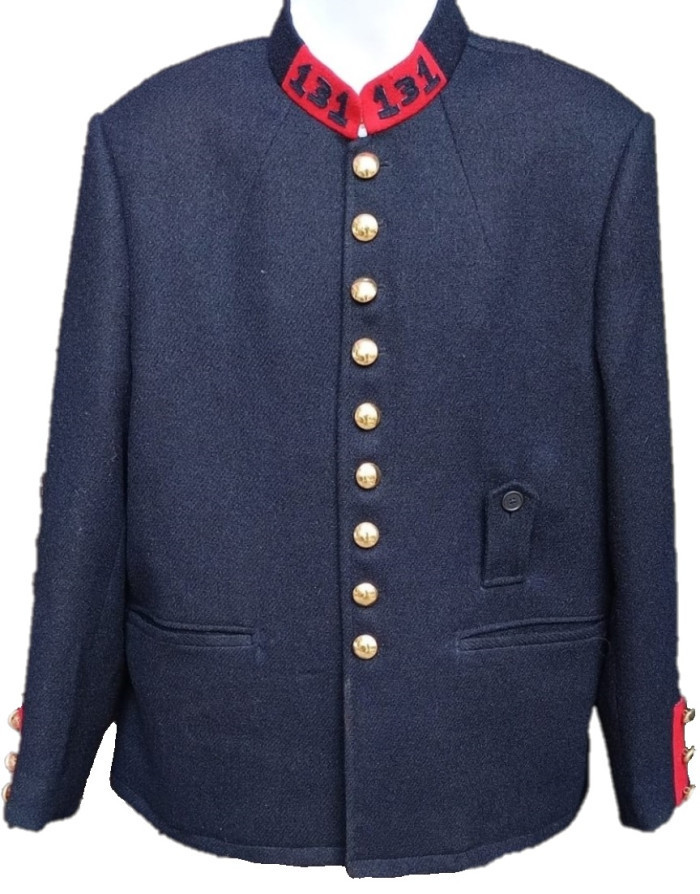
Dark blue jacket
-
Red epaulettes
-
White kepi
-
White belt
The red shoulder cords and epaulettes are often poorly copied in replicas. Compare photos from official Camerone parades to spot differences.
Pioneer Gear
Legion pioneers are known for:
-
Leather apron
-
Axe carried on shoulder
-
Long beard (for parade tradition)
The leather apron should be thick and structured. Thin costume-style aprons are a red flag if priced as “authentic.”
Modern F3 Uniform
Today, Legion soldiers wear the F3 combat uniform, introduced as part of French Army modernization.
Key details:
-
Ripstop fabric
-
Multiple cargo pockets
-
Velcro panels for patches
-
Camouflage pattern similar to CCE (Camouflage Centre Europe)
If someone lists a “modern Legion uniform,” confirm whether it matches actual F3 specs.
Why Buy Replicas?
For Reenactment
Many WW1 and WW2 reenactors buy Legion uniforms. A proper replica helps create accurate displays. For example, a reenactor portraying a 1915 Legion soldier needs:
-
Horizon blue or early-war style uniform
-
Correct cap or helmet
-
Period-accurate gear
For Collecting
Collectors may buy:
-
Kepi blanc
-
Insignia
-
Unit patches
Original items can be expensive. Replica kepis usually cost far less than authentic issued pieces.
For Film and Media
The Legion’s image is often used in documentaries and independent films. Affordable replicas help production teams keep costs down.
Features: What to Check Before Buying
Here’s a practical checklist:
-
Correct fabric weight (not costume-level thin material)
-
Accurate insignia (grenade emblem shape matters)
-
Proper stitching and seam quality
-
Size chart based on actual measurements
-
Clear era identification (WW1, WW2, modern)
-
Seller references or reviews
-
Return policy
-
Real product photos, not stock images
If you see vague terms like “military style” without details, be careful.
Pros & Cons of Buying Legion Uniforms
Pros
-
Affordable replicas available
-
Good for reenactment and display
-
Strong historical value
-
Easy to source kepi blanc online
Cons
-
Many low-quality copies
-
Sizing can vary widely
-
Some sellers overcharge by claiming “rare”
-
Hard to verify authenticity without research
Knowing both sides helps you avoid regret purchases.
Real-World Examples
Reenactor Case
A European reenactor bought a “Legion WW1 uniform” online. The listing claimed it was based on 1916 RMLE specs. After receiving it, he noticed the color was wrong and the buttons were modern-style. He had to replace parts, increasing total cost by 40%.
Lesson: check historical references before buying.
WW2 Legion Fact
During WW2, Legion units in North Africa wore uniforms adapted to desert conditions. Some sellers market standard French Army uniforms as “Legion desert issue.” Without checking unit records, buyers may overpay for common items.
Modern Replica Buyer
A buyer looking for a modern Legion F3 uniform ordered a set labeled “French Army combat.” It lacked proper Velcro placement and had incorrect camouflage tone. The seller had used a generic pattern.
Again, research saves money.
FAQs
Where can I buy a French Foreign Legion uniform?
You can find replicas through military surplus stores, reenactment suppliers, and online marketplaces. Always check reviews and product photos carefully.
How much does a Legion kepi cost?
Replica kepis usually range from budget costume prices to higher-quality reenactment versions. Original issued kepis cost significantly more.
Is it legal to buy and wear a Legion uniform?
In most countries, owning a replica is legal. However, wearing it in public as if you are an active soldier may cause legal issues depending on local laws.
What is special about Camerone Day?
Camerone Day on 30 April commemorates the 1863 battle in Mexico. It is one of the most important traditions in Legion culture.
What is the modern Legion uniform called?
The modern combat uniform follows the F3 system used by the French Army.
Are original Legion uniforms easy to find?
Original pieces exist but are harder to verify. Documentation and provenance matter.
Conclusion
The French Foreign Legion has nearly two centuries of history. From Camerone in 1863 to modern operations, it built a reputation based on discipline and sacrifice.
But when it comes to buying a French Foreign Legion uniform, the biggest risk is not knowing what you’re looking at. Wrong specs, fake insignia, and inflated prices are common.
Take time to learn the history. Compare uniform details. Check seller credibility.
If you want a Legion kepi or full uniform for reenactment or collection, do it the smart way. Research first. Then grab your replica today with confidence.