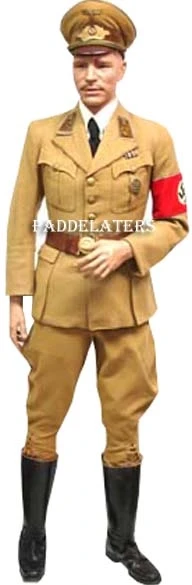
Introduction: Understanding the Significance of German WW2 Uniforms
The German military uniforms from World War II, or the Wehrmacht uniform, played an essential role in the iconic image of Nazi Germany's army during the conflict. The uniform wasn’t just a piece of clothing; it was a symbol of power, organization, and discipline, and it reflected both the military and ideological goals of the regime. Its distinctive designs, materials, and insignia have made it one of the most recognizable military uniforms in history.
In this blog post, we'll take a closer look at the different aspects of the German WW2 military uniform, its key features, and its significance in the context of the war. Additionally, we will explore the authenticity of these uniforms, how to distinguish real ones from replicas, and their lasting impact on modern military uniform designs.
Features: Key Components of the German WW2 Military Uniform
The German WW2 uniform was designed for functionality, practicality, and ideological representation. From its color to its structure, the uniform had various components that made it unique. Let’s break down some of the main features that defined the German military attire.
1. Uniform Types
There were multiple types of uniforms worn by different branches of the military during the Second World War. The primary ones include:
-
Army (Heer) Uniform: The standard olive-green uniform worn by soldiers of the German Army. The color of the uniform was called "feldgrau" (field gray), which was ideal for camouflage in the European landscape. The tunic had four buttons down the front and a distinctive collar.
-
SS Uniform: The SS (Schutzstaffel) was a paramilitary organization that grew alongside the Nazi regime. Their uniform had some key differences, such as black or field-gray jackets with a skull-and-crossbones insignia. SS members were considered elite soldiers, and their uniform reflected that status.
-
Waffen-SS: While the Waffen-SS had similar uniforms to the regular army, they often had more specialized gear such as camouflage smocks (called Sumpftarn), which were designed for different combat environments.
-
Luftwaffe (Air Force) and Kriegsmarine (Navy) Uniforms: The Luftwaffe wore light blue tunics, and the Kriegsmarine wore naval uniforms with their own distinct buttons and insignia.
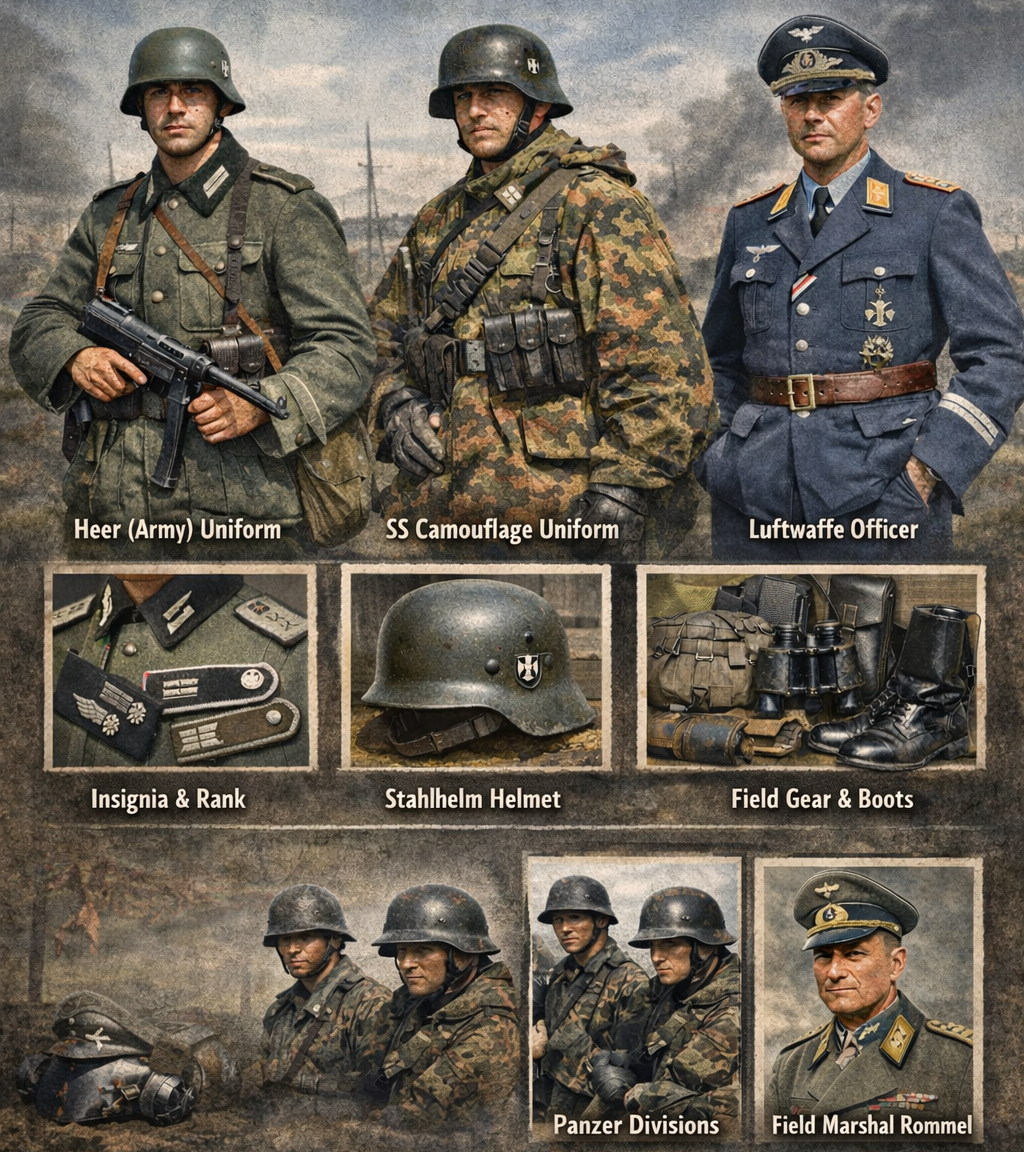
Each branch had variations, but the basic structure remained similar across the board, ensuring uniformity within the military forces.
2. Insignia and Rank Markings
The insignia on a German WW2 uniform was a clear marker of rank, unit affiliation, and sometimes even political status. The most notable insignia included:
-
Collar Tabs (Kragenspiegel): These indicated the soldier's rank and branch of service. For example, a general would have silver piping, while an enlisted soldier had simple black collar tabs.
-
Shoulder Boards (Schulterklappen): Used to denote rank, the shoulder boards were worn on the epaulets of the tunic. Each branch of the military had its own specific design for the shoulder boards.
-
Eagle and Swastika: The eagle holding the swastika was the primary symbol of the Third Reich and was often displayed on the breast pocket of the tunic or on the cap.
-
Cuff Titles and Unit Insignia: Many specialized units, such as the Panzer divisions, had unique cuff titles that displayed the unit's insignia or motto. These were worn on the lower sleeves of the uniform.
3. Material and Design Features
German military uniforms were made from high-quality wool, cotton, and sometimes leather for specific gear like boots or gloves. The design was simple, but functional, focusing on durability and comfort for the soldiers in harsh conditions.
-
Color: The feldgrau (field gray) color helped soldiers blend into their surroundings in the European terrain, which was particularly useful in forested or muddy landscapes.
-
Jackets and Trousers: The jacket had four buttons down the front and a stand-up collar, and the trousers were tucked into leather boots. Officers could have more tailored versions, while enlisted men wore practical designs for ease of movement.
-
Boots: Tall leather boots were standard, providing soldiers with protection and support during long marches and battles. The boots were often polished to a shiny black finish.
4. Headgear
The German soldiers' headgear evolved throughout the war. Some of the most important headgear types included:
-
Pickelhaube (Spiked Helmet): Initially worn by German soldiers, this helmet became iconic but was largely replaced by the more practical Stahlhelm by the middle of the war.
-
Stahlhelm (Steel Helmet): Introduced early in the war, this steel helmet was designed to offer more protection. Its distinctive shape and design became synonymous with German soldiers during World War II.
-
Visor Caps (Schirmmütze): Worn by officers and certain units, the visor cap was a more formal piece of headgear, typically adorned with silver or gold insignia.
Pros & Cons: Advantages and Drawbacks of the German Uniform Design
The German military uniform was well-designed and functional, but like any design, it had its strengths and weaknesses.
Pros:
-
Durability: The use of high-quality materials meant that the uniform could withstand harsh conditions, such as rain, cold weather, and long marches, which were common during the war.
-
Practicality: The uniform was designed with comfort and utility in mind, making it easier for soldiers to move and fight effectively.
-
Camouflage Effectiveness: The field-gray color worked well in blending in with the environment, which was particularly beneficial for infantry soldiers.
-
Iconic Design: The German WW2 uniform became one of the most recognized military uniforms in history. Its distinctive look continues to be a point of fascination for collectors, historians, and military enthusiasts.
Cons:
-
Lack of Ventilation: Despite the uniform’s durability, the thick wool could make soldiers hot and uncomfortable, especially in warmer climates.
-
Bulky Design for Some Branches: The uniform could be cumbersome in some cases, especially for tank crews who would have preferred lighter materials and more flexible designs.
-
Political Symbolism: Many of the uniforms, particularly those worn by the SS, have become associated with the atrocities of the Nazi regime, leading to their use being controversial in modern times.
Real-World Examples: Famous German Uniforms and Units
Throughout the war, many notable German units and figures wore these uniforms, adding to their iconic status. Some examples include:
-
The Waffen-SS: This elite group wore specialized uniforms, including camouflage smocks and distinctive insignia. Their uniforms became symbols of the highly organized and feared nature of the group.
-
Panzer Divisions: Soldiers in these units wore distinctive camouflaged smocks and helmets, designed to blend into different environments, making them highly effective in their role as tank crews.
-
Field Marshals and High-ranking Officers: High-ranking officers, such as Erwin Rommel, wore more polished versions of the uniform, with unique insignia and tailored features that set them apart from regular soldiers.
FAQs: Common Questions about German WW2 Uniforms
How Can You Tell an Authentic German WW2 Uniform from a Replica?
Authenticating a German WW2 uniform requires knowledge of its details. Real uniforms often feature high-quality stitching, period-correct buttons, and specific insignia. Replicas may have modern stitching, incorrect insignia, or lower-quality materials. It's essential to consult with an expert or use references from collectors when in doubt.
What Was the Purpose of the German SS Uniform?
The SS uniform was designed to reflect the elite status of the unit. It was distinct from regular army uniforms, with black or field-gray jackets, special insignia, and a more polished appearance. The SS had an important role during the war, and its uniforms reflected their special status within the Nazi regime.
Were German Soldiers Required to Wear a Full Uniform?
Yes, soldiers in the German military were expected to wear the full uniform as part of their discipline and organization. Variations occurred depending on rank, weather, and unit type, but a consistent appearance was important for the image of the military.
Conclusion: The Legacy of the German WW2 Uniform
The German military uniform from World War II remains a powerful symbol of the era. Whether admired for its practicality, design, or controversial history, it continues to hold historical significance. As we reflect on the legacy of these uniforms, it's crucial to remember the larger context of the war and the impact these soldiers had on global history.