THE LASTING LEGACY OF THE U.S. WW1 UNIFORM IN MODERN MILITARY FASHION
Introduction: The Uniforms that Defined a Generation
World War I was a pivotal moment in history, not just for the battles fought but for the soldiers who wore the uniforms that came to symbolize their service. The U.S. WW1 uniform, designed with both practicality and symbolism in mind, was much more than just clothing—it was part of a soldier’s identity, a tool for survival, and a symbol of patriotism. For the millions of men who served, the uniform became a second skin, carrying with it the weight of duty, hardship, and the promise of victory.
But what made the U.S. WW1 uniform stand out? Why did it matter so much to the soldiers who wore it? Let’s take a deeper look at the elements that made up these iconic military uniforms, explore some of the challenges faced by soldiers, and hear from those who lived through it all.
The Key Features of the U.S. WW1 Uniform
When we think of the U.S. WW1 uniform, several defining features come to mind. Each component of the uniform was carefully crafted to meet the needs of soldiers on the battlefield. Below, we’ll explore the materials, designs, and functional elements that made these uniforms both distinctive and practical.
Material and Design: Practicality Meets Durability
The primary material for the U.S. WW1 uniform was wool. Wool was chosen for its durability, insulation, and natural moisture-wicking properties, all essential for soldiers who would endure harsh conditions on the front lines. Wool was especially effective in cold climates, which was important for soldiers fighting in Europe during the winter months. The heavy, thick fabric, however, could be uncomfortable, especially during warmer weather.
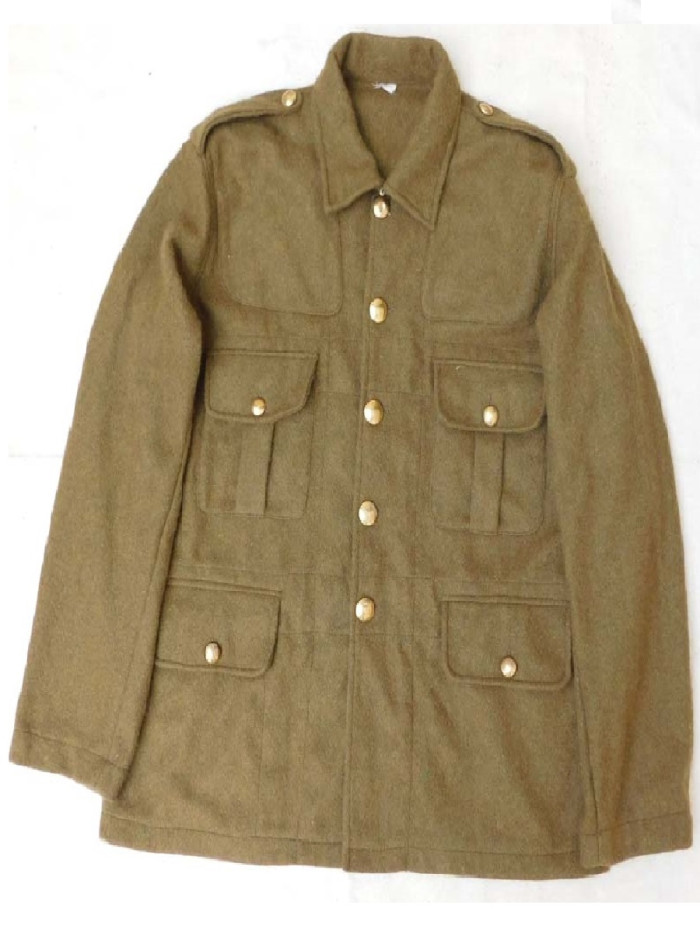
The uniform was composed of several key pieces: the tunic, trousers, belt, and a distinctive felt hat, often referred to as the "Doughboy" hat, named after the American infantryman. The tunic was a simple, military-style jacket, featuring four large pockets, with a belt at the waist to keep everything in place. The trousers, designed to be practical and durable, were straight-legged and often had cuffs at the bottom to prevent dirt and mud from getting in.
The color of the uniform was a drab olive green, which helped soldiers blend into the landscape and remain concealed from enemy forces. The color was chosen not just for camouflage but also because it was practical and easy to produce in mass quantities.
Insignia and Equipment: Symbols of Pride and Functionality
The U.S. WW1 uniform featured a number of insignia that represented a soldier’s rank, unit, and achievements. Rank was typically denoted by patches on the sleeves or shoulder epaulets. For example, a sergeant would wear chevrons, while officers displayed their rank through different color and style of insignia. The uniform also had space for unit badges, often sewn onto the sleeve, indicating the division to which the soldier belonged. These small details not only helped organize the army but also created a sense of pride and camaraderie among the troops.
In addition to the basic uniform, soldiers carried a variety of essential equipment. This included a woolen greatcoat for warmth, leather gloves, and a gas mask. The gas mask was especially important given the heavy use of chemical warfare during WW1. It was bulky and awkward to wear but could be life-saving when poison gas was deployed on the battlefield.
The Pros and Cons of the WWI U.S. Uniform
While the U.S. WW1 uniform served its purpose in many ways, it wasn’t without its challenges. Let’s explore the advantages and disadvantages of the uniform as experienced by the soldiers who wore it.
Pros: Durability, Protection, and Symbolism
One of the main advantages of the uniform was its durability. The heavy wool material was resistant to wear and tear, making it suitable for the tough conditions of trench warfare. The uniform’s sturdy construction helped protect soldiers from the elements, especially during the cold winter months in Europe. For soldiers enduring long days in the trenches, the uniform offered some comfort and warmth.
The uniform also provided a sense of identity and pride. Each soldier wore the same uniform, which helped foster a sense of unity and brotherhood. Soldiers who served in different divisions often referred to their uniforms as “proud,” as they symbolized not just the individual but the collective effort of the American military.
Cons: Discomfort and Inflexibility
However, the U.S. WW1 uniform also had significant downsides. As durable and protective as the wool was, it was far from comfortable, particularly in the summer months. The thick wool could become unbearably hot, especially during physical activity. Soldiers often had to endure heat rash, chafing, and discomfort, making it difficult to focus on the task at hand.
Additionally, the uniform was relatively stiff and lacked flexibility, which made movement difficult. Soldiers had to march long distances or crouch in the trenches, and the uniform's restrictive design made these tasks more difficult than they needed to be.
Another major downside was the heavy load of equipment soldiers had to carry in addition to their uniforms. The addition of a rifle, ammunition, a gas mask, and other personal items often made soldiers feel burdened, especially during long, grueling days in the trenches.
Soldiers’ Accounts: Personal Stories from the Front Lines
To truly understand the impact of the U.S. WW1 uniform, let’s look at the experiences of the men who wore them. Soldiers’ firsthand accounts reveal just how much the uniform meant to them, both as a piece of equipment and as a symbol of their service.
One soldier, Private First Class John Kelly, who served with the 42nd Rainbow Division, recalled how his uniform became a part of his daily routine. "At first, the wool felt rough, but after days of fighting in it, it became like a second skin," he wrote in his memoirs. "It was hot, uncomfortable, but when you put it on, it meant you were ready to fight, ready to serve. It was our uniform, and we wore it with pride."
Another account from Sergeant Thomas Brooks of the 1st Infantry Division highlights how the uniform served as both a practical necessity and a morale booster. “The uniform kept me warm during the cold nights in the trenches, but when I put it on, it also reminded me that I was part of something bigger than myself. It wasn’t just about the battles, it was about the men beside me, the cause we were fighting for.”
While these personal stories show the importance of the uniform, they also reveal the frustrations soldiers had with its design. Private William Harris, who served in the trenches, mentioned how the uniform’s stiffness made movement cumbersome. “When you’re crawling through the mud, trying to avoid enemy fire, every little movement counts. And that heavy wool coat—let’s just say it wasn’t doing me any favors.”
Frequently Asked Questions
What materials were used in the WW1 U.S. uniform?
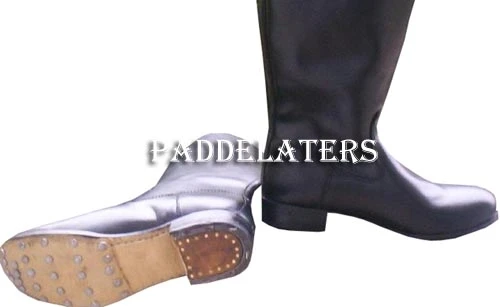
The U.S. WW1 uniform was primarily made of wool for the tunic, trousers, and coat. Wool was chosen for its durability and insulation properties. Other materials included cotton for the lining and leather for boots and belts.
Why were the uniforms designed in that way?
The design of the uniform was based on practicality and functionality. The wool material helped keep soldiers warm and dry, while the simple design made it easy to mass-produce. The uniform was also designed to be sturdy enough to withstand the harsh conditions of trench warfare.
How did soldiers feel about wearing them?
While soldiers respected the uniform as a symbol of pride and unity, many found it uncomfortable, particularly in hot weather. The thick wool could cause chafing, and the uniform's rigid structure made movement difficult. However, for many soldiers, the discomfort was outweighed by the sense of duty and pride the uniform represented.
Conclusion: Lasting Legacy of the U.S. WW1 Uniform
The U.S. WW1 uniform was more than just a set of clothes; it was an integral part of a soldier’s experience during one of the most brutal conflicts in history. Despite its shortcomings, it offered protection, pride, and a sense of unity that helped soldiers endure the harsh realities of war. Today, the WW1 U.S. uniform stands as a lasting symbol of sacrifice and service, and its influence can still be seen in modern military uniforms around the world. The legacy of the “Doughboy” uniform is not just in the fabric or the design, but in the stories of the soldiers who wore it—stories of courage, endurance, and an unwavering commitment to duty.
REQUISITION RELATED GEAR
EXPLORE MORE FIELD REPORTS
Browse all published guides and history articles.
