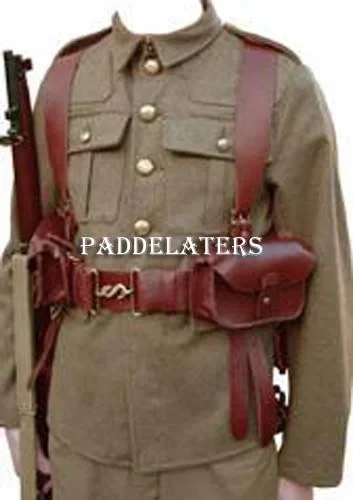
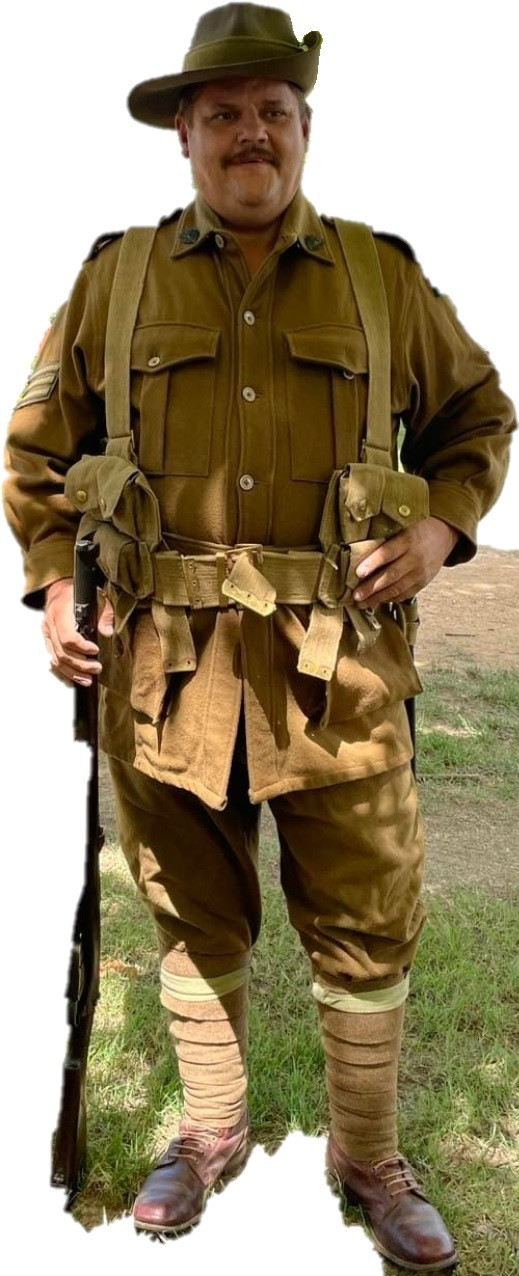
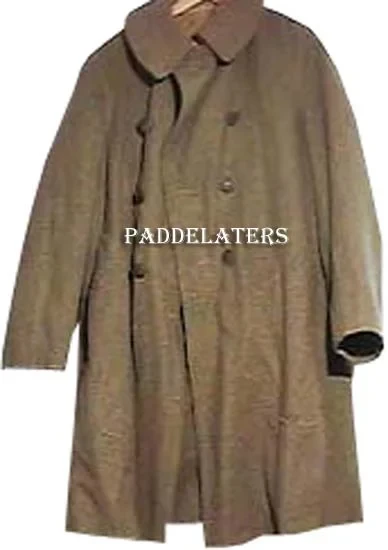
Introduction to WW1 German Uniforms
World War 1 German uniforms were built for a modern industrial war. When the war started in 1914, German soldiers still wore bright colors in some units. Officers often had dark blue tunics and polished brass fittings. Within months, battlefield reality forced change. Rifle fire, machine guns, and artillery made visibility dangerous. The German army shifted toward feldgrau, meaning “field gray,” a muted gray-green shade designed to reduce visibility.
Collectors and reenactors today want these uniforms for display, film, or living history events. Museums such as the Imperial War Museum hold original officer tunics and helmets. These artifacts show clear wear patterns, stitching styles, and fabric weight. But reproducing them accurately is harder than it looks.
Ever tried sewing a feldgrau tunic? It is not just about color. It is about wool weight, lining material, button placement, and collar piping that matches rank and regiment. That is where most people run into trouble.
The Problem with Modern Reproductions
The biggest issue is accuracy. Many online sellers offer “WW1 German officer uniform” sets, but details often do not match original records.
Problem one: wrong fabric. Original officer tunics were made from heavy wool broadcloth. Period samples measured around 16 to 20 ounces per yard, based on preserved examples studied by textile historians. Modern reproductions often use lighter wool blends or synthetic mixes. These hang differently and wear differently.
Problem two: incorrect color. Feldgrau was not bright green. Surviving uniforms from 1915–1918 show a gray base with green undertones. Dye formulas varied due to wartime shortages, so there was no single shade. Cheap reproductions use bright green fabric that looks closer to costume material.
Problem three: fake hardware. The 1916 German army manual described specific fittings for the Pickelhaube helmet, including brass or steel fittings depending on supply. Many modern helmets use thin stamped metal and plastic liners.
Poor fit is another issue. Original officer tunics were tailored. They had a fitted waist and shaped back seams. Off-the-rack reproductions are often boxy. That changes the entire look.
If you are a reenactor, these mistakes stand out. Groups like The Great War Society maintain strict authenticity standards. Uniforms are checked for correct insignia, stitching style, and materials before events.
Key Features of WW1 German Officer Uniforms
German officer uniforms changed during the war, but certain features remained consistent.
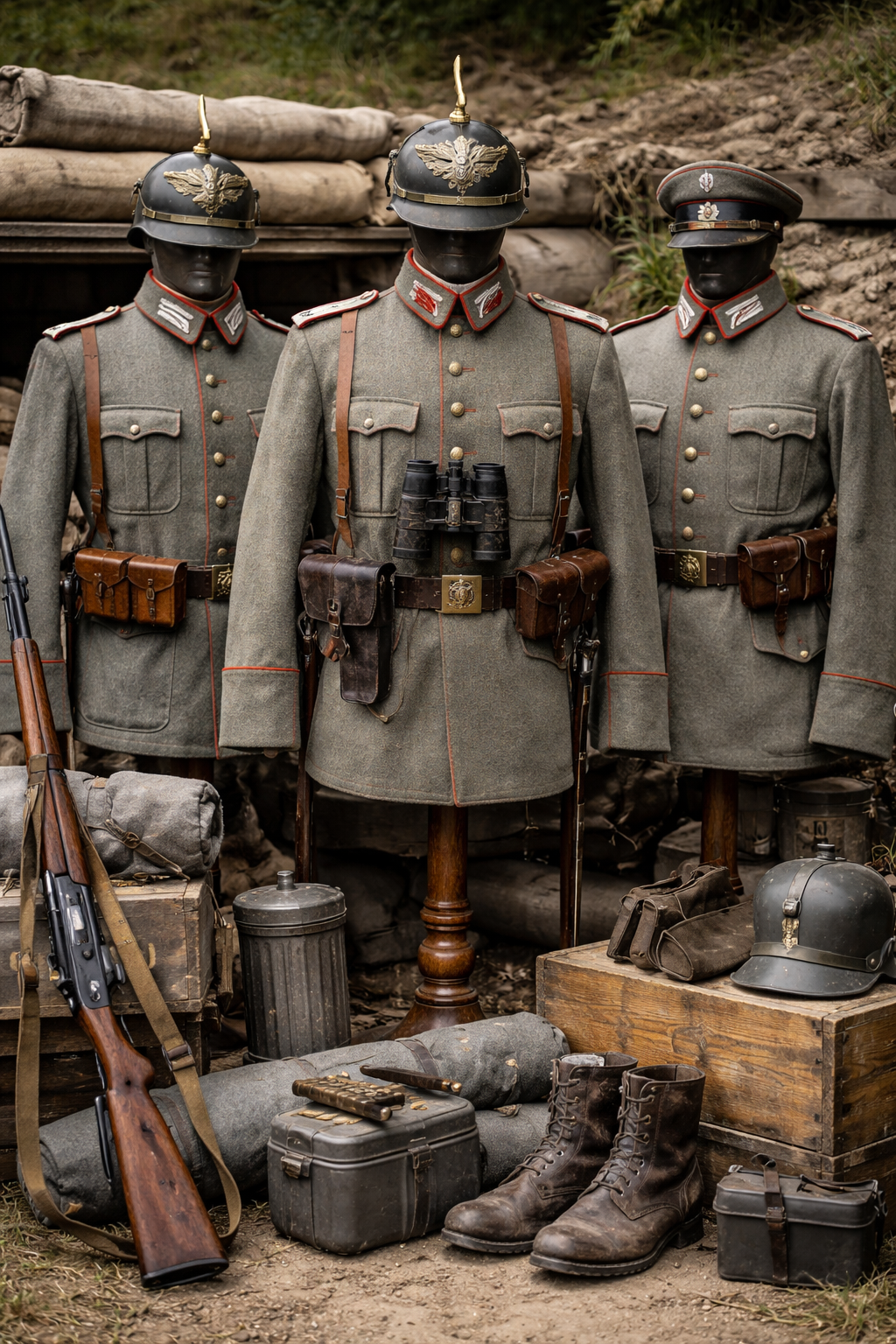
The standard officer field tunic, often called the M1910 or M1915 pattern, included:
-
Feldgrau wool body
-
Stand-up collar
-
Colored piping indicating regiment
-
Shoulder boards with rank insignia
-
Eight front buttons
-
Four front pockets with scalloped flaps
Officers often purchased their own uniforms from private tailors. That meant small variations in cut and lining. However, overall structure followed army regulations.
During major battles such as the Battle of the Somme in 1916, photographs show officers wearing simplified field tunics with fewer decorative elements. Bright brass was often dulled or replaced with field-gray fittings to reduce shine.
Materials and Colors (Feldgrau Fabric Specs)
Feldgrau fabric was heavy wool. Surviving examples tested by museum conservators show dense weave patterns and strong twill structures. Fabric weight commonly ranged between 16 and 20 ounces per yard for officer tunics.
Color variation occurred because Germany faced dye shortages by 1916. Synthetic dye production was affected by blockades. As a result, some tunics appear more gray, others slightly green or brownish.
Key material details:
-
Outer shell: 100% wool broadcloth
-
Lining: cotton or lightweight silk for officers
-
Buttons: stamped brass (early war) or field-gray steel (later war)
-
Thread: cotton or linen thread in matching gray tones
Authentic wool today can cost around $20–$30 per yard from specialty textile suppliers in the United States or Europe. That price reflects natural fiber content and proper weight.
Iconic Elements like Pickelhaube and Tunic Details
The Pickelhaube helmet is one of the most recognized symbols of Imperial Germany. Early-war officer Pickelhauben used black leather bodies with brass spike fittings. According to 1916 regulations, steel fittings replaced brass for many units to reduce reflection.
An original 1916 officer Pickelhaube in the Imperial War Museum collection shows:
-
Leather shell around 2–3 mm thick
-
Metal spike mounted on a removable base
-
Silk liner with drawstring
-
Officer cockades in black, white, and red
Tunic details also mattered. Officer tunics featured:
-
French cuffs with piping
-
Tailored waist seam
-
Hidden internal suspenders for belt support
-
Rank insignia on shoulder boards
These small details separate a museum-grade reproduction from a costume.
How to Make Your Own WW1 German Uniform (Step-by-Step)
If you want accuracy, follow these steps carefully.
Step 1: Research Original Patterns
Study museum photos and wartime manuals. Focus on pocket shape, button spacing, and collar height. Avoid guessing proportions.
Step 2: Choose Correct Fabric
Buy heavy wool broadcloth in feldgrau shade. Aim for 16–20 ounces per yard. Test the drape. It should feel firm and structured.
Step 3: Draft or Purchase Accurate Pattern
Look for patterns based on M1910 or M1915 tunics. Ensure it includes shaped back seams and fitted waist.
Step 4: Cut and Assemble
Use cotton or linen thread. Reinforce shoulder seams. Sew pockets with scalloped flaps. Measure spacing evenly between the eight front buttons.
Step 5: Add Insignia and Piping
Research your chosen regiment. Piping color differs by unit. Use wool piping, not synthetic cord.
Step 6: Construct or Source Pickelhaube
If building one, use vegetable-tanned leather. Install metal fittings per 1916 spec. For safety and practicality, some reenactors use reproduction shells but replace hardware with higher-quality metal parts.
Step 7: Final Fitting
Adjust waist taper and sleeve length. Officer tunics were fitted, not loose.
Making a full officer uniform can take 30–50 hours of sewing time depending on skill level.
Pros and Cons of DIY vs. Buying Reproductions
Here is a factual comparison.
DIY Pros:
-
Control over materials
-
Accurate fabric weight selection
-
Authentic tailoring
-
Wool costs about $20–$30 per yard
DIY Cons:
-
Time investment (30+ hours)
-
Need sewing skills
-
Mistakes can waste fabric
Buying Reproduction Pros:
-
Faster
-
No sewing required
-
Some high-end makers use correct wool
Buying Reproduction Cons:
-
Quality varies widely
-
Risk of incorrect color or hardware
-
Higher-end sets can cost $800–$1,500
Online marketplaces show steady demand. Some eBay sellers report consistent monthly sales of WW1 German reproduction uniforms, especially before major reenactment seasons. Listings that mention correct wool weight and 1916 specifications often attract more views.
Real-World Case Study: Reenactor Success Story
A member of The Great War Society documented his uniform build using museum references. He replaced synthetic lining with cotton and used heavier wool after feedback from other members.
At his first event, authenticity inspectors approved the uniform without corrections. Event photos showed proper drape and fit compared to lower-quality reproductions nearby. The reenactor later shared that investing in correct wool improved durability over multiple seasons.
Another example involves a German officer tunic linked to a Somme veteran preserved in a UK museum archive. Wear marks on elbows and collar showed heavy field use. The construction quality helped it survive more than a century, proving that material choice mattered.
Frequently Asked Questions (FAQs)
1. What fabric was used for WW1 German officer tunics?
Heavy wool broadcloth, typically 16–20 ounces per yard, in feldgrau shade.
2. What does feldgrau mean?
It means “field gray.” It describes the gray-green color adopted for field service.
3. Were all Pickelhauben made of leather?
Most early-war versions used leather. Late-war shortages led to alternative materials and eventually steel helmets.
4. How much does it cost to make a full officer uniform?
Materials alone can range from $300 to $600 depending on wool price and hardware.
5. Did officers buy their own uniforms?
Yes. Many officers purchased tailored uniforms following army regulations.
6. How accurate are online reproductions?
Accuracy varies. Check fabric weight, lining material, and hardware details before buying.
7. Can beginners sew one?
Yes, but it requires patience and pattern accuracy.
Conclusion: Bring History to Life
World War 1 German uniforms are more than collector items. They reflect industrial warfare, supply shortages, and military reform. From bright early-war brass to muted 1916 field-gray fittings, each detail tells part of the story.
The problem with modern reproductions is clear: wrong fabric, poor fit, and fake details reduce authenticity. That matters to collectors and reenactors who care about history.
The solution is careful research, correct materials, and attention to detail. Whether you choose DIY or purchase from a trusted maker, focus on wool weight, accurate feldgrau shade, and proper hardware.
Ever held a heavy wool tunic and felt its structure? That weight connects you to soldiers who wore similar garments over a century ago. With the right approach, you can bring that history back to life—accurately, respectfully, and with confidence.