Introduction
Many people search online for information about Nazi SS uniforms, the clothing worn by Adolf Hitler, and the wider system of German military uniforms in WWII. Old photographs, war films, and museum displays often show these uniforms, yet many viewers do not know what the details mean. Questions often appear about the black SS outfits, field-gray combat uniforms, and the brown political clothing used in rallies and public events.
Without historical context, these garments can easily be misunderstood. Some people see them simply as dramatic clothing, while historians view them as tools used by a political system to display power, rank, and group identity. Uniforms helped organize the chain of command, mark political loyalty, and show authority inside the Nazi state.
Between 1933 and 1945 the German government produced millions of uniforms for soldiers, officers, and political units. The SS, the Wehrmacht army, and other organizations used different fabrics, colors, and insignia. Surviving examples are preserved today by institutions such as the Imperial War Museums in the United Kingdom and the United States Holocaust Memorial Museum in Washington. By studying these preserved garments, historians can understand how uniforms worked in daily military life and in propaganda.
Key Features of SS Uniforms
The SS, short for Schutzstaffel, began as a small political guard unit for Adolf Hitler but later grew into a large organization with military divisions. Their uniforms changed several times during the 1930s and the war years.
One early design was the black SS uniform introduced in the mid-1930s. According to records held by the United States Holocaust Memorial Museum, this uniform included a black tunic, black trousers, a peaked cap, and silver-colored insignia. The tunic was usually made from wool fabric similar to other European military uniforms of the period. Silver braid and buttons were used to mark officer ranks.
A key visual symbol on SS uniforms was the double lightning bolt insignia, known as the SS runes. These symbols appeared on collar patches and sometimes on helmets. Another important badge was the Totenkopf, or skull emblem. This symbol had been used earlier in German military history but was adopted by SS units as a mark of authority and loyalty.
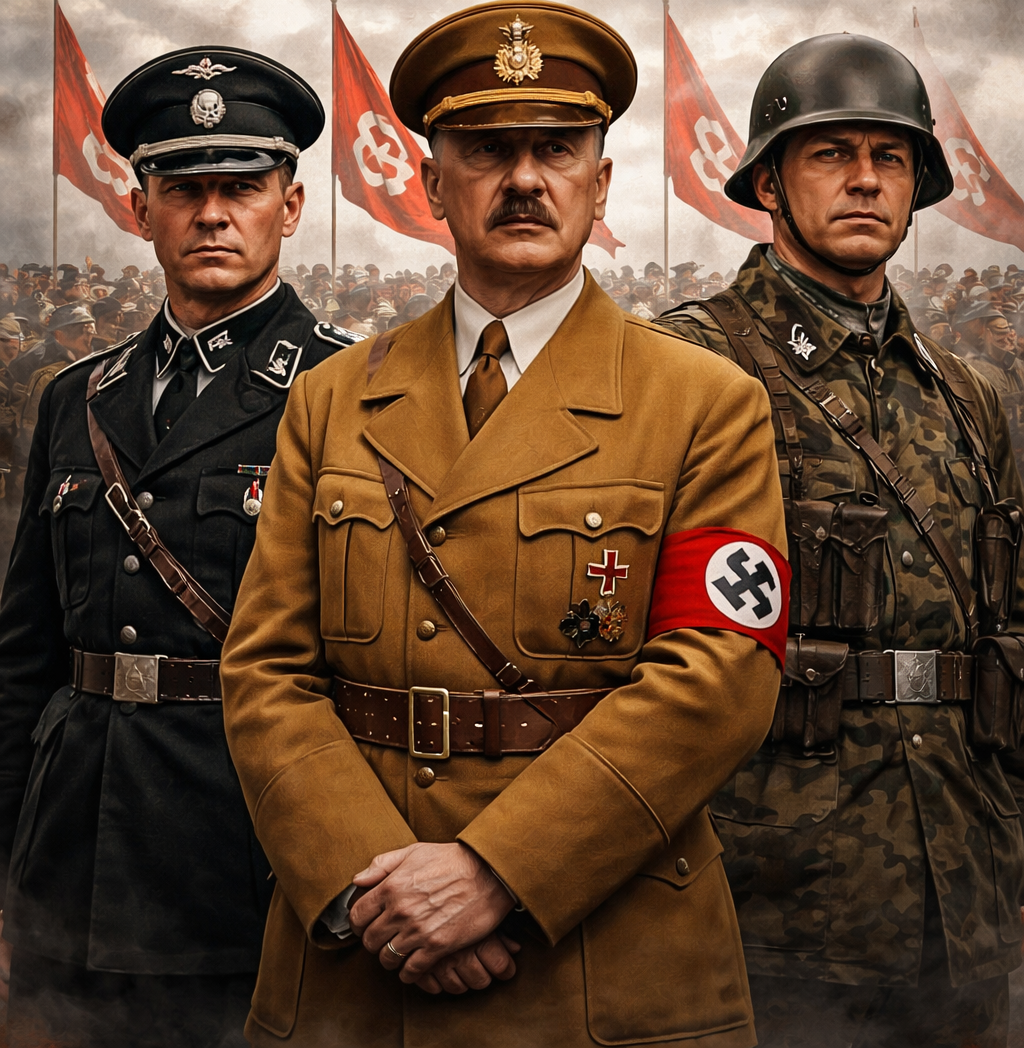
During the war, black dress uniforms were used less often because they were not practical for battlefield conditions. Combat units of the Waffen-SS instead wore field-gray uniforms similar to those used by the regular German army. These were made from wool cloth and designed for field use. Some units also received camouflage clothing such as smocks and helmet covers. The Imperial War Museums archive shows examples of these camouflage patterns, including leaf and plane tree designs used by SS divisions in the early 1940s.
Rank markings were also important features. Officers used shoulder boards and collar patches to indicate their position. These markings allowed soldiers to recognize command roles quickly during training and combat.
Hitler’s Personal Uniform Details
Adolf Hitler’s own clothing was different from most combat uniforms. He rarely wore battlefield gear and instead preferred a simple brown political uniform connected to the Nazi Party.
Photographs from the 1939 Nuremberg Rally show Hitler wearing a brown tunic with a belt, trousers, and a red armband with the swastika symbol. The tunic was usually made of wool and had four front pockets. Unlike many military officers, Hitler did not display many medals. One badge he regularly wore was the Iron Cross First Class, awarded to him during the First World War.
Hitler’s uniform style was intentionally plain compared with high-ranking generals. Historians note that this choice helped present him as a political leader rather than a traditional officer. The simple design also made it easier for crowds to recognize him during rallies and public events.
During wartime briefings, Hitler sometimes wore a gray military-style tunic known as the field gray Führer tunic. This outfit appeared in many wartime photographs taken at command headquarters such as the Wolf’s Lair in East Prussia.
Pros and Cons in Historical Context
Uniform systems served several practical purposes in the German military structure. First, they helped organize the chain of command. Rank insignia made it easier for soldiers to identify leaders and follow orders quickly. Second, uniforms created group identity within units such as the SS or Wehrmacht divisions.
Uniform design also helped with logistics. Standardized clothing allowed factories to produce large quantities of garments. Historical production records show that German textile factories produced millions of wool tunics, trousers, and caps during the war years.
However, there were also limitations. Some early SS dress uniforms were not suited for combat. Black clothing made soldiers visible in the field, which is one reason it was replaced by field-gray and camouflage gear. Wool uniforms were also heavy and could become uncomfortable in wet conditions.
Another issue involved supply shortages later in the war. By 1944, German industry struggled to maintain the same quality of fabric and tailoring. Surviving uniforms from late-war production often show simpler construction and fewer decorative elements.
Historians also emphasize that uniforms played a role in propaganda. The Nazi government used carefully designed clothing in parades, films, and rallies to project power and discipline. In this way, uniforms became tools for political messaging as well as military use.
Real-World Examples from German Military
Historical records and museum collections provide real examples of how these uniforms appeared during wartime events.
One example comes from Waffen-SS units during the Battle of Normandy in 1944. Photographs taken by Allied forces show SS soldiers wearing field-gray tunics with camouflage smocks. The camouflage patterns helped reduce visibility in wooded areas and farmland. Helmets often carried cloth covers that matched the smocks.
Another example involves SS Panzer divisions on the Eastern Front. Many soldiers wore winter uniforms made from white cloth during snowy conditions. These garments were designed to blend with the environment and were worn over standard wool uniforms.
A third case comes from the 1939 Nuremberg Rally, one of the large propaganda events organized by the Nazi Party. During this rally, Adolf Hitler appeared in his brown political uniform while SS guards stood nearby in black dress uniforms. Photographs from this event show how different uniform styles were used together to create a strong visual display of authority.
A fourth example involves German officers photographed at military headquarters during the war. In these images, Hitler often appears in his gray tunic while generals wear decorated military uniforms with medals and shoulder boards. The contrast highlights how different roles inside the Nazi system were represented through clothing.
These real-world cases show that Nazi SS uniforms and Hitler’s clothing were not random designs. Each piece of clothing followed rules related to rank, purpose, and political symbolism.
FAQs
1. What were Nazi SS uniforms made from?
Most SS uniforms used wool fabric for tunics and trousers. Some field gear also used cotton cloth, especially for camouflage smocks.
2. What symbols appeared on SS uniforms?
Common symbols included the SS rune insignia, the skull badge known as the Totenkopf, and rank markings on collars and shoulders.
3. Did SS soldiers always wear black uniforms?
No. Black uniforms were mainly used for formal or political events before the war. Combat units mostly wore field-gray uniforms during WWII.
4. What uniform did Hitler usually wear?
Hitler usually wore a brown Nazi Party uniform with a belt and armband. During wartime meetings he sometimes wore a gray military-style tunic.
5. Were SS uniforms different from Wehrmacht uniforms?
Yes. Although both used field-gray clothing during the war, SS units had different insignia and sometimes used unique camouflage designs.
6. Where can original SS uniforms be seen today?
Examples are displayed in museums such as the Imperial War Museums and the United States Holocaust Memorial Museum.
7. Why did camouflage uniforms appear later in the war?
Camouflage helped soldiers blend with the environment, making them harder to see in combat situations.
8. Did all German soldiers wear the same uniforms?
No. Different branches such as the army, air force, navy, and SS had different uniform styles and insignia.
Conclusion
Interest in Nazi SS uniforms and Hitler uniform history continues because these garments appear in photographs, museums, and historical research. At first glance they may look like simple clothing, but closer study shows they were carefully designed systems that reflected rank, authority, and political identity.
By examining real examples preserved in museums and archives, historians can explain how these uniforms were produced, how they changed during the war, and how they were used in both military operations and propaganda events. Black SS dress uniforms, field-gray combat clothing, and Hitler’s brown political outfit each served different roles inside the German system.
Understanding these details helps fill the curiosity gap many people have when they first encounter images of German military uniforms from WWII. Rather than seeing them as costumes or symbols alone, historians analyze them as historical artifacts connected to a specific time, government, and military structure.
In this way, studying uniforms becomes another way to understand the broader history of the Second World War and the political system that produced these garments.