Introduction: The Problem Collectors Face
German World War I uniforms are among the most collected military items in the world. Many collectors look for feldgrau tunics, helmets, and trousers used by the Imperial German Army between 1914 and 1918.
But there is a problem.
Authentic uniforms are difficult to identify. Thousands of reproductions exist today. Some are modern copies. Others are original uniforms that were modified or repaired after the war. Prices can reach hundreds or even thousands of dollars, so mistakes are expensive.
Many collectors ask the same question: How do you know if a German WW1 uniform is real?
This guide explains the history and main features of these uniforms and shows real examples from museum records. The goal is simple—help collectors understand what they are buying.
Evolution of German WW1 Uniforms
Before World War I, German soldiers wore bright and visible uniforms. The most well-known example was the dark blue Prussian tunic with the leather Pickelhaube.
When the war began in 1914, this style quickly proved outdated. Modern warfare required camouflage and practical clothing.
The German Army began replacing older uniforms with the feldgrau (field gray) system. Feldgrau uniforms blended better with the environment and were easier to mass-produce.
Key changes during the war included:
-
1907–1910: Introduction of feldgrau field uniforms
-
1915–1916: Simplification of tunics to speed production
-
1916: Introduction of the Stahlhelm M1916
These changes show how quickly armies adapted to trench warfare.
For collectors, understanding this timeline helps identify whether a uniform matches the correct production period.
Key Features of the M1910 Tunic
One of the most common German WW1 uniforms is the M1910 Feldgrau Tunic.
The Imperial German Army introduced it shortly before the war. Museums such as the Imperial War Museum have documented examples in their collections.
Important features include:
-
Feldgrau wool fabric
-
Eight front buttons
-
Four external pockets
-
Colored piping showing regiment type
-
Red lining in early production models
The wool used in these tunics was thick and stiff. That stiffness often surprises collectors when they handle original pieces.
Ever wondered why some WW1 tunics feel heavier than modern uniforms? The reason is simple. Wool quality and weaving methods were different from modern fabrics.
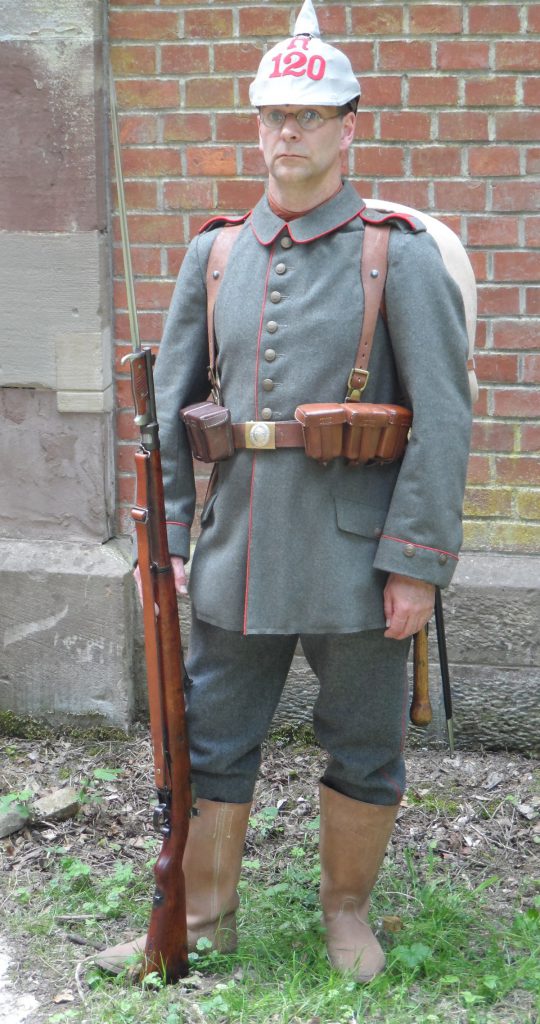
Production numbers were large. German archives suggest millions of feldgrau tunics were produced between 1910 and 1918. This mass production explains why tunics are still found today, though original examples are becoming harder to locate.
The Shift to the M1916 Tunic
As the war continued, Germany simplified uniform construction.
The M1916 Feldbluse reduced production time and material use.
Key changes included:
-
Simpler pocket construction
-
Less decorative piping
-
Reduced tailoring work
Factories needed to produce uniforms quickly. By 1916, millions of soldiers were serving on multiple fronts. Simplified uniforms helped meet demand.
For collectors, this means late-war uniforms often look more basic than early war versions.
Helmets: From Pickelhaube to Steel
Helmets show one of the clearest changes during the war.
Early German soldiers wore the leather Pickelhaube helmet. It was iconic but not designed for artillery and shrapnel.
In 1916 the German Army introduced the Stahlhelm M1916 steel helmet.
Important features:
-
Pressed steel construction
-
Large side ventilation lugs
-
Interior leather liner with three pads
The Stahlhelm provided better protection against shell fragments. Many historians consider it one of the most effective helmets of the war.
Collectors often find both helmet types on the market. The Pickelhaube is usually more decorative, while the Stahlhelm reflects late-war combat design.
Main Features of German WW1 Uniforms
German WW1 uniforms were designed for durability and practicality.
Common characteristics include:
Typical design features
-
Feldgrau wool fabric for camouflage
-
Shoulder boards for unit identification
-
Brass or steel buttons
-
Reinforced seams for field use
-
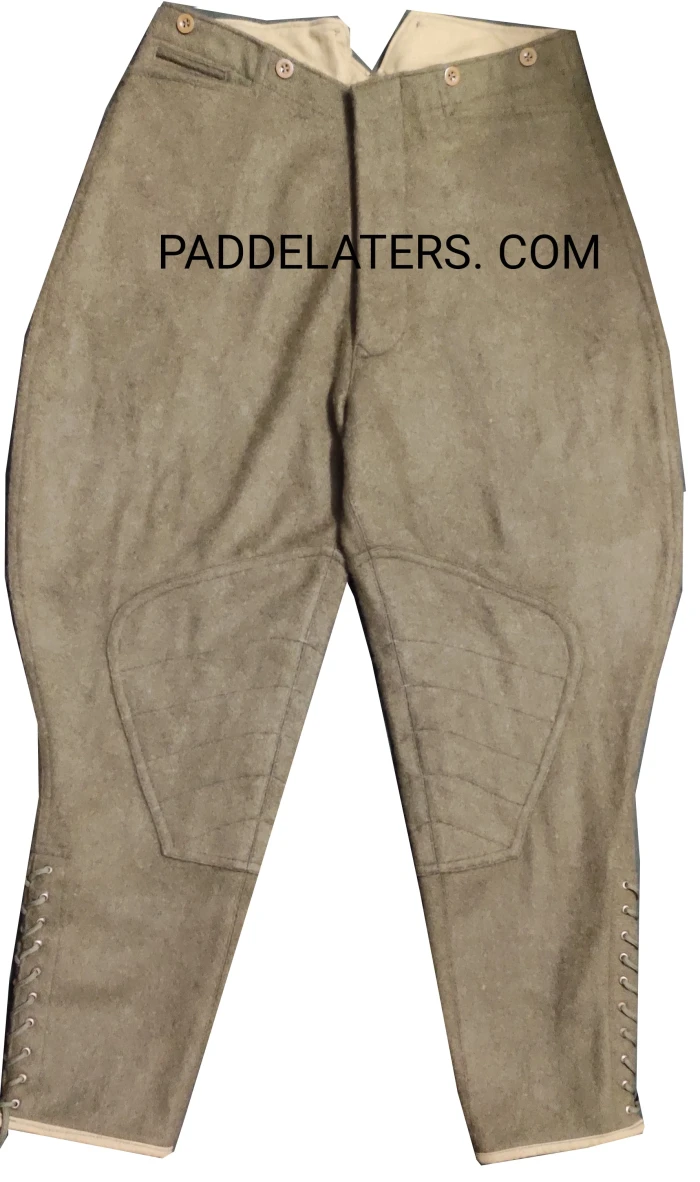
Wool trousers designed for riding or marching
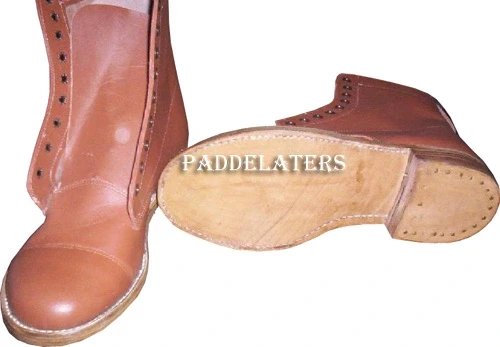
Trousers were often worn with high boots or puttees. The design allowed movement in trenches and muddy terrain.
Uniform construction was done by both military factories and civilian contractors. This created small variations between pieces.
Collectors often study stitching patterns and button markings to determine authenticity.
Pros and Cons for Collectors
German WW1 uniforms are valuable historical items. But collecting them has both advantages and risks.
Pros
-
Important historical artifacts
-
Strong demand in the collector market
-
Many museum references available
-
Wide range of items: tunics, helmets, trousers
Cons
-
High number of reproductions
-
Rising prices for authentic pieces
-
Some uniforms heavily restored
-
Authentication requires research
Because of these risks, many collectors compare items carefully before buying.
Real-World Examples of Authentic Uniforms
Real museum pieces help collectors understand what authentic uniforms look like.
Case Study 1: M1910 Feldgrau Tunic
A documented example in the Imperial War Museum collection shows:
-
Feldgrau wool body
-
Red interior lining
-
Eight brass buttons
-
Regiment shoulder boards
The stitching and fabric weight match known wartime production standards.
Collectors often use museum photographs to compare with items offered online.
Case Study 2: M1916 Stahlhelm Helmet
A preserved Stahlhelm M1916 in German military archives shows:
-
Thick steel shell
-
Ventilation lugs used for armor plates
-
Three-pad leather liner
Many reproductions fail to copy the exact steel thickness or liner construction.
That is one reason helmet collectors closely inspect interior hardware.
Case Study 3: Pickelhaube Infantry Helmet
An original Pickelhaube helmet from a Prussian infantry regiment includes:
-
Leather body
-
Brass spike and fittings
-
Cockade showing Imperial colors
These helmets were produced before and during early WW1.
Later in the war, simplified versions used steel fittings instead of brass to save materials.
WW2 Pants Comparison
Some collectors compare WW1 trousers with later WWII uniforms.
For example, the M42 German Field Pants introduced during WWII used:
-
Simplified pockets
-
More durable cotton-wool blends
-
Reinforced seat and knee areas
Compared to WW1 trousers, M42 pants were more optimized for long field use.
This comparison helps collectors understand how German military clothing evolved between the two wars.
Frequently Asked Questions
1. How can you identify an original WW1 German tunic?
Look for period wool fabric, correct stitching patterns, and original buttons. Museum references and archive photos are useful for comparison.
2. Why are feldgrau uniforms important?
Feldgrau marked the shift from decorative uniforms to practical camouflage clothing used in modern warfare.
3. Are Pickelhaube helmets rare?
Some models are common, especially infantry versions. Officer models and early production helmets are rarer and more expensive.
4. Why did Germany replace the Pickelhaube?
Leather helmets did not protect well against artillery fragments. Steel helmets offered better protection.
5. What makes reproductions easy to spot?
Modern materials, incorrect stitching, and new metal fittings often reveal copies.
6. How much do authentic WW1 uniforms cost?
Prices vary widely. A basic tunic may cost several hundred dollars, while rare helmets or officer uniforms can exceed several thousand.
7. Are WW1 trousers harder to find?
Yes. Many trousers were worn out or reused after the war, which makes surviving examples less common.
Conclusion: The Solution for Collectors
German WW1 uniforms tell the story of how armies adapted to industrial warfare. Feldgrau tunics, Pickelhaube helmets, and Stahlhelm helmets all show different stages of that change.
For collectors, the biggest challenge is authentication. Reproductions and restored items are common. Without research, buyers can easily overpay for incorrect pieces.
The best approach is simple:
-
Study museum examples
-
Compare stitching, fabric, and hardware
-
Buy from reputable sellers
-
Ask for detailed photographs
Online marketplaces like eBay and Amazon often list WW1 military collectibles. When browsing listings, check seller ratings and request close-up images of buttons, liners, and seams.
Careful research protects your money and helps preserve real historical artifacts.
For many collectors, that extra effort is worth it. Owning an authentic German WW1 uniform means holding a real piece of history.