Introduction
Picture a British soldier—often called a “Tommy”—standing knee-deep in mud during the Battle of the Somme in 1916. Rain is falling, artillery is shaking the ground, and the uniform he wears must survive cold, dirt, and long hours in the trenches. Early in World War I, many soldiers faced a serious problem: uniforms designed before trench warfare often struggled with comfort, durability, and visibility on the battlefield. Even though khaki had already replaced bright red coats by the early 1900s, the conditions of industrial war quickly exposed weaknesses in the clothing soldiers depended on every day.
The British Army had to rethink how uniforms worked. Heavy wool fabrics soaked up water in muddy trenches. Gear placement slowed movement. Even small design choices—like how trousers wrapped around the legs—affected endurance during long marches.
As the war progressed, the military made adjustments. By the time World War II began in 1939, British uniforms had evolved into a more practical system. The new battledress replaced older tunics, helmets improved protection, and specialized clothing appeared for airborne troops and commandos.
This article explores how British military uniforms changed from World War I to World War II. Using historical records from the Imperial War Museum and British Army archives, we’ll look at the problems soldiers faced, the real battlefield lessons learned, and how the uniforms adapted to meet the demands of modern warfare.
WWI British Uniforms: The Basics
During World War I, British soldiers typically wore the 1902 Pattern Service Dress, which became the standard field uniform for the British Army. The uniform was designed in khaki wool, a color chosen to reduce visibility compared with earlier red coats used during the 19th century.
Khaki uniforms had already been tested in colonial campaigns in India and South Africa before the war. When trench warfare began in Europe in 1914, this clothing became the everyday working uniform for millions of soldiers.
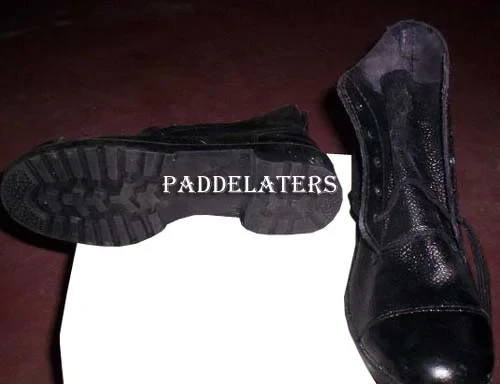
The typical WWI uniform included a wool tunic, trousers, puttees wrapped around the lower legs, leather boots, and a cap or helmet. Soldiers also carried equipment from the 1908 Pattern Web Equipment system, which distributed weight across the body.
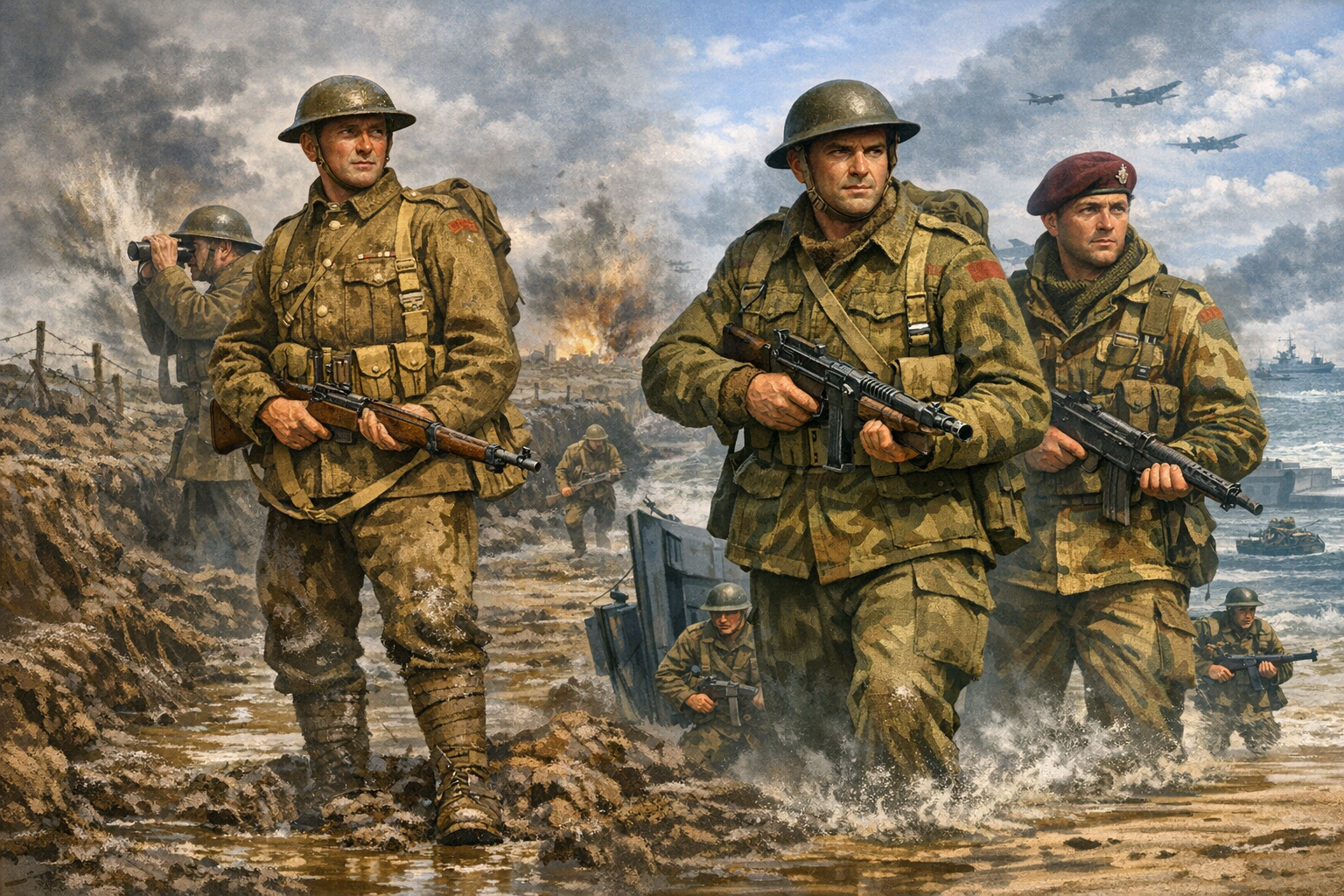
However, trench warfare introduced new problems. Mud, rain, and constant movement placed heavy stress on clothing. Wool retained moisture and became heavy when wet. Soldiers sometimes wore the same uniform for weeks while stationed in front-line trenches.
Despite these challenges, the Service Dress uniform became one of the most recognizable military outfits of the early 20th century.
Key Features and Ranks
Several parts of the WWI British uniform became standard across the army:
1902 Pattern Tunic
The tunic was made from khaki wool and featured four pockets on the front. It buttoned up the front and included shoulder straps where rank badges could be attached.
Service Dress Cap (SD Cap)
This soft cap was commonly worn when soldiers were away from active combat zones. It was practical and easy to store in equipment packs.
Puttees
Puttees were long strips of cloth wrapped around the lower legs from ankle to knee. They helped support the legs during long marches and protected trousers from mud.
Brode Helmet (1915)
As trench warfare intensified, head protection became necessary. The Brodie steel helmet was introduced in 1915 and became widely used on the Western Front.
Rank Insignia
Rank was displayed using badges on the sleeves or shoulders. For example, chevrons indicated non-commissioned officers, while stars and crowns represented officer ranks.
These features created a uniform system that balanced tradition and battlefield needs, though the war soon proved further changes were necessary.
WWII British Military Uniforms
By the start of World War II, the British Army had learned many lessons from the First World War. The biggest change came with the introduction of Battledress in 1937, which gradually replaced the older Service Dress tunic.
Battledress was designed to be more practical for mechanized warfare and fast movement. Instead of a long tunic, soldiers wore a short wool serge jacket paired with high-waisted trousers. The shorter jacket made it easier to carry equipment belts and sit inside vehicles.
The wool serge fabric used in battledress weighed roughly 18–20 ounces per square yard, according to British Army clothing specifications. This weight provided durability while maintaining warmth in colder climates.
Another important development was the Mk II steel helmet, introduced in 1938. It improved upon the earlier Brodie design with better liners and straps, allowing soldiers to wear it comfortably for longer periods.
Specialized uniforms also appeared during WWII:
Denison Smock (Airborne Forces)
British paratroopers and commandos used the Denison smock, a camouflage garment introduced in 1942. It helped break up the soldier’s silhouette and provided additional pockets.
Tank Crew Clothing
Armoured units used protective coveralls designed to resist grease and oil inside tanks.
Cold Weather Gear
British troops fighting in northern Europe received additional layers and waterproof clothing to deal with harsh conditions.
These changes reflected the new style of warfare during WWII. Soldiers moved faster, used vehicles more often, and required clothing that worked in different climates and combat roles.
Pros and Cons: Real-World Case Studies
Uniform design always shows its strengths and weaknesses during real combat.
Case Study: Battle of the Somme (1916)
During the Somme offensive in World War I, British soldiers spent long periods inside water-filled trenches. The khaki wool Service Dress uniform proved durable but had limitations.
Pros
-
Thick wool resisted tearing during trench work.
-
Khaki color reduced visibility compared with earlier uniforms.
Cons
-
Wool absorbed water and mud, making uniforms heavier.
-
Limited ventilation increased discomfort during long marches.
Imperial War Museum records describe soldiers sometimes carrying over 30 kilograms of equipment, which made wet clothing even more exhausting during attacks.
Case Study: Normandy Campaign (1944)
During the Allied landings in Normandy, British soldiers wore the newer battledress uniform.
Pros
-
Short jacket improved movement during combat.
-
Wool serge fabric remained durable under heavy use.
-
Helmets provided better shock absorption.
Cons
-
Wool still retained moisture in rainy conditions.
-
Limited camouflage compared with later military uniforms.
Despite these drawbacks, the WWII battledress system proved more practical for mobile warfare compared with the longer WWI tunic.
British Uniforms in Action: Examples
Historical battles show how uniforms worked in real situations.
Battle of the Somme (1916)
British soldiers wearing Service Dress uniforms advanced across open ground. The khaki color helped reduce visibility compared with earlier red coats used before 1900.
Passchendaele (1917)
Extreme mud conditions tested uniform durability. Puttees helped keep mud out of boots, though soldiers still struggled with wet clothing.
D-Day Landings (1944)
British infantry arriving in Normandy wore battledress and Mk II helmets. Commandos and airborne troops used Denison smocks for camouflage.
Operation Market Garden (1944)
Paratroopers used airborne uniforms designed for mobility and parachute operations, showing how specialized clothing had become during WWII.
These examples show how uniform design adapted to different types of combat.
FAQs
Why did WWI British uniforms use khaki?
Khaki reduced visibility on the battlefield. It was first used in colonial campaigns and later adopted across the British Army before WWI.
What helmet did British soldiers use in WWI?
The Brodie helmet, introduced in 1915, protected soldiers from shrapnel falling into trenches.
What replaced the WWI Service Dress uniform?
The British Army introduced Battledress in 1937, which became the standard uniform during WWII.
What fabric was used in WWII battledress?
Battledress was made from wool serge, typically weighing around 18–20 ounces per square yard.
What was the Denison smock?
The Denison smock was a camouflage garment worn by British paratroopers and commandos during WWII.
Were WWII uniforms more effective than WWI uniforms?
In many ways, yes. WWII uniforms improved mobility and equipment compatibility, though materials like wool still had limitations.
Conclusion
British military uniforms changed significantly between World War I and World War II. The early Service Dress uniform faced serious challenges in trench warfare, especially with mud, moisture, and heavy equipment loads. Over time, battlefield experience pushed the British Army to improve design, leading to the introduction of the battledress uniform and specialized clothing like the Denison smock.
These changes solved many practical problems while keeping uniforms durable and functional. From the trenches of the Somme to the beaches of Normandy, British uniforms evolved alongside modern warfare—proving that even clothing can play a vital role in military effectiveness.