Introduction (PAS Problem hook)
War puts soldiers into tough places. Mud. Rain. Cold wind. Long marches. A uniform is not just clothing. It must protect the soldier and help them move fast. During World War I and World War II, the United States Army had to solve many problems with uniforms.
In 1917, when the United States entered World War I, the army grew very fast. Millions of new soldiers needed clothing. The main issue was simple: the army needed uniforms that could survive trench warfare. Soldiers stayed in wet trenches for weeks. Wool uniforms got heavy when soaked with water. Mud stuck to them. Cold weather made things worse.
Reports from the U.S. Army Quartermaster Corps show that uniforms had to balance warmth, cost, and speed of production. By 1918, more than 3.8 million olive drab wool tunics had been produced for American troops. That number shows how quickly production had to move.
But problems did not stop there. When World War II began, soldiers faced new environments. Jungle heat in the Pacific. Freezing winters in Europe. Long campaigns across deserts and forests. Old uniform designs could not meet these new demands.
So the army started redesigning uniforms. Engineers studied fabrics. Officers collected feedback from soldiers. New field jackets, boots, and gear appeared.
The story of U.S. military uniforms in these wars is really a story about solving real problems faced by real soldiers in battle.
Key Features of WW1 US Uniforms
Design Details
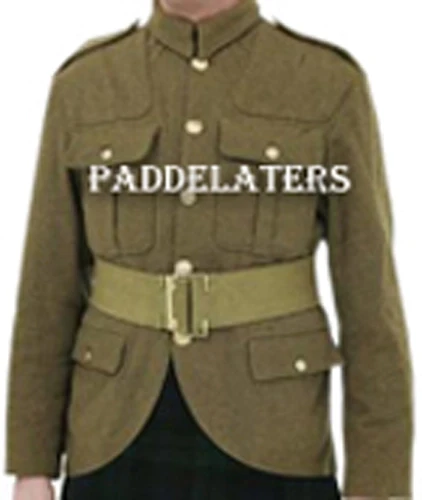
The standard U.S. Army uniform in World War I was built around the 1917 Service Uniform. It followed a simple structure that matched European battlefield conditions.
Key design elements included:
-
Olive drab wool tunic
-
Matching wool trousers
-
Campaign hat or steel helmet
-
Leather boots with puttees (cloth leg wraps)
-
Button front tunic with four pockets
The olive drab color helped soldiers blend into natural surroundings. Earlier uniforms used brighter shades, but military planners learned from European armies that darker earth tones reduced visibility.
The tunic used a structured cut. Soldiers carried maps, tools, and small items in the front pockets. The steel helmet, introduced after early combat experience, protected against shrapnel falling into trenches.

The uniform worked best in cool weather. Wool provided insulation and could still keep warmth when damp. This mattered because trench warfare exposed soldiers to rain and cold for long periods.
Materials and Production Facts
Uniform production during World War I was a huge task. The U.S. Army relied on the Quartermaster Corps to coordinate manufacturing.
Important facts include:
-
3.8 million olive drab wool tunics produced by 1918
-
Wool sourced mainly from American textile mills
-
Uniform contracts spread across many factories
-
Production increased rapidly after U.S. entry in 1917
Wool was the main material because synthetic fibers were not yet common. Wool had advantages. It was strong. It held heat. But it also had problems.
Heavy wool uniforms became uncomfortable in wet conditions. Soldiers sometimes reported that soaked wool could double the weight of their clothing.
Production records from the U.S. Army show that factories worked around the clock to meet demand. Uniforms had to reach troops training in the United States and soldiers already deployed in France.
WW2 American Uniforms in Action
Evolution from WW1
World War II brought major changes to American uniforms. Military planners studied the problems from the earlier war.
Instead of relying only on wool, designers began using cotton and blended fabrics. These materials worked better in different climates.
One of the most important developments was the M1943 field jacket.
Key features included:
-
Water-repellent cotton outer fabric
-
Loose design for layering clothing
-
Four large cargo pockets
-
Adjustable waist drawstring
-
Hood attachment capability
The jacket became widely used during the later years of World War II. According to U.S. Army records, about 8 million M1943 field jackets were issued to American troops.
The design solved several problems. Cotton dried faster than wool. The loose fit allowed soldiers to wear sweaters underneath. Soldiers fighting in cold regions like the Battle of the Bulge relied on layered clothing systems.
Field gear also improved. Combat boots replaced older shoe-and-legging systems. Helmets received better liners for comfort and protection.
These updates made the uniform more flexible for different battle environments.
German Military Uniforms Comparison Example
German soldiers in World War II wore the well-known feldgrau uniform, a field grey color designed for camouflage.
Historical textile records show that German industry produced uniforms using large quantities of dyed cloth. Researchers estimate that around 2.5 million tons of fabric were processed for feldgrau uniforms during the war years.
The feldgrau color helped soldiers blend into forests and open terrain. The design included:
-
Tunic with front pockets
-
Wool trousers
-
Steel helmet
-
Leather boots
Compared with American uniforms, German uniforms stayed closer to traditional wool materials longer. U.S. uniforms gradually moved toward cotton and layered systems.
Pros and Cons Based on Historical Use
Uniforms always involve trade-offs. Military reports from both wars show strengths and weaknesses.
Advantages of WW1 uniforms
-
Wool kept soldiers warm in cold trench conditions
-
Olive drab color improved battlefield camouflage
-
Simple design allowed fast mass production
Disadvantages
-
Wool absorbed water easily
-
Wet uniforms became heavy
-
Limited comfort in warm weather
Advantages of WW2 uniforms
-
Cotton fabrics dried faster
-
Layered clothing system worked in many climates
-
Improved jackets like the M1943 offered better storage and mobility
Disadvantages
-
Cotton provided less natural insulation than wool
-
Early war uniforms still lacked full weather protection
-
Supply chains struggled to equip rapidly expanding forces
These pros and cons shaped later military clothing systems.
Real-World Case Studies
Military archives contain many reports from soldiers describing their uniforms during combat.
Case Study 1: American Soldiers in WW1 Trenches
Letters from soldiers stored in the U.S. Army Heritage and Education Center describe trench conditions in France.
One soldier wrote in 1918:
“The mud sticks to everything. Our wool coats keep us warm, but when the rain comes they get very heavy.”
This statement reflects the real issue of wool absorbing water. Trench warfare exposed soldiers to constant moisture. Even with strong material, uniforms could become uncomfortable after long exposure.
Case Study 2: M1943 Jackets During the Battle of the Bulge
The winter battle in Belgium in 1944 tested American uniforms under severe conditions. Temperatures dropped below freezing.
Reports from the U.S. Army Quartermaster Corps show that layered clothing systems were critical. Soldiers wearing the M1943 jacket with inner wool layers stayed warmer than those using older field coats.
Veteran accounts often mention the flexibility of the jacket pockets and adjustable waist. These small design details helped soldiers carry tools and personal gear more easily.
Case Study 3: German Feldgrau Uniform Use
German forces relied heavily on wool feldgrau uniforms during World War II. Textile production records indicate massive cloth processing for military use.
The color provided good camouflage in forests and rural terrain. However, like the American WW1 uniform, heavy wool could trap moisture.
Historians at the Imperial War Museum note that German soldiers in harsh winter campaigns sometimes faced similar clothing challenges as their opponents.
FAQs
1. What color were WW1 U.S. Army uniforms?
They were mainly olive drab, a green-brown shade designed to blend into natural terrain.
2. How many WW1 U.S. uniforms were produced?
By 1918, about 3.8 million olive drab wool tunics had been produced for American soldiers.
3. What was the M1943 field jacket?
It was a water-repellent cotton combat jacket introduced during World War II and issued to around 8 million troops.
4. Why did the U.S. Army switch from wool to cotton fabrics?
Cotton dried faster and worked better in varied climates such as jungles and temperate battlefields.
5. What was the German feldgrau uniform?
It was a field grey combat uniform worn by German soldiers, produced using large quantities of dyed cloth during World War II.
6. Did soldiers like their uniforms?
Reports show mixed reactions. Some soldiers valued warmth and durability, while others complained about weight or wet clothing.
Conclusion (PAS Solution wrap-up)
Uniforms in World War I and World War II show how armies learn from real battlefield problems. Early WW1 uniforms focused on warmth and quick production. Olive drab wool clothing served millions of American soldiers but struggled in wet trench conditions.
By the time of World War II, designers changed their approach. New fabrics, layered systems, and improved jackets helped soldiers operate in many climates. The M1943 field jacket, issued to millions of troops, became a practical solution built from lessons learned in earlier combat.
At the same time, comparisons with other armies, such as Germany’s feldgrau uniform system, reveal that every military faced similar challenges: balancing protection, comfort, and mass production.
The history of these uniforms is not only about fabric or color. It reflects how armies adapt equipment to real human needs during war.
200-Word Summary
U.S. military uniforms in World War I and World War II evolved in response to real battlefield problems faced by soldiers. During World War I, the standard American uniform was the olive drab wool service uniform introduced in 1917. It included a wool tunic, trousers, leather boots, and a steel helmet. By 1918, about 3.8 million wool tunics had been produced for American troops. Wool helped keep soldiers warm in cold trench conditions but absorbed water and became heavy during rain.
Lessons from WW1 influenced uniform design in World War II. Military planners focused on flexibility and climate adaptation. Cotton fabrics and layered clothing systems became more common. One of the most important pieces of gear was the M1943 field jacket, made with water-repellent cotton and issued to around 8 million soldiers. The jacket allowed better movement, storage, and weather protection.
Comparisons with German feldgrau uniforms, produced using large volumes of dyed fabric, show how different armies approached similar problems of camouflage and durability.
Historical records and soldier reports demonstrate both advantages and limits of these uniforms. Together, these designs reflect the ongoing effort of military planners to improve soldier protection, mobility, and comfort during major global conflicts.